

A platform dedicated to providing unbiased reviews of newly launched applications, analyzing everything from their features to their full potential.
info@scoutforge.net© 2026 Scoutforge. All rights reserved.
A platform dedicated to providing unbiased reviews of newly launched applications, analyzing everything from their features to their full potential.
info@scoutforge.net© 2026 Scoutforge. All rights reserved.
A platform dedicated to providing unbiased reviews of newly launched applications, analyzing everything from their features to their full potential.
info@scoutforge.net© 2026 Scoutforge. All rights reserved.
Cycling through all six. Tap any point to stop.
Measured on six things
Feedback loop for AI agent-written documents
Extremely early-stage with zero verifiable traction, reviews, or community; no GitHub or launch buzz detected.
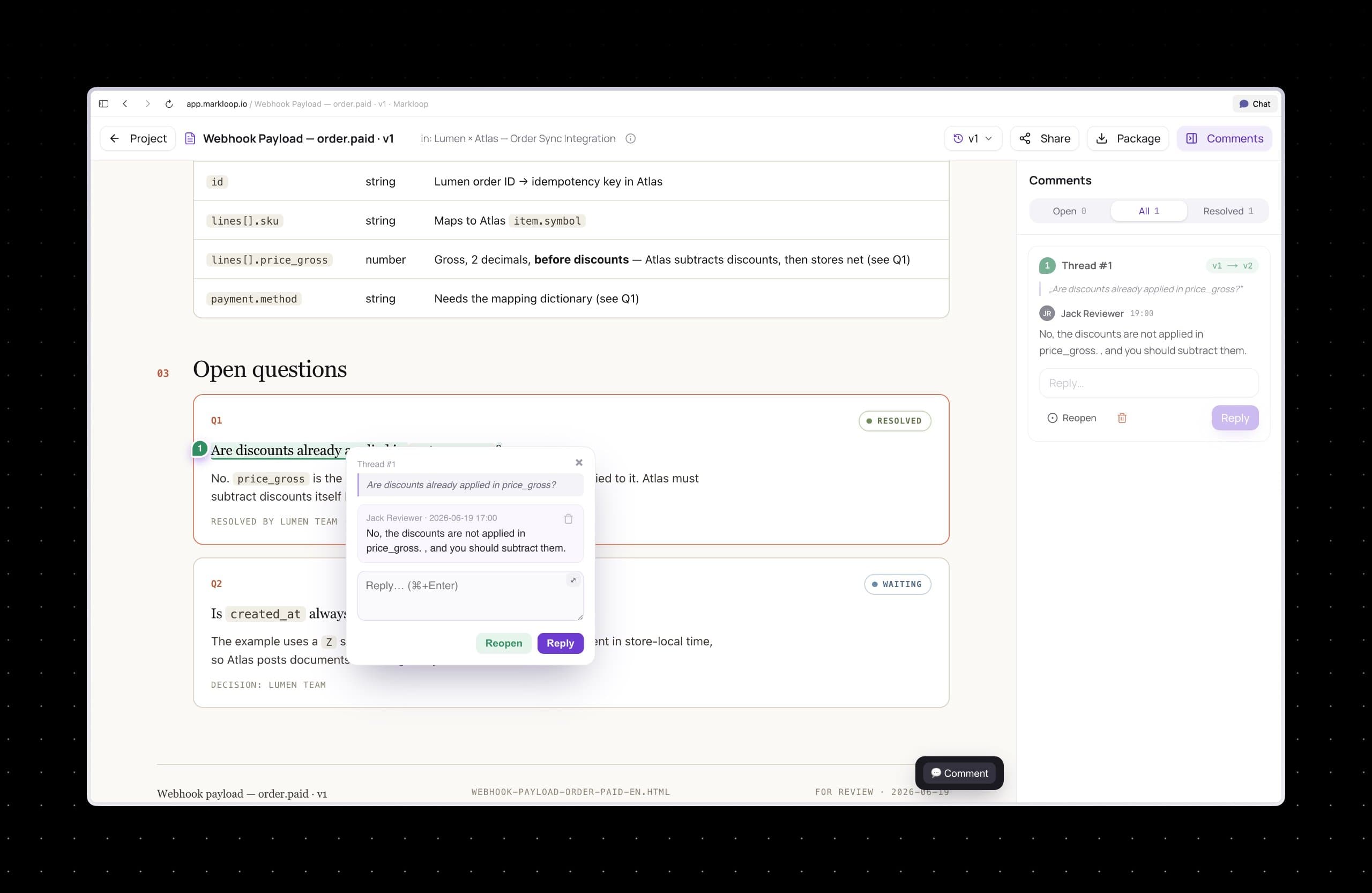
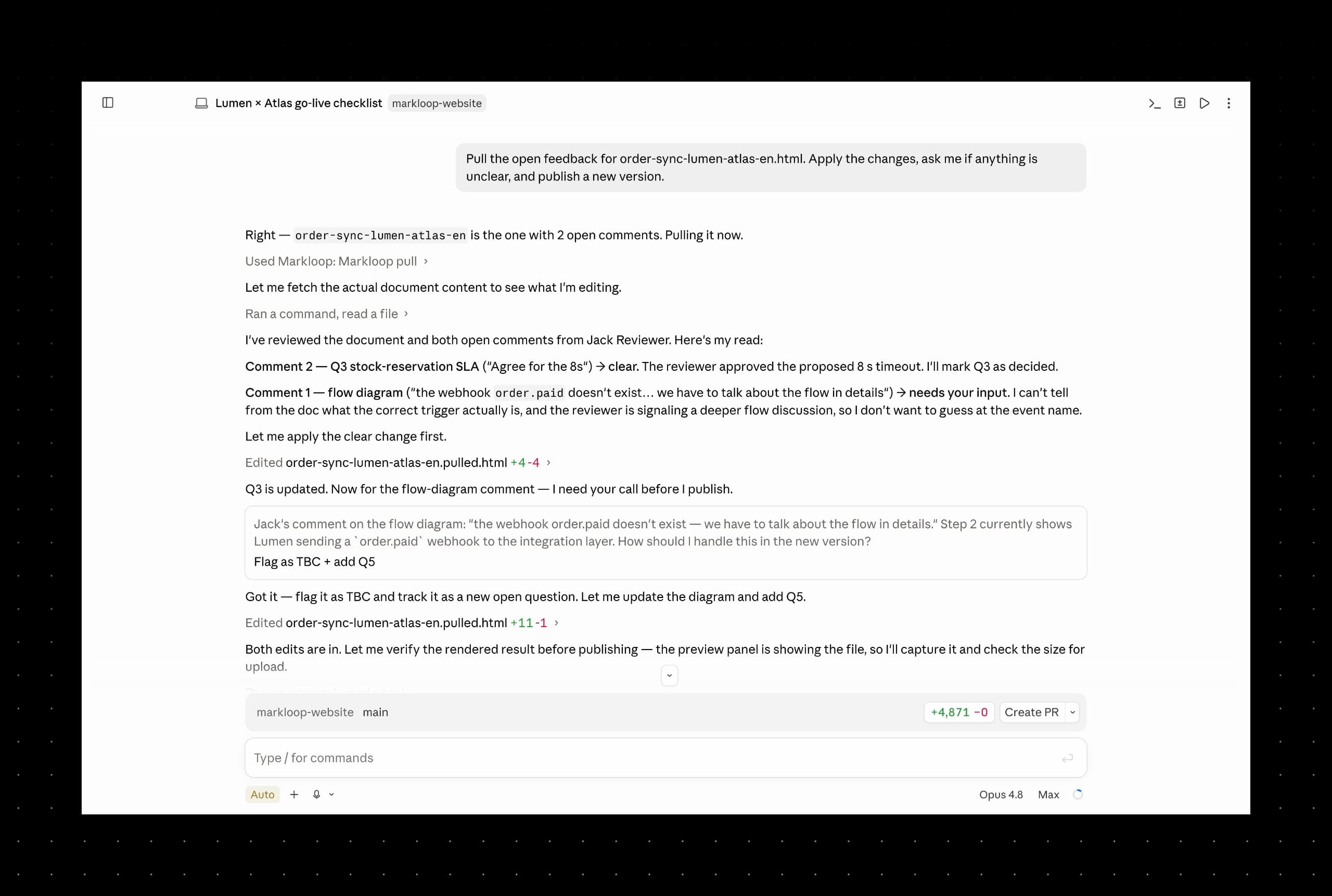
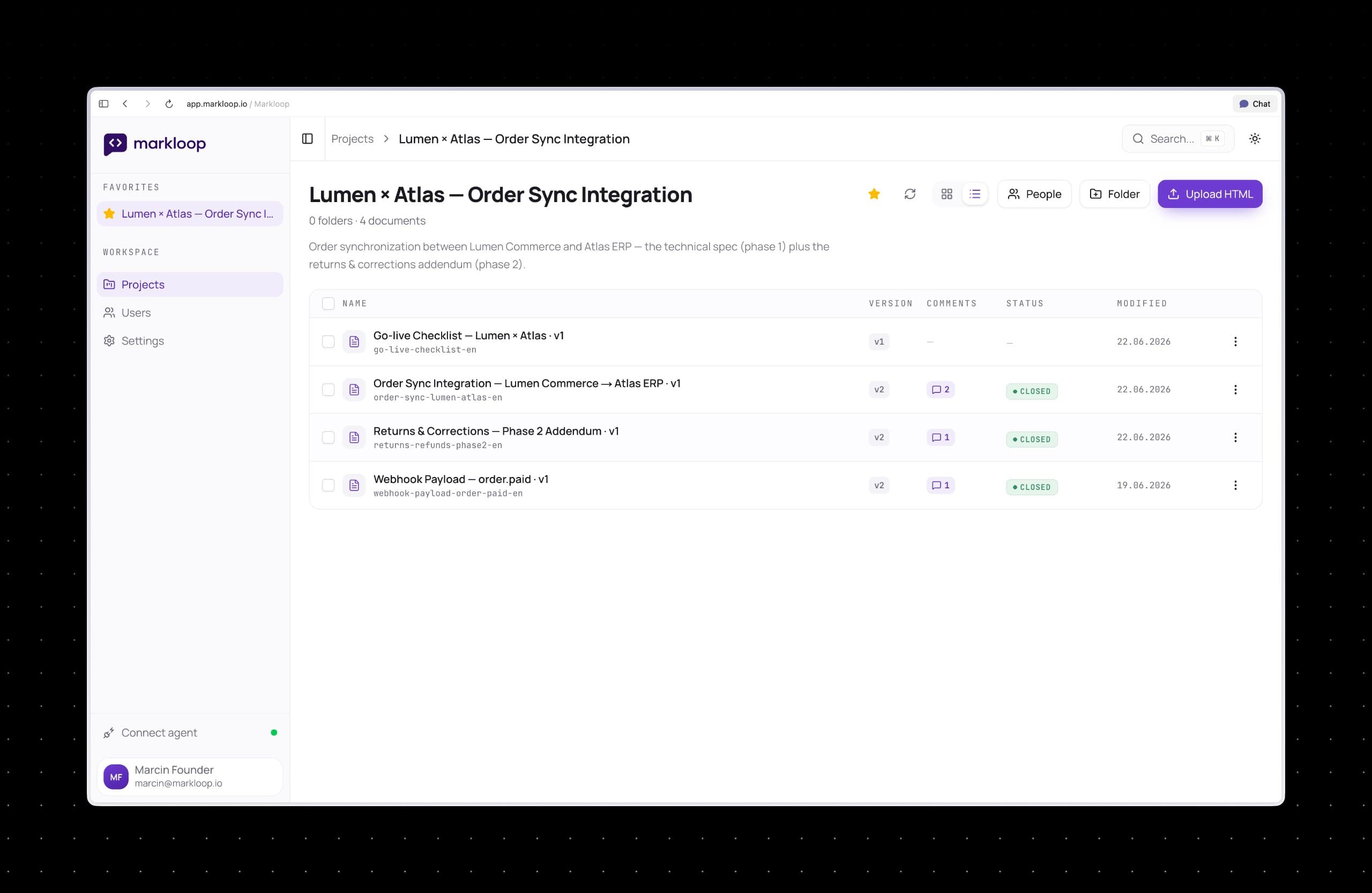
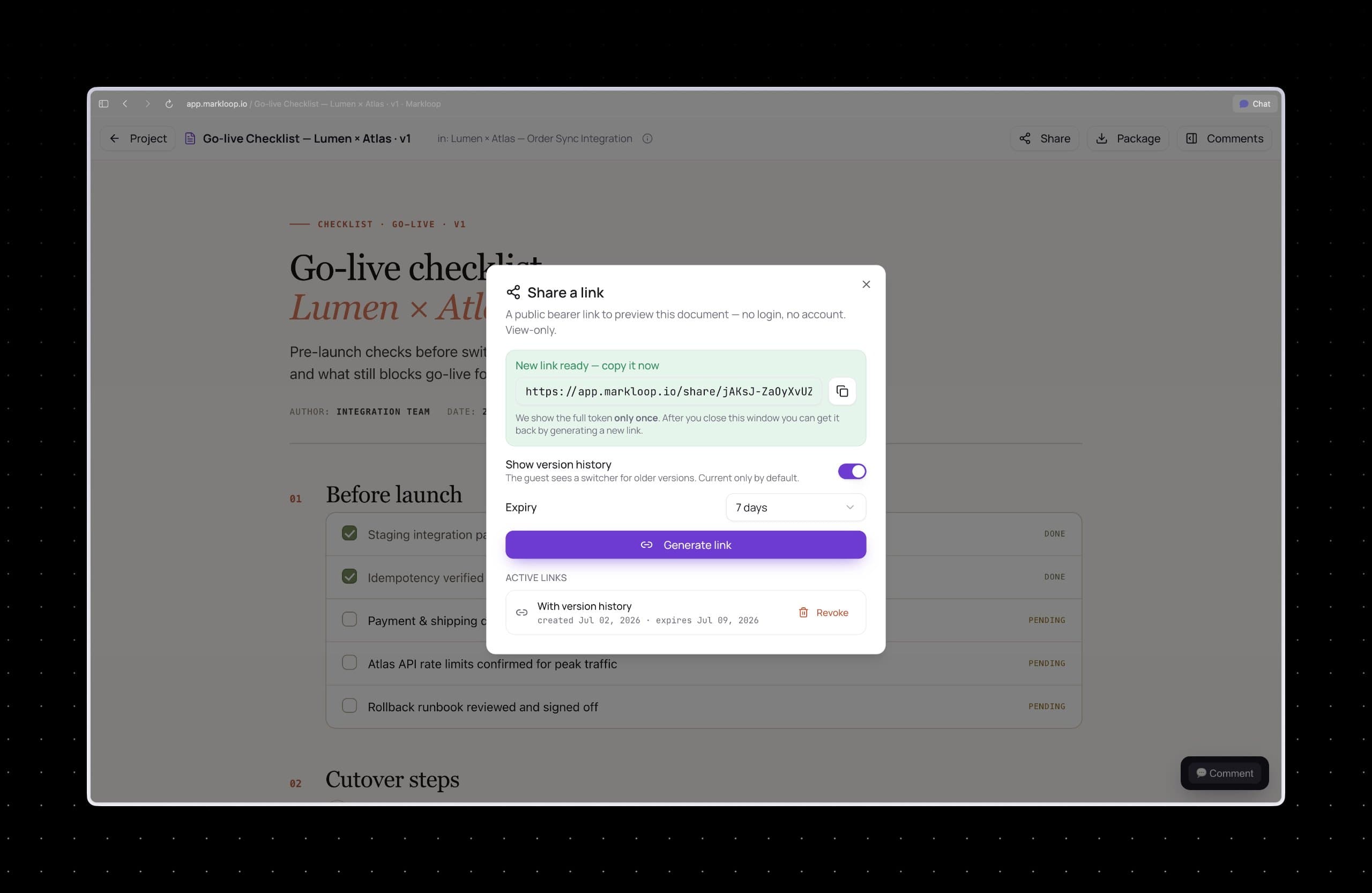
As someone who's been deep in the AI agent space, I've found Markloop to be a real game-changer. It's a web app built for a very specific—and increasingly common—pain point: reviewing documents that your AI agent (like Claude Code or Codex) generates. Instead of copy-pasting specs or reports into Google Docs and losing all formatting, or scattering feedback across Slack and email, Markloop gives you a dedicated space where human reviewers can comment directly on the HTML document, answer embedded questions, and see everything in context. The real magic? Your agent can pull that structured feedback back in via MCP (Model Context Protocol) and apply changes locally. It creates a tight loop: agent writes → people review → agent revises. No more being the middleman translating comments into prompts. I tested it with a technical design doc, and the anchored comments and version tracking made the whole review cycle so much smoother. Pricing starts at $19/month for solo builders, with unli...
Drawn from the product itself, not from a survey.
Demographic
Solo developers using AI coding agents (Claude Code, Codex)
Pain points
Needs to get fast feedback on agent-written docs like specs or RFCs, but feedback gets scattered across Slack, email, and screenshots; copy-pasting into Google Docs breaks formatting.
Primary needs
A way to share rendered HTML documents with colleagues, collect inline comments, and have the agent automatically apply changes without manual translation.
Demographic
Product founders and product managers working with AI agents
Pain points
PRDs and product specs are drafted by agents, but getting sign-off from stakeholders involves messy async communication and manual update cycles.
Primary needs
A structured review process where stakeholders can comment on specific sections, answer questions, and see revision history, with feedback packaged for the agent to incorporate.
Demographic
Consultants, agencies, and client-facing teams using AI for deliverables
Pain points
Sending polished reports or proposals to clients leads to feedback via email threads, with no way to tie comments to specific parts of the document.
Primary needs
A tool to share professional HTML documents with clients, collect feedback in context, and control access so clients see only what's relevant.
Written by AI from measured evidence, scored out of 100.
Markloop solves a genuine pain point for developers using AI coding agents by providing structured, anchored feedback on HTML artifacts that agents can consume directly via MCP. The tight loop of agent-write → human-review → agent-revise is elegantly packaged. Strengths lie in design clarity and targeted usability for its audience. Weaknesses include minimal security posture, unknown accessibility, and near-zero external validation or growth signals. It's a promising early tool for a specific workflow but not yet mature enough for teams needing enterprise features or proven reliability.
Strong onboarding narrative and MCP integration for target AI users; reviewers get simple comment/answer flow without accounts.
Polished, modern landing page with excellent visual examples of anchored comments and version tracking tailored to HTML artifacts.
Lightweight marketing site loads fast; product avoids server-heavy processing by keeping changes local to the agent's machine.
HTTPS and basic privacy controls (rendered view only, scoped access) in place; no audits or compliance badges published.
Responsive site with decent contrast; no WCAG claims, a11y docs, or multi-language support mentioned anywhere.
Extremely early-stage with zero verifiable traction, reviews, or community; no GitHub or launch buzz detected.
Markloop's design nails the niche with a clean, focused landing page that showcases exactly how anchored comments and versioned HTML artifacts work. The visual examples of comment threads on specs and RFCs make the value proposition instantly clear. Usability shines for the core workflow: upload or MCP-push an HTML doc, invite reviewers via email, collect inline feedback and answers, then pull structured data back to the agent. The FAQ covers edge cases like sharing Claude artifacts outside orgs thoroughly. However, the experience assumes comfort with AI coding agents—non-technical reviewers get a simple interface, but the overall product feels purpose-built rather than broadly accessible.
Speed is adequate for a lightweight web tool; the site itself is responsive and the product philosophy of local agent application avoids heavy backend processing. No lag reports exist because adoption is minimal. Security is table-stakes only—HTTPS and promises that reviewers never see source code or other projects. Privacy controls are well-explained but lack any third-party audits or compliance certifications. For solo developers iterating on internal specs this is fine; for agencies or client work handling sensitive proposals, the absence of SOC 2 or similar is a notable gap compared to mature alternatives.
Accessibility receives little attention—no WCAG statements or testing claims appear on the site. The marketing pages are reasonably responsive with good typography, but deeper product accessibility (screen reader support for comment anchors, etc.) remains unverified. Growth is the weakest area: despite a clear problem-solution fit for AI agent users, there are no independent reviews, GitHub activity, or community signals. The product is very new and niche, so early traction is expected to be low. It competes in a crowded space of document tools but differentiates via agent integration rather than broad appeal.
Conclusion
If you're a solo builder or small team already deep in Claude Code or Codex and tired of copy-pasting feedback, Markloop is worth testing at the $19 starter price. For broader teams or client deliverables, consider whether Google Docs or Notion's existing collaboration plus manual agent prompts suffice until Markloop matures.
Named competitors, point by point. Nobody paid to appear here or to be left out.
 Markloop Markloop |  Google Docs Google Docs |  Notion Notion |  Slack + Screenshots Slack + Screenshots | |
|---|---|---|---|---|
| AI agent integration (MCP push/pull for feedback) | Native MCP for Claude Code & Codex; exports structured comments | None | None | None |
| Anchored comments on HTML elements | Yes - pinned to element + exact text quote | Text comments only | Text comments only | None - screenshots lose context |
| Version tracking with addressed status | Yes - comments tied to versions, mark resolved across revisions | Basic version history | Page history | None |
Google Docs
General-purpose document editing and commenting, but lacks anchoring to specific HTML elements, version tracking for agent documents, and direct integration with AI agents.
Notion
Collaborative workspace with comments, but not designed for HTML artifacts from agents; feedback is not structured for automated reapplication.
Slack + Screenshots
Unofficial feedback method via messaging and images, but comments are not anchored to the document, context is lost, and there's no agent integration.
Comparing options? See Markloop alternatives, scored side by side
What the review was written against. A verdict with no sources is an opinion.

An all-in-one hospitality software for restaurants and ba...

A weekly newsletter delivering curated tech jobs, intervi...

White-label reputation management software for agencies s...

Privacy-first open source journal app with a continuous t...

Puzzly is an all-in-one B2B lead generation platform that...

All-in-one AI workspace for docs, projects, and knowledge...

A free, open-source platform offering 110 AI agent skills...

Open-source desktop app for switching AI coding providers...

One verified handle for your online identity, readable by...

Frame-perfect video-to-GIF maker that runs entirely in yo...

White-label website audits that close deals for digital a...

Automated quote follow-up for trades and service businesses.
A platform dedicated to providing unbiased reviews of newly launched applications, analyzing everything from their features to their full potential.
info@scoutforge.net© 2026 Scoutforge. All rights reserved.