Cycling through all six. Tap any point to stop.
Measured on six things
Replace expensive SaaS with software you own
Growth
37Active social accounts and site claims (18+ tools); no reviews, GitHub, funding, or traction signals—clearly very early-stage product.
Screenshots
1 / 3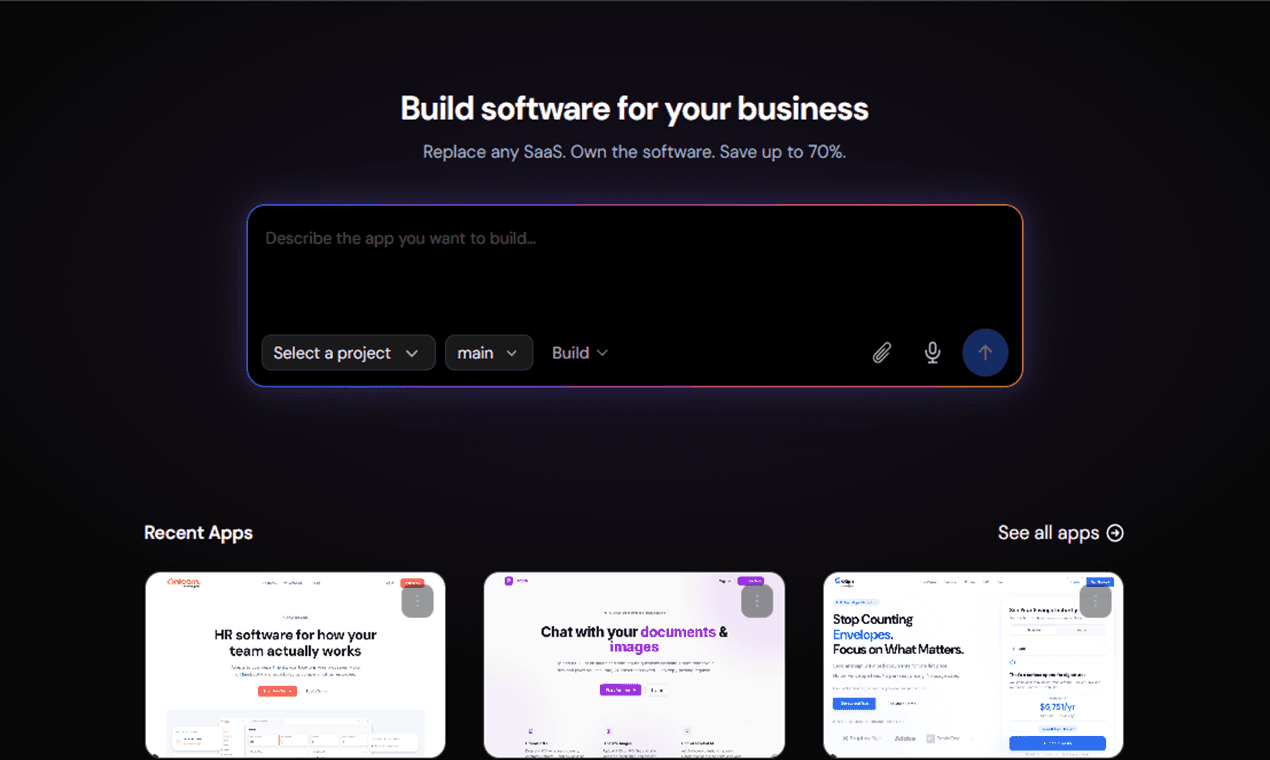
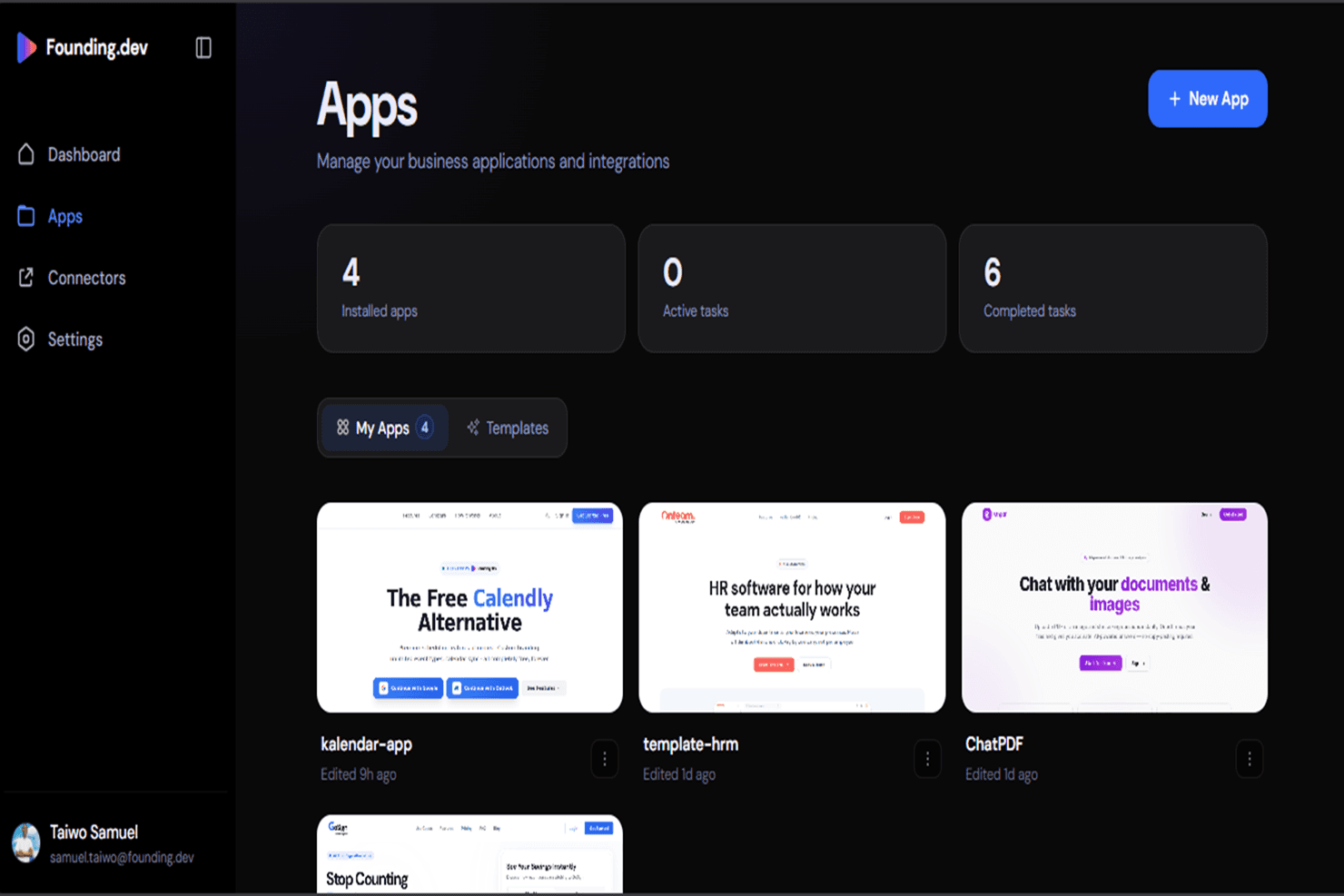
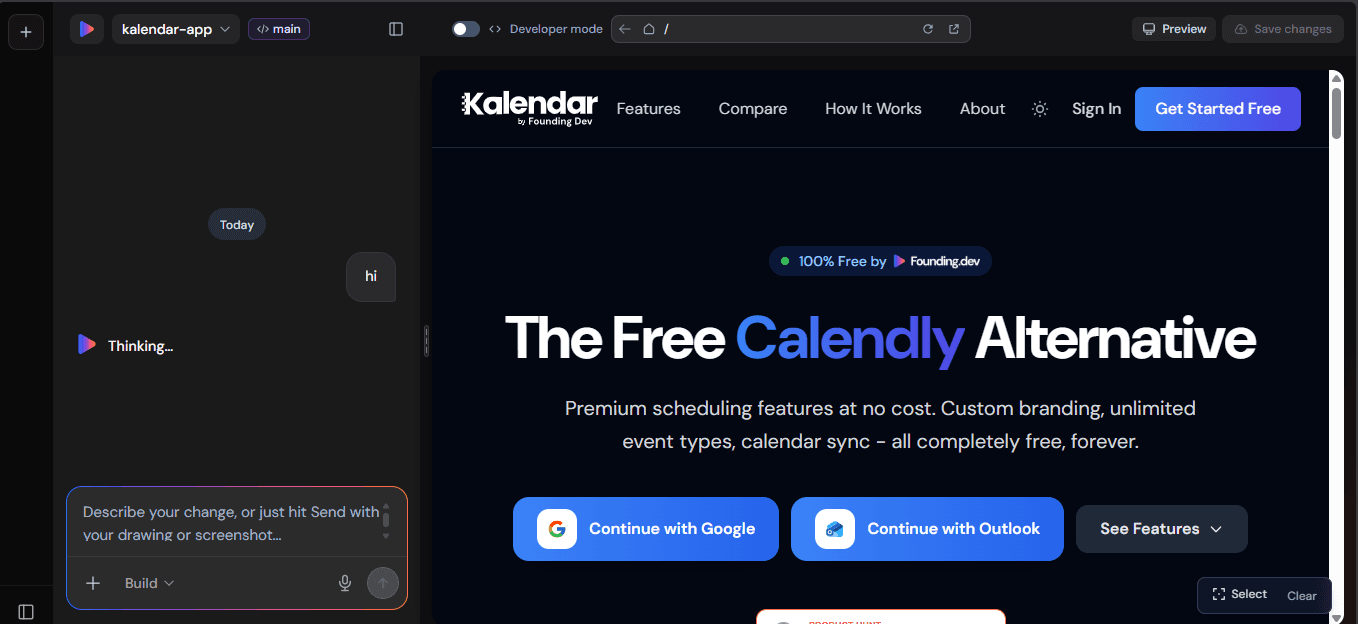
About this app
Founding.dev helps business owners replace expensive, bloated SaaS with software they own. With Founding.dev, they swap complex, costly apps for their own software — built from a proven starter template and tailored to how their business works. It cuts their software bill by up to 70%, at one flat price per company with no per-seat fees, and they can change it anytime, just by telling AI what they need
Key features
- 1AI-powered migration and customization from templates for owned software.
- 2Flat per-company pricing with unlimited users and no per-seat fees.
- 3Self-host or cloud deployment with full source code ownership.
Target customer profile
Drawn from the product itself, not from a survey.
Demographic
SME owners and founders with 10-200 employees
Pain points
High SaaS costs, feature bloat, vendor lock-in
Primary needs
Customizable, owned software; lower operational costs
Demographic
CTOs and technical leads in startups
Pain points
Time spent on internal tool maintenance, lack of control over data
Primary needs
Quick deployment, scalable infrastructure, source code ownership
Demographic
Operations managers in mid-size companies
Pain points
Managing multiple SaaS subscriptions, integration headaches, per-seat pricing
Primary needs
Unified platform, unlimited users, AI-powered migration
Scout Review
Written by AI from measured evidence, scored out of 100.
Founding.dev targets SME owners frustrated with SaaS costs by offering owned, customizable alternatives via templates and AI. Strengths lie in the clear value prop of flat pricing and source ownership, backed by live examples. Weaknesses include sparse external validation and unproven enterprise features, making it a promising but high-risk bet for teams ready to self-manage tools.
Measure by measure
Usability
71Live demos and templates enable quick value; FAQ covers key questions, but no verified onboarding flow, reviews, or detailed docs beyond site claims.
Design
87Polished modern homepage with consistent branding, live interactive demos (GoSign etc.), and clear visual hierarchy showcasing templates and savings.
Speed
64Modern site with demo links loads reasonably; no benchmarks, tech details, or complaints found—typical for early unproven SaaS.
Security
57Strong claims of SSO, encryption, audits, and compliance as defaults; privacy policy exists but no independent audits or certifications verified.
Accessibility
41No WCAG mentions, a11y statements, or multi-language support found; responsive design assumed but unverified for keyboard/screen reader use.
Growth
37Active social accounts and site claims (18+ tools); no reviews, GitHub, funding, or traction signals—clearly very early-stage product.
Improvement areas
- Lack of independent security audits and compliance certifications.
- Minimal user reviews, traction metrics, or community engagement.
- No verified accessibility standards or multi-language support.
Design & Usability
Founding.dev presents a sleek, modern interface with live demos of replacements like GoSign and Kalendar that immediately convey the ownership pitch. Usability benefits from template-driven starts and AI promises for migration, though the lack of independent reviews leaves the real onboarding experience untested. It positions well against bloated SaaS but needs more transparent flows to convert skeptics.
Speed & Security
The site itself performs adequately with quick demo access, but speed claims rest on unverified infrastructure promises. Security gets bold assertions around SSO and encryption yet lacks any third-party validation like SOC 2, making it a mixed bag typical of early tools—solid on paper, risky in practice for data-sensitive SMEs.
Accessibility & Growth
Accessibility is a notable gap with no mentions of standards or support features, limiting broader appeal. Growth signals are minimal—no reviews, GitHub activity, or major traction—indicating a nascent product still building momentum in a crowded AI/SaaS replacement space dominated by more visible players.
Conclusion
If you're tired of per-seat fees and vendor lock-in, Founding.dev offers an intriguing path to ownership—but verify the AI migration claims with a pilot before committing your stack.
Suggestions for improvement
- Publish detailed case studies with real migration timelines and cost savings.
- Add SOC 2 or similar compliance documentation to build trust.
- Expand community features like a public Discord or changelog for transparency.
- Implement and document accessibility improvements for inclusive design.
Alternatives comparison
Named competitors, point by point. Nobody paid to appear here or to be left out.
 Founding.dev |  Lovable | |
|---|---|---|
| Core offering | SaaS replacement templates + AI customization for owned software | AI chat-based app/website builder from prompts |
| Pricing model | Flat per-company price, no per-seat fees | Not specified on homepage (likely usage-based or subscription) |
| Ownership & deployment | Full source code ownership, self-host or cloud, no vendor lock-in | Deploy to world with one click; app ownership unclear |
| Target use case | Replace specific SaaS (e-sign, scheduling, HR, forms) for SMEs | General app and website prototyping/building |
Comparing options? See Founding.dev alternatives, scored side by side
Sources
What the review was written against. A verdict with no sources is an opinion.
More Productivity apps
View all Productivity
Vibe Coding Agent Skills
92A free, open-source platform offering 110 AI agent skills...

Puzzly – B2B Lead Generation & Sales Intelligence Platform
92Puzzly is an all-in-one B2B lead generation platform that...

Qamarero
92An all-in-one hospitality software for restaurants and ba...

StoryPad
92Privacy-first open source journal app with a continuous t...

The Stack Newsletter
92A weekly newsletter delivering curated tech jobs, intervi...

Notion
92All-in-one AI workspace for docs, projects, and knowledge...

EmbedMyReviews
92White-label reputation management software for agencies s...

Gerty
91Private, local AI assistant for Mac that runs offline

CC Switch
91Open-source desktop app for switching AI coding providers...

QRBliss
91Branded QR codes with AI Brand Sync, 15 free dynamic code...

username.md
90One verified handle for your online identity, readable by...

PitchWhip
90AI cold call scripts & direct dials from LinkedIn


A platform dedicated to providing unbiased reviews of newly launched applications, analyzing everything from their features to their full potential.
info@scoutforge.net© 2026 Scoutforge. All rights reserved.
