Cycling through all six. Tap any point to stop.
Measured on six things
Ask health questions and get answers drawn from the experts you follow, with every source cited. Then find a provider or order labs.https://ltrl.com
Security
52HTTPS is in place, but no SOC 2, ISO, HIPAA, security page, or bug bounty found. Standard for early-stage, but thin for health data.
Screenshots
1 / 1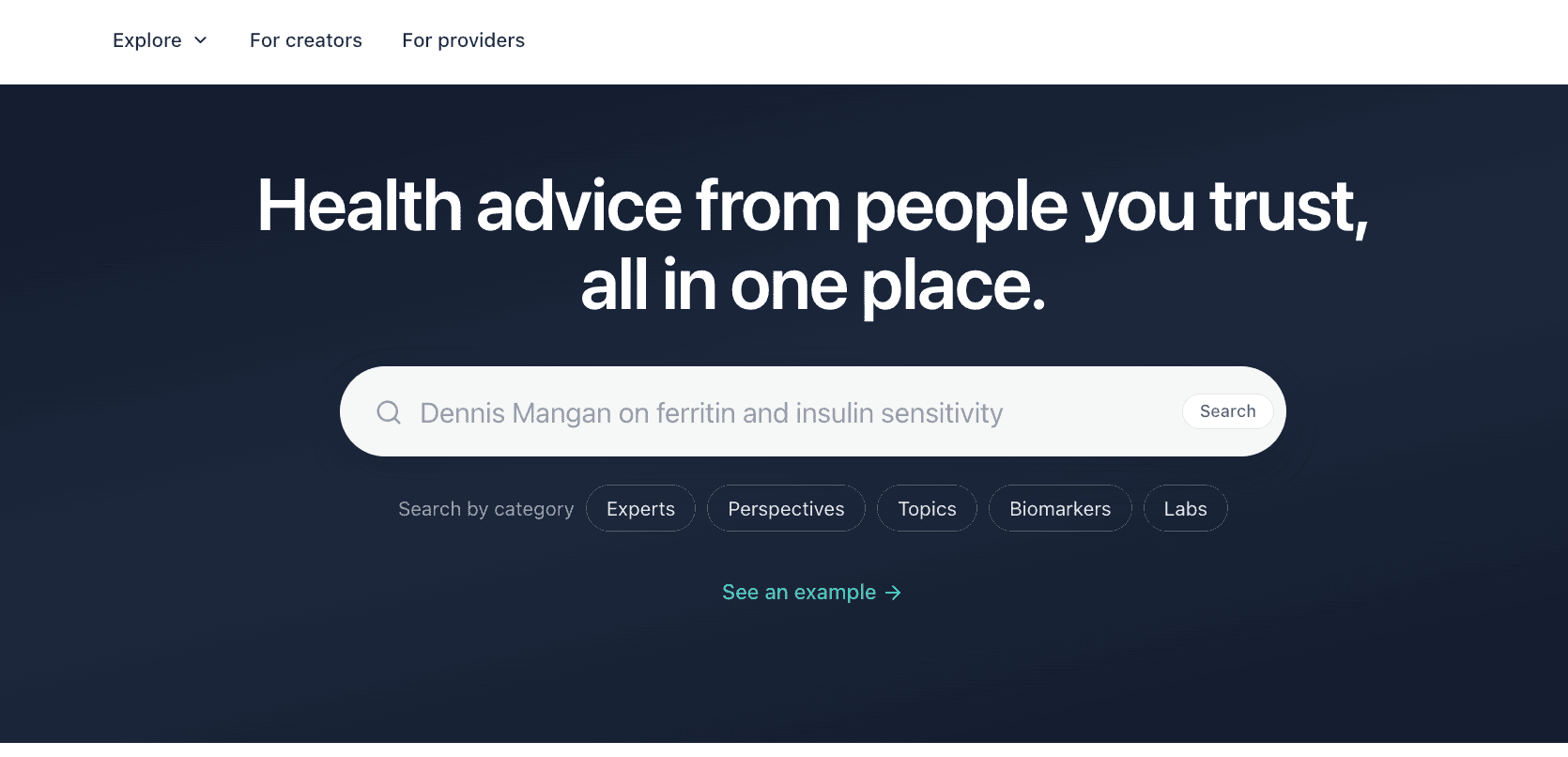
About this app
Ltrl AI is a health search engine built on the people you already trust. Instead of pulling answers from anywhere on the internet, it draws on the published work of the physicians, researchers, dietitians, and health writers you choose to follow, and links every answer back to the original article. Ask a question in plain language. You'll get a clear answer, see exactly whose work it comes from, and be able to read more from that expert in one click. When you're ready to act, Ltrl helps you take the next step: find a provider near you or order lab tests, without starting your search over. Ltrl AI provides health information, not medical diagnosis. Talk to a clinician about decisions regarding your care. https://ltrl.com
Key features
- 1Plain-language health search using trusted expert sources
- 2Every answer links back to the original article for verification
- 3Next-step actions: find a provider or order lab tests without restarting
Target customer profile
Drawn from the product itself, not from a survey.
Scout Review
Written by AI from measured evidence, scored out of 100.
Ltrl is a health search engine that answers questions using sources you choose to trust—physicians, researchers, dietitians—and links every answer back to the original article. It's a compelling angle in a crowded AI search space. The site is fast (100/100 Lighthouse) and clean, with a straightforward search-first interface. But security transparency is minimal, accessibility has gaps, and the business model is unclear. The product shows promise but needs to define its audience and prove why it's better than generic AI search. For now, it's a solid early-stage tool with a differentiated idea and room to grow.
Measure by measure
Usability
62Plain-language search with linked expert sources is intuitive. Next-step actions (provider finder, lab tests) add value, but no pricing or trial info visible.
Design
68Clean, modern search-first interface with clear branding. Trust-focused copy and expert sourcing are well-presented, though no app store presence to judge native UI.
Speed
88Lighthouse mobile and desktop both score 100/100. LCP 1.5s, CLS 0, TBT 51ms — genuinely fast, no user complaints found.
Security
52HTTPS is in place, but no SOC 2, ISO, HIPAA, security page, or bug bounty found. Standard for early-stage, but thin for health data.
Accessibility
70Lighthouse accessibility 91/100, but failing audits for button names and color contrast. No a11y statement or multi-language support found.
Growth
58Real problem: trustworthy health search. Expert-sourcing is a specific wedge, but no clear segment or pricing model shown. Domain age is context, not traction.
Improvement areas
- No visible pricing or free trial information
- Minimal security transparency (no SOC 2, HIPAA, or security page)
- Accessibility gaps: unlabeled buttons and insufficient color contrast
Design & Usability
Ltrl presents a clean, modern search-first interface that puts a plain-language query bar front and center. The design communicates trust through expert sourcing and clear branding, though without an app store presence we can only judge the website. Usability is solid: you ask a question, get an answer linked to original expert articles, and can take next steps like finding a provider or ordering lab tests without restarting. However, the site lacks visible pricing or trial information, which makes it hard to assess the full onboarding flow. The core interaction is intuitive, but the absence of a free tier or demo details leaves a gap for new users.
Speed & Security
Speed is a standout: Lighthouse scores 100/100 on both mobile and desktop, with LCP 1.5s, CLS 0, and TBT 51ms. The site loads fast and feels snappy, with no user complaints about lag found. Security, however, is thin. HTTPS is in place, but there's no SOC 2, ISO, HIPAA, security page, or bug bounty mentioned. For a health-focused product handling sensitive queries, that's a notable gap. While early-stage products often lack formal certifications, the absence of any security transparency beyond HTTPS is a weakness. Users should be aware that data handling practices are not detailed.
Accessibility & Growth
Accessibility scores 91/100 on Lighthouse, but failing audits for button accessible names and color contrast indicate real gaps. No accessibility statement or multi-language support was found, which limits reach. Growth potential is moderate: the problem—trustworthy health search—is real, and expert-sourcing is a specific differentiator. However, the target customer is not clearly defined, and no pricing model is visible. The domain is 26.5 years old, but that's context, not traction. The category is crowded with AI search tools, and without a clear wedge or segment focus, Ltrl risks being interchangeable. The idea has room, but execution and positioning need sharpening.
Conclusion
Ltrl's expert-sourcing approach is a smart counter to the 'AI hallucination' problem in health search. If it can build trust through transparency and secure handling of sensitive queries, it could carve out a niche. But without pricing, security certifications, or a clear target segment, it's hard to see how it scales beyond a neat demo. The speed and design are there; the rest is a work in progress. Worth watching, but not yet a must-use.
Suggestions for improvement
- Publish a clear pricing page or free tier details to reduce friction for new users.
- Add a security page detailing data handling, encryption, and any compliance plans (HIPAA, SOC 2).
- Fix accessibility issues: label buttons properly and improve color contrast to meet WCAG AA.
- Define a specific target segment (e.g., chronic condition patients, caregivers) and tailor messaging.
Alternatives comparison
Named competitors, point by point. Nobody paid to appear here or to be left out.
 Ltrl | ||
|---|---|---|
| Core search method | Plain-language search over user-selected expert sources | No alternative provided |
| Source transparency | Every answer links to original expert article | No alternative provided |
| Next-step actions | Find provider or order lab tests | No alternative provided |
| Pricing model | Not disclosed | No alternative provided |
| Security certifications | None found | No alternative provided |
Comparing options? See Ltrl alternatives, scored side by side
More Health & Wellness apps
View all Health & Wellness
StoryPad
92Privacy-first open source journal app with a continuous t...

Pushup RPG: Fitness Quest
90Pushup RPG is a camera-based push-up counter and fitness RPG for home workouts. Real push-ups and squats become attacks as you defeat 48 foes across 8 biomes, earn XP and loot, join guilds, and battle in live 40-second duels. Free on iOS and Android.

Gryper
89Workout tracker with muscle heatmaps and volume landmarks

Snapkin: Photo Calorie Counter
88Snapkin is a calorie tracker you use by photographing your plate.

Innermost
87An AI-powered emotional support app that acts as a person...

Cat Years to Human Years
86Free cat age calculator converting cat years to human years.

Mantra Meditation Timer
85A minimalist, distraction-free meditation timer for mantr...

TDEE Calculator
84Free TDEE calculator that estimates maintenance calories, weight loss targets, muscle gain calories, and macro recommendations based on your body stats and activity level.

FitLifeBud
84AI meal plans for your week, with one aisle-sorted shopping list

WellWired
84AI explained simply for older adults, with safety lessons...

TheBean.ai
84Adaptive AI personal trainer that evolves with your progr...

SayLift
84Voice workout log and calorie counter for iPhone


A platform dedicated to providing unbiased reviews of newly launched applications, analyzing everything from their features to their full potential.
info@scoutforge.net© 2026 Scoutforge. All rights reserved.
