

A platform dedicated to providing unbiased reviews of newly launched applications, analyzing everything from their features to their full potential.
info@scoutforge.net© 2026 Scoutforge. All rights reserved.
A platform dedicated to providing unbiased reviews of newly launched applications, analyzing everything from their features to their full potential.
info@scoutforge.net© 2026 Scoutforge. All rights reserved.
A platform dedicated to providing unbiased reviews of newly launched applications, analyzing everything from their features to their full potential.
info@scoutforge.net© 2026 Scoutforge. All rights reserved.
Cycling through all six. Tap any point to stop.
Measured on six things
Enterprise-grade manga reader and translator for individuals and studios
Real problem (raw manga is unreadable to most fans), specific wedge (layout-preserving translation with bubble detection and inpainting), and three distinct buyers: readers, scanlation groups, studios via API. Google Lens and DeepL structurally can't match the layout work.
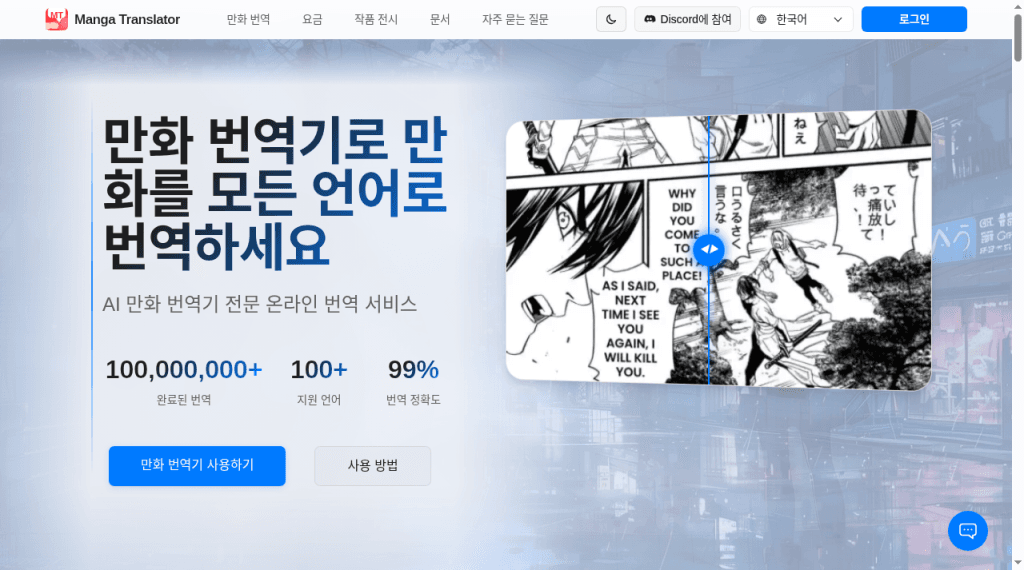
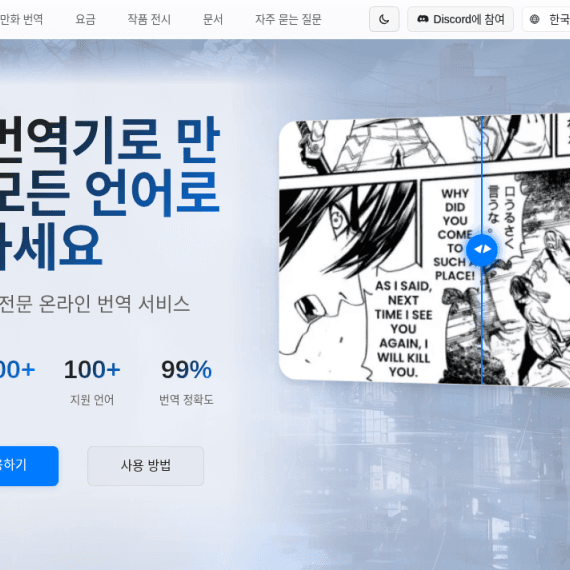
MangaTranslate is an enterprise-grade manga reader and translator: batch and custom translation for individuals, a full online Photoshop editor and API for studios, all languages supported.
Drawn from the product itself, not from a survey.
Demographic
Manga and webtoon fans
Pain points
Language barriers prevent reading raw or untranslated manga.
Primary needs
Quick, accurate translation that preserves artwork and reading flow.
Demographic
Scanlation groups and fan translators
Pain points
Manual translation and typesetting is time-consuming and tedious.
Primary needs
Automated tools for OCR, translation, and layout adjustment.
Demographic
Publishers and localization professionals
Pain points
High cost and slow turnaround for official translations.
Primary needs
Scalable, high-quality translation with API integration and editing options.
Written by AI from measured evidence, scored out of 100.
MangaTranslate is a genuinely useful tool aimed at a real problem, and the measured numbers back the pitch: 97/100 mobile Lighthouse performance, 97/100 accessibility, and a security header set that's cleaner than most indie SaaS. The layout-preserving translation — bubble detection, inpainting, smart typesetting, fourteen font styles — is a concrete differentiator that Google Lens and DeepL structurally cannot match, and the three-step flow plus batch upload to 100 images makes it usable for both a casual reader and a scanlation group. The weaknesses are the usual early-stage ones: no published security audit for the studio-facing API, no accessibility statement, a desktop performance score 22 points below mobile, and a homepage so dense that the fourteen-font picker competes with the upload box for attention. The pricing page offers three tiers plus usage-based plus API billing, which is flexible but asks the buyer to do too much work. None of this is fatal. It's a product that has clearly built the hard part and now needs to decide who it's actually selling to.
Three-step flow (language → upload → export) with drag-drop for jpg/png/webp/avif/pdf/zip, batch up to 100 images, background queue, batch download. Free tier is 5 credits/day without login. Pricing has three tiers plus usage-based and API modes.
A dense but purposeful tool UI: language pickers, three model tiers, 14 font styles with use-case copy, and a drag-drop zone all on one page. Korean localization is complete, not bolted on. Cluttered for a first-timer, but nothing looks dated or broken.
Lighthouse mobile 97/100 with LCP 2.0s, CLS 0, TBT 39ms. Desktop trails at 75/100, a real 22-point gap. Site claims parallel processing and caching for 'fastest on the web' — that claim is unverified, but the measured mobile numbers back the snappy feel.
HTTPS enforced with CSP, frame protection, X-Content-Type-Options, Referrer-Policy, secure cookies, SPF and DMARC — 10/13 on the header checklist. HSTS and Permissions-Policy are missing. No SOC 2, ISO, pen-test, or bug bounty published, which is normal at this stage.
Lighthouse a11y 97/100, with two real failures: insufficient color contrast and visible text labels without matching accessible names. Ships localized routes and a 100+ language target list. No WCAG statement or a11y page published, so keyboard/screen-reader depth is unverified.
Real problem (raw manga is unreadable to most fans), specific wedge (layout-preserving translation with bubble detection and inpainting), and three distinct buyers: readers, scanlation groups, studios via API. Google Lens and DeepL structurally can't match the layout work.
MangaTranslate's interface is a working tool, not a landing page pretending to be one. Language selectors, three model tiers (Manga 1 credit, Ultra 2 credits, EagleEye 1 credit), fourteen font styles with per-style use-case copy, and a drag-drop zone all live on the homepage. The Korean localization is complete and reads naturally. The flow is genuinely three steps: pick languages, upload, export. Batch uploads go to 100 images (200 on Ultra) with background processing and batch download, and the free tier gives 5 credits a day without login — though those credits are shared per public IP, which is a real constraint for shared networks. Pricing offers three tiers plus usage-based and API billing, which is flexible but also three different mental models on one page. Where it stumbles: the homepage is dense enough that a first-timer has to scan past fourteen font options before finding the upload box, and there's no visible onboarding tour or video walkthrough for the editor and API products the description promises.
Speed is the strongest measured dimension. Lighthouse mobile scores 97/100 with LCP 2.0s, CLS 0, and TBT 39ms — genuinely fast for a tool that has to render image previews and a font menu. Desktop drops to 75/100, a 22-point gap that suggests the desktop build ships meaningfully more JavaScript or heavier assets than the mobile one; worth investigating, but not a user-facing problem yet. The site claims 'fastest translation speed on the web' via parallel processing and caching — that's marketing, not a benchmark, and no third party has verified it. Security is competent but not audited: HTTPS enforced, CSP, frame protection, X-Content-Type-Options, Referrer-Policy, secure cookies, SPF and DMARC all present, hitting 10 of 13 header checks. Missing HSTS and Permissions-Policy. No SOC 2, ISO 27001, pen-test report, or bug bounty program is published, which is typical for a product at this stage but means studios evaluating the API have nothing to hand their security team. The pricing page notes EU 14-day withdrawal rights are waived on immediate digital delivery, with a refund policy linked.
Accessibility scores 97/100 on Lighthouse with two concrete failures: insufficient color contrast, and visible text labels that don't match their accessible names. Both are cheap to fix and both are real. The site does invest in internationalization — localized routes like /ko/ and a target-language list over 100 entries — but publishes no accessibility statement or WCAG conformance claim, so keyboard navigation and screen-reader behavior beyond the automated checks are unverified. Growth is the more interesting question. The problem is real: raw and untranslated manga is unreadable to most of the global audience, and manual scanlation is slow volunteer labor. The wedge is specific — layout-preserving translation with bubble detection, inpainting, and smart typesetting — and it's exactly what the listed alternatives can't do. Google Lens translates text in an image but leaves the layout alone; DeepL doesn't touch images at all. MangaTranslate also names three distinct buyers: individual readers, scanlation groups, and publishers/studios via API. That breadth is both the opportunity and the risk — the consumer tier is a low-margin, high-volume business, while the studio API is where real revenue lives, and the product currently markets both with equal weight. The category has headroom as manga and webtoon readership grows globally, but the wedge is copyable and the incumbents have distribution.
Conclusion
If you read raws and you're tired of squinting at Google Lens output that keeps the Japanese and drops the layout, this is worth the five free daily credits. If you run a scanlation group, the batch upload and background queue will save you real hours. If you're a publisher evaluating the API, wait — there's no SOC 2, no pen-test report, and no security page to hand your compliance team, and that gap will stall procurement before the translation quality ever gets discussed. The product's biggest open question isn't technical, it's positioning: the consumer tier and the studio tier are two different businesses with two different sales motions, and the site currently sells both with the same homepage. Pick one to lead with, build the security and docs story the studio tier needs, and the rest of this is already in place.
Named competitors, point by point. Nobody paid to appear here or to be left out.
 MangaTranslate MangaTranslate |  Google Lens Google Lens |  DeepL DeepL | |
|---|---|---|---|
| Image-based translation (reads text directly from manga panels) | Yes — core feature, with dedicated OCR for complex backgrounds and stylized text | Yes — real-time text translation from images via camera or upload | No — text-only translation, no image input |
| Preserves manga layout (bubble detection, inpainting, typesetting) | Yes — auto erase/refill, size/position/line-break adjustment, layout and reading rhythm preserved | No — overlays translated text without preserving panel layout | No — not applicable, no image handling |
| Batch processing and background queue | Yes — up to 100 images per batch (200 on Ultra), background queue, batch download | No — one image at a time | Yes for text — document translation supports batch files, but not images |
| Font/style control for translated text | Yes — 14 font styles with per-style use-case guidance (action, romance, wuxia, etc.) | No — fixed overlay font, no user control | No — plain text output only |
| API access for studios / automation | Yes — dedicated API billing mode and integration path advertised on site | No public API for this use case | Yes — DeepL API is a mature, well-documented product |
| Free tier | 5 credits/day without login (shared per public IP); 5 more via daily check-in when signed in | Free — no account required, no usage cap | Free tier with character limits; Pro is paid |
| Security / compliance posture | HTTPS enforced, CSP, DMARC, secure cookies; no SOC 2, ISO, or pen-test published | Google-grade infrastructure and compliance (SOC 2, ISO 27001, etc.) | ISO 27001 certified, GDPR-compliant, published security documentation |
Google Lens
Google Lens can translate text in images in real-time, but it doesn't preserve manga layout or offer specialized features like speech bubble detection.
DeepL
DeepL is a powerful text translation service, but it lacks image-based translation and manga-specific features like inpainting.
Comparing options? See MangaTranslate alternatives, scored side by side

An all-in-one hospitality software for restaurants and ba...

A weekly newsletter delivering curated tech jobs, intervi...

White-label reputation management software for agencies s...

Privacy-first open source journal app with a continuous t...

Puzzly is an all-in-one B2B lead generation platform that...

All-in-one AI workspace for docs, projects, and knowledge...

A free, open-source platform offering 110 AI agent skills...

Open-source desktop app for switching AI coding providers...

One verified handle for your online identity, readable by...

Frame-perfect video-to-GIF maker that runs entirely in yo...

White-label website audits that close deals for digital a...

Automated quote follow-up for trades and service businesses.
A platform dedicated to providing unbiased reviews of newly launched applications, analyzing everything from their features to their full potential.
info@scoutforge.net© 2026 Scoutforge. All rights reserved.