Cycling through all six. Tap any point to stop.
Measured on six things
OCD SensAI is a clinical platform for OCD therapists and their patients. The therapist portal is free. Patients practice ERP and ACT in a mobile app with a no-reassurance AI coach, and progress syncs back to the clinician.
Speed
45Lighthouse mobile 48/100 with a 20.6s LCP and 8.3s FCP; desktop only 55/100. CLS is a clean 0 and TBT is modest at 367ms, but that first paint is brutal — a therapist opening this between clients will notice.
Screenshots
1 / 3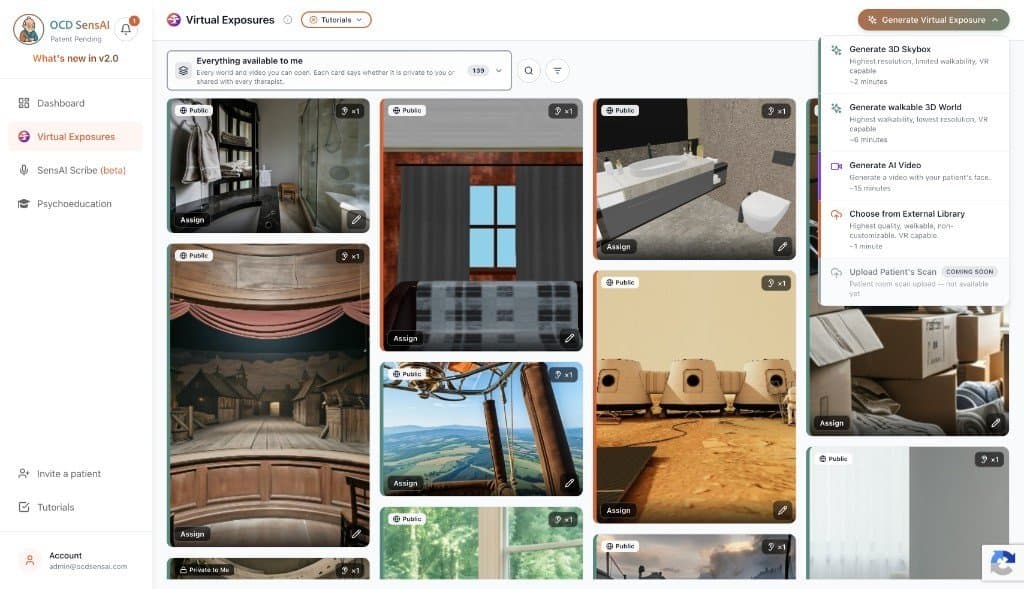
About this app
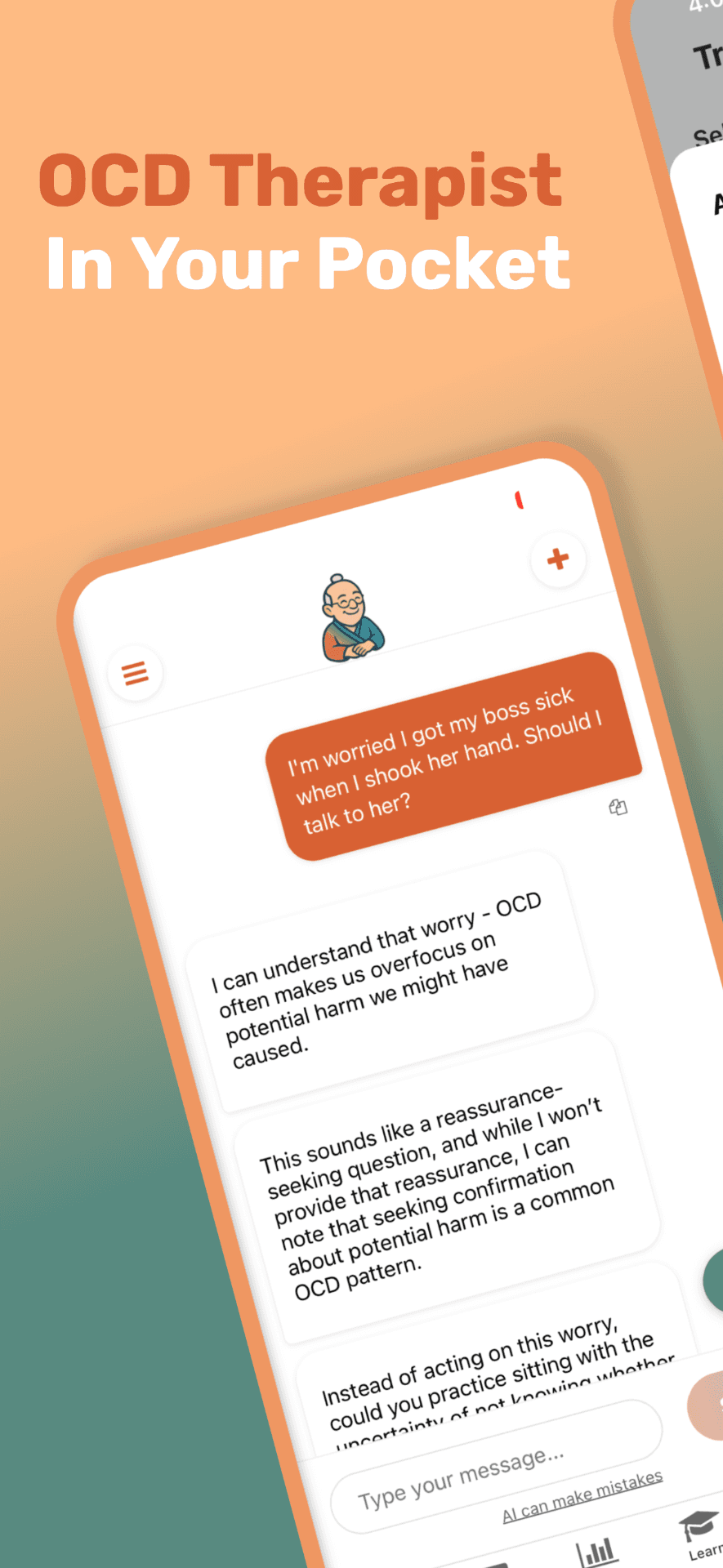
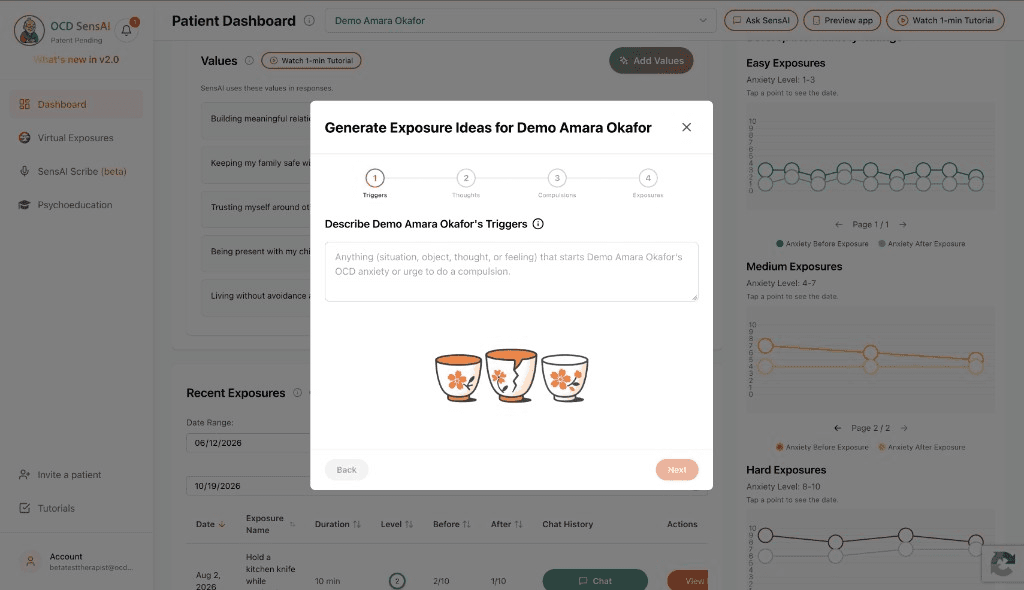
OCD SensAI helps licensed therapists deliver OCD treatment between sessions. The web portal at ocdsensai.com is free for clinicians. Therapists assign exposure hierarchies, Acceptance and Commitment Therapy (ACT) values work, and homework, then review anxiety ratings, assessments, and practice data. Patients use the OCD SensAI app on iOS and Android. The app includes Exposure and Response Prevention (ERP) tools and an AI coach built to avoid giving reassurance, so it does not feed the OCD doubt loop. Therapists can also create immersive 3D exposure environments that patients open in the app or on a VR headset.
Key features
- 1Free clinician web portal for assigning ERP exposure hierarchies, ACT values work, and homework.
- 2Patient iOS/Android app with ERP tools and an AI coach designed to avoid giving reassurance.
- 33D immersive exposure environments openable in-app or on a VR headset.
- 4Therapist dashboards reviewing anxiety ratings, assessments, and between-session practice data.
Target customer profile
Drawn from the product itself, not from a survey.
Demographic
Licensed mental health therapists specializing in OCD
Pain points
Time-consuming treatment planning and progress tracking
Primary needs
Efficient tools to create and monitor personalized ERP exercises
Demographic
Clinical psychologists and counselors in private practice
Pain points
Limited access to evidence-based OCD resources and analytics
Primary needs
Integrated platform with AI-driven insights and patient data analytics
Demographic
OCD treatment centers and group practices
Pain points
Coordinating care and maintaining consistent treatment protocols
Primary needs
Centralized system for managing multiple patients and therapist collaboration
Scout Review
Written by AI from measured evidence, scored out of 100.
OCD SensAI is a well-positioned clinical tool with a clear thesis: give OCD therapists a free portal to assign ERP hierarchies, ACT values work, and homework, then let patients run exposures in an app with an AI coach that refuses to reassure. That last detail is the smartest thing here — reassurance is the exact behavior ERP is trying to extinguish, so an AI that withholds it is a real design insight, not a gimmick. The 3D/VR exposure environments add a second differentiator. Execution is uneven: security headers are excellent (11/12) but compliance disclosure is absent, mobile performance is poor (48/100, 20.6s LCP), and accessibility has three concrete failures despite a 92 audit score. The site is clean and the workflow is legible, but screenshots, docs, and trust signals are thin. A credible early product with a sharp idea and a lot of proof still to publish.
Measure by measure
Usability
60The workflow is clearly described — assign hierarchies, ACT values, homework, then review ratings — and the clinician portal being free removes the signup wall. But there's no visible docs, help center, or onboarding walkthrough to confirm it's actually easy.
Design
62Clean, clinical landing page that leads with the therapist portal and patient app split. The 3D exposure and AI coach claims are bold but under-shown — no visible product screenshots in the collected content to back them up.
Speed
45Lighthouse mobile 48/100 with a 20.6s LCP and 8.3s FCP; desktop only 55/100. CLS is a clean 0 and TBT is modest at 367ms, but that first paint is brutal — a therapist opening this between clients will notice.
Security
74Strong header hygiene — HTTPS, HSTS, CSP, frame protection, Referrer-Policy, SPF and DMARC all present, 11/12 checklist points. Only Permissions-Policy is missing. But no SOC 2, HIPAA, or pen-test claim surfaced for a product handling clinical mental-health data.
Accessibility
70Lighthouse a11y 92/100, but three real failures: insufficient color contrast, undersized touch targets, and no main landmark. No accessibility statement or WCAG claim found, and no evident multi-language support.
Growth
68Sharp wedge: a free clinician portal plus a reassurance-avoiding AI coach and 3D/VR exposures aimed squarely at OCD specialists. Specific segment, real differentiator, category with headroom — early stage (domain from late 2025) is context, not the score.
Improvement areas
- No visible HIPAA, SOC 2, or penetration-test disclosure for clinical mental-health data.
- Mobile performance is poor: 48/100 Lighthouse, 20.6s LCP, 8.3s FCP.
- Three accessibility failures (contrast, touch targets, main landmark) and no WCAG statement.
- No product screenshots, demo, docs, or help center to substantiate the experience claims.
Design & Usability
OCD SensAI's site reads like a serious clinical product: therapist portal on one side, patient app on the other, and a workflow spelled out in plain terms — build exposure hierarchies, layer in ACT values work, assign homework, then review anxiety ratings and assessment data. The clinician portal being free is the right call for adoption and removes the usual signup friction. Where it thins out is proof: the 3D exposure environments and reassurance-avoiding AI coach are the headline differentiators, but the collected content shows no product screenshots or demo to confirm they look and feel as good as they sound. There's also no visible documentation, help center, or onboarding walkthrough, so 'easy to use' is a claim rather than a demonstrated fact. Competent, clearly positioned, and under-evidenced on the experience side.
Speed & Security
Speed is the weak link. Lighthouse mobile scores 48/100 with a 20.6-second LCP and 8.3-second FCP; desktop only reaches 55/100. CLS is a perfect 0 and total blocking time is a modest 367ms, so the page is stable and not overloaded with scripts — it's the initial paint that drags. For a tool a therapist might open in a five-minute gap between sessions, that first load is a real cost. Security is the stronger half: the HTTP probe shows HTTPS enforced with HSTS, CSP, frame protection, X-Content-Type-Options, Referrer-Policy, SPF and DMARC all in place — 11 of 12 checklist points, with only Permissions-Policy missing. The gap is disclosure: for software holding clinical mental-health records, there's no visible SOC 2, HIPAA, or penetration-test claim in the collected content, which is exactly what a therapist's compliance officer will ask about first.
Accessibility & Growth
Accessibility lands at 92/100 on the automated audit, but the three failing checks are the kind that bite real users: insufficient color contrast, touch targets too small or tightly spaced, and a missing main landmark for screen-reader navigation. There's no accessibility statement or WCAG conformance claim, and no evident multi-language support. On growth, the idea is the strongest part of the product. It names a specific, underserved buyer — licensed OCD therapists who need between-session ERP tracking — and backs it with differentiators the incumbents don't obviously have: a free clinician portal, an AI coach explicitly built to avoid reassurance (which is the whole point of ERP), and 3D/VR exposure environments. NOCD is a consumer telehealth platform and Kleiner is a therapy service; OCD SensAI positions as the clinician's tooling layer, which is a genuinely different seat at the table. The limit is trust and adoption: therapists are conservative buyers, and the wedge only compounds if the clinical evidence and compliance story catch up to the ambition.
Conclusion
The pitch is genuinely differentiated and the free-for-clinicians model is the right wedge for a two-sided product. What stands between OCD SensAI and real clinical adoption isn't the idea — it's the receipts. Therapists need to see the app, read the docs, and hand their compliance officer a HIPAA or SOC 2 answer before they'll route patient data through it. Fix the 20-second mobile load, publish the security posture, and show the product instead of describing it, and this moves from promising to persuasive.
Suggestions for improvement
- Publish a HIPAA/SOC 2 posture page — clinical buyers need this before routing patient data.
- Fix mobile LCP (20.6s): compress hero assets, defer non-critical JS, target sub-2.5s.
- Add real product screenshots and a short demo video for the portal, app, and 3D exposures.
- Resolve the three a11y failures (contrast, touch targets, main landmark) and add an accessibility statement.
Alternatives comparison
Named competitors, point by point. Nobody paid to appear here or to be left out.
 OCD SensAI | NOCD |  Kleiner Services | |
|---|---|---|---|
| Primary model | Clinician tooling layer: free therapist portal + patient ERP app | Consumer telehealth platform connecting individuals to OCD therapists | Online OCD treatment service using ERP therapy |
| Who it's built for | Licensed OCD therapists and treatment centers | Individuals with OCD seeking therapy | Individuals seeking accessible online ERP care |
| Between-session ERP tracking | Yes — exposure hierarchies, homework, anxiety ratings, assessments | Yes — ERP tools and progress tracking within its platform | Personalized care plans; dedicated tracking tools not specified |
| AI coach | Yes — designed to avoid giving reassurance | Not a core advertised feature | Not advertised |
| 3D / VR exposure environments | Yes — in-app or on a VR headset | No | No |
| Pricing for clinicians | Free clinician web portal | Patient-facing therapy subscription | Per-session / treatment pricing |
NOCD
NOCD is a telehealth platform that connects individuals with OCD to licensed therapists and provides ERP therapy, tools, and community support.
Kleiner Services
Kleiner Services offers online OCD treatment using ERP therapy, with a focus on accessibility and personalized care plans.
Comparing options? See OCD SensAI alternatives, scored side by side
More Health & Wellness apps
View all Health & Wellness
StoryPad
92Privacy-first open source journal app with a continuous t...

Pushup RPG: Fitness Quest
90Pushup RPG is a camera-based push-up counter and fitness RPG for home workouts. Real push-ups and squats become attacks as you defeat 48 foes across 8 biomes, earn XP and loot, join guilds, and battle in live 40-second duels. Free on iOS and Android.

Gryper
89Workout tracker with muscle heatmaps and volume landmarks

Snapkin: Photo Calorie Counter
88Snapkin is a calorie tracker you use by photographing your plate.

Innermost
87An AI-powered emotional support app that acts as a person...

Mantra Meditation Timer
85A minimalist, distraction-free meditation timer for mantr...

WellWired
84AI explained simply for older adults, with safety lessons...

TheBean.ai
84Adaptive AI personal trainer that evolves with your progr...

TDEE Calculator
84Free TDEE calculator that estimates maintenance calories, weight loss targets, muscle gain calories, and macro recommendations based on your body stats and activity level.

FitLifeBud
84AI meal plans for your week, with one aisle-sorted shopping list

RAADS-R Test
82Free 80-item RAADS-R autism self-assessment for adults, with instant total and domain scores, privacy-first access, and clear non-diagnostic guidance.

FormBlends
82A personalized GLP-1 weight loss platform offering physic...


A platform dedicated to providing unbiased reviews of newly launched applications, analyzing everything from their features to their full potential.
info@scoutforge.net© 2026 Scoutforge. All rights reserved.
