Cycling through all six. Tap any point to stop.
Measured on six things
AI face search for finding public web and similar face ma...
Speed
46Lighthouse mobile 49/100 with a 7.2s LCP and 5.0s FCP — that's a slow first paint on the surface people actually arrive from. Desktop scores 95/100, so the backend is fine and the mobile bundle is the problem. CLS 0.078 and TBT 527ms are tolerable.
Screenshots
1 / 2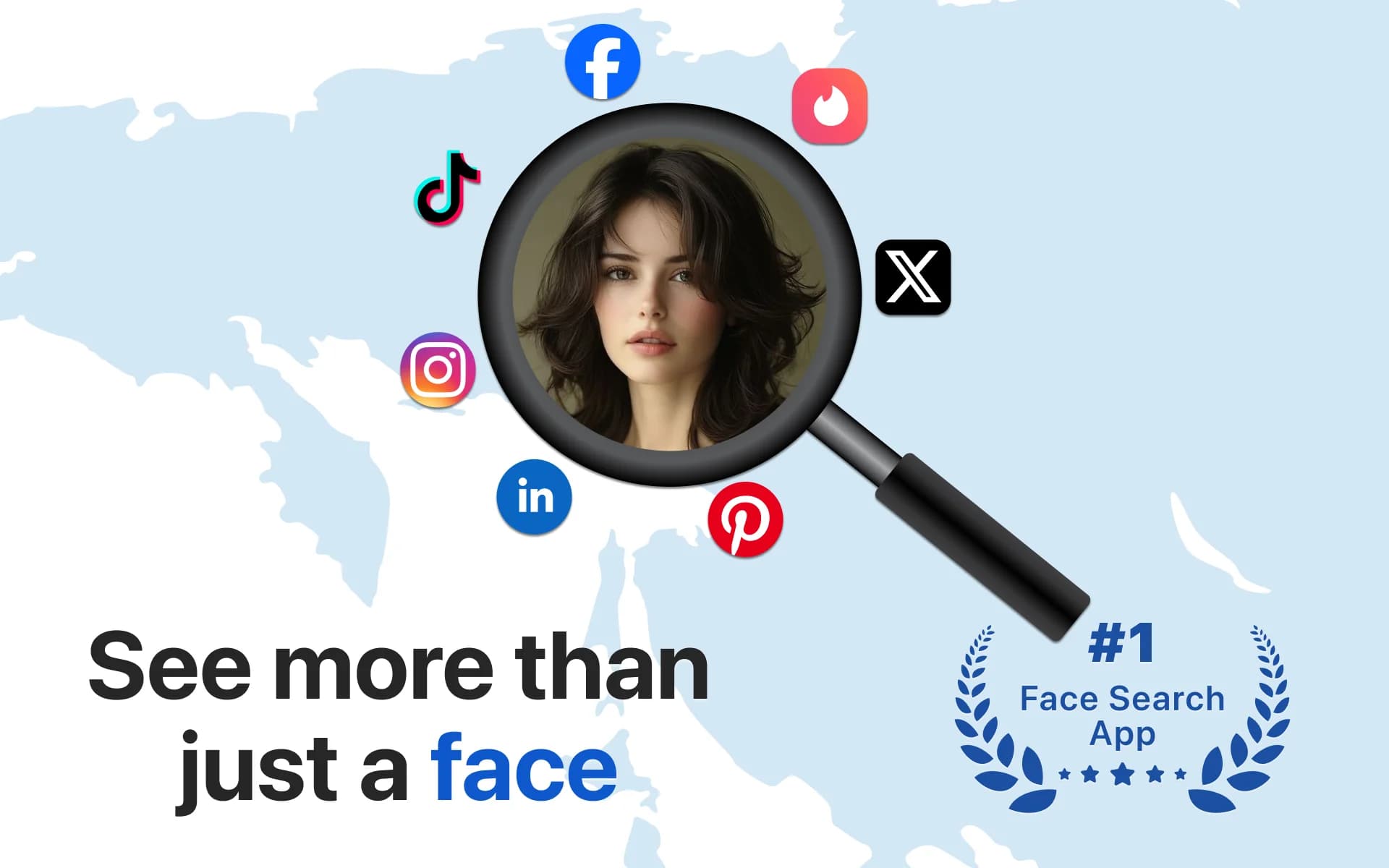
About this app
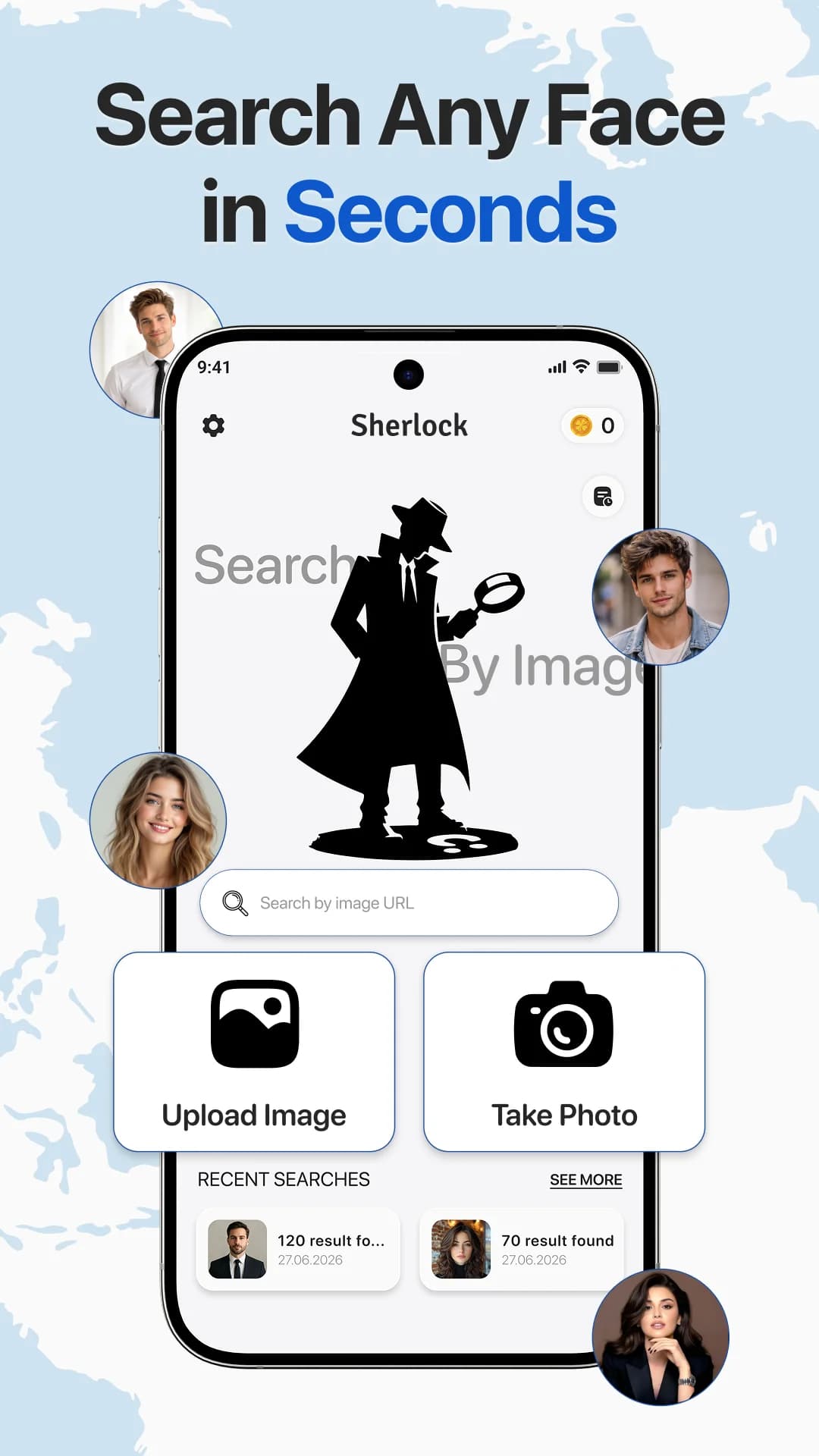
I've been testing Sherlock - AI Face Search for about a week now, and it's one of those apps that feels a bit like a double-edged sword in the best possible way. The core idea is simple: you upload a photo, it uses facial recognition to find visually similar faces and images across supported public web sources. For someone like me who's constantly checking if a profile photo is legitimate or trying to track down where an image originally appeared online, this is a genuinely useful tool. The app lets you upload from your gallery, take a new photo, or paste an image URL. You crop the face you want to search, and it runs its AI face search, returning matches ranked by score with direct source links. I really appreciate that it shows match scores for every result, so you can judge how reliable each hit is. The privacy angle is also handled well — search history stays stored locally on your device, and it doesn't permanently store your photos. That said, this isn't a magic bullet. The ap...
Key features
- 1AI face search and reverse image search from a single uploaded photo, camera capture, gallery file, or pasted image URL.
- 2Results ranked by match score with direct source links to publicly accessible pages, blogs, forums and social profiles.
- 3Search history stored locally on-device; the app states it does not permanently store uploaded photos or build personal profiles.
Target customer profile
Drawn from the product itself, not from a survey.
Demographic
Online daters and social media users
Pain points
Unsure if a profile photo is genuine or stolen from someone else
Primary needs
Verify a face or profile picture quickly before engaging
Demographic
Journalists and OSINT researchers
Pain points
Need to trace an image's public web origins or spot reused photos
Primary needs
Reverse image and face search with source links and ranked matches
Demographic
Everyday curious users
Pain points
Want to know where a photo appears online but lack technical tools
Primary needs
Simple upload, crop, and search with locally stored history
Scout Review
Written by AI from measured evidence, scored out of 100.
Sherlock is a competent, clearly-scoped face and reverse image search app for Android, and it's honest about what it is: the listing explicitly states it's a visual similarity tool, not an identity verification service, and warns against using it for employment, housing or credit decisions. That disclaimer is doing real work and it's the right call. The measured profile is uneven in the way real products are. Accessibility is strong at 98/100 on automated checks. Desktop performance is excellent at 95/100 while mobile sits at 49/100 with a 7.2s LCP. Security is a solid-but-incomplete 8/13 on headers, with a Data Safety declaration that says photos may be shared with third parties. Design is polished for the category. Usability is simple to start and hard to evaluate, because there's no free trial and no docs. Growth is a real niche with a real wedge, constrained by a per-search credit model competing against free alternatives.
Measure by measure
Usability
62Four-step flow is genuinely simple and the credit cost is disclosed in-app before purchase. But support is one Gmail address, there's no help center, no docs, and no free demo — you find out whether the search is any good only after spending a credit.
Design
68Judged on the app UI via Play screenshots, not a website. Dark, consistent upload-crop-results flow with match-score cards reads more polished than most indie face-search apps. Store icon and screenshots are coherent. Nothing distinctive, but nothing sloppy either.
Speed
46Lighthouse mobile 49/100 with a 7.2s LCP and 5.0s FCP — that's a slow first paint on the surface people actually arrive from. Desktop scores 95/100, so the backend is fine and the mobile bundle is the problem. CLS 0.078 and TBT 527ms are tolerable.
Security
608/13 on the header probe: HSTS, CSP, frame protection and Permissions-Policy are all in place. Missing Referrer-Policy, DMARC and secure cookies, and HTTPS enforcement wasn't detected. Play Data Safety admits photos may be shared with third parties — for a face-search app, that's the sentence that matters.
Accessibility
78Lighthouse accessibility 98/100, with only two failing audits: no main landmark and visible text labels lacking matching accessible names. No WCAG statement published, and the app is Android-only with no iOS listing in evidence. Strong automated result, thin documentation behind it.
Growth
58Real, specific problem — verifying a profile photo before you engage — with a concrete wedge: match scores plus direct source links and on-device history. But it's a credits-metered utility in a category where Google Lens is free, and nothing in the material explains why you'd pay per search instead.
Improvement areas
- Mobile performance: Lighthouse mobile 49/100 with a 7.2s LCP versus 95/100 on desktop — the bundle needs real weight reduction.
- No free trial, demo or sample search, so users must spend a credit before they can judge whether results are accurate.
- Security gaps: no DMARC, no Referrer-Policy, HTTPS enforcement not detected, and a Data Safety disclosure that photos may be shared with third parties.
Design & Usability
Judged on the app itself, since Sherlock ships through Google Play and the listing is marketing. The UI is dark, coherent and consistent across icon, screenshots and copy — an upload-crop-results flow with match-score cards and source links, which is more considered than most indie face-search apps manage. Usability is where it thins out. The four-step flow is genuinely simple and the credit cost is disclosed before purchase, which is honest. But there is no help center, no documentation, no free trial and no demo — support is a single Gmail address. For a tool whose entire value proposition is 'is this result trustworthy,' making users spend a credit to find out whether the results are any good is a real friction point. Simple to start, expensive to evaluate.
Speed & Security
Speed is a tale of two platforms. Lighthouse desktop scores 95/100, so the backend and rendering pipeline are healthy. Mobile scores 49/100 with a 7.2s LCP and 5.0s FCP — that is a slow first paint on the surface most users actually arrive from, and it's a bundle-weight problem, not an infrastructure one. CLS at 0.078 and TBT at 527ms are acceptable. Security lands at 8/13 on the header probe: HSTS, CSP, frame protection, X-Content-Type-Options, Permissions-Policy and SPF are all present, which is a solid baseline for an indie app. Missing are Referrer-Policy, DMARC and secure cookies, and HTTPS enforcement wasn't detected. The bigger question is the Play Data Safety declaration — photos and videos may be shared with third parties, and device IDs are collected. For a face-search tool, that's the disclosure users should read twice.
Accessibility & Growth
Accessibility is the strongest measured dimension: Lighthouse scores 98/100 with only two failing audits — a missing main landmark and visible text labels without matching accessible names. That's a genuinely good automated result. What's missing is everything the automated audit can't see: no WCAG conformance statement, no accessibility documentation, and an Android-only footprint with no iOS listing in the evidence. Growth is a judgement on the idea. The problem is real and specific — online daters and OSINT researchers wanting to know whether a photo is genuine or where it originally appeared — and the wedge is concrete: match scores, direct source links, and search history that stays on-device. That's a defensible niche. The limit is the model. Credits-per-search puts a meter in front of a verb that Google Lens performs for free, and nothing in the product's own material explains why a user would pay per query rather than tolerate a worse free result. Traction exists — 10K+ downloads, 4.1 stars, 988 reviews — but that's how far it's come, not how far it can go.
Conclusion
The honest read: Sherlock solves a problem people actually have, and it solves it in a way that's more transparent than most — match scores, source links, on-device history, and a disclaimer that doesn't oversell. The measured evidence backs the parts that work: 98/100 accessibility, 95/100 desktop performance, a clean header baseline. The parts that don't work are equally clear. Mobile loads in 7.2 seconds. There's no documentation, no trial, and no way to judge result quality before paying. And the Data Safety section says photos may go to third parties, which for a face-search app is the one line that deserves a plain-English explanation on the listing itself. None of this is fatal. All of it is fixable, and most of it is cheap to fix. Ship a free first search, write a help page, tighten the mobile bundle, and publish what actually happens to an uploaded photo. Do that and the 4.1 stars start looking like a floor instead of a ceiling.
Suggestions for improvement
- Offer one free search per day or a free trial credit — users currently can't judge result quality without paying first.
- Publish a plain-English data handling page explaining exactly what happens to an uploaded photo and who the 'third parties' in the Data Safety section are.
- Cut mobile bundle weight to close the 49 vs 95 Lighthouse gap; a 7.2s LCP on mobile is the single biggest fixable number here.
- Add a help center or FAQ beyond a Gmail address — document what 'supported public web sources' actually covers and what it doesn't.
Alternatives comparison
Named competitors, point by point. Nobody paid to appear here or to be left out.
 Sherlock - AI Face Search |  FYI.AI | Layla | Cardly AI: Sports Card Scanner | |
|---|---|---|---|---|
| Core function | AI face search and reverse image search from a photo or image URL, with ranked match scores and source links. | AI-powered face search and identity discovery scanning public sources for matches. | AI companion app with face-matching and social discovery features. | AI image recognition for scanning and identifying sports cards from photos. |
| Match scoring and source transparency | Every result shows a match score plus a direct link to the source page. | Returns identity matches from public sources; scoring detail not specified in listing. | Face matching oriented toward social discovery rather than scored source-linked results. | Returns item identification and card value data rather than match scores. |
| Pricing model | Credits per search, purchased via subscription or in-app purchase; pricing shown in-app before buying. | In-app purchases; specific credit or subscription structure not detailed in listing. | Freemium companion app with in-app purchases for premium features. | Free with in-app purchases for scanning and identification features. |
| Privacy and data handling | Search history stored locally; photos not permanently stored; Data Safety notes photos may be shared with third parties. | Scans public sources for identity discovery; data handling detail not specified in listing. | Companion app handling user photos and profile data; specifics not detailed in listing. | Processes photos of physical items rather than faces, so privacy exposure is lower. |
| Primary use case | Verifying whether a profile photo is genuine and tracing where an image appears online. | Identity discovery and face search across public sources. | Social discovery and AI companionship. | Collecting and valuing sports cards from photos. |
FYI.AI
An AI-powered face search and identity discovery app that scans public sources for matches.
Layla
An AI companion and face-matching app with social discovery features.
Cardly AI: Sports Card Scanner
Uses AI image recognition to scan and identify items from photos, similar visual search tech.
Comparing options? See Sherlock - AI Face Search alternatives, scored side by side
More Productivity apps
View all Productivity
Qamarero
92An all-in-one hospitality software for restaurants and ba...

The Stack Newsletter
92A weekly newsletter delivering curated tech jobs, intervi...

EmbedMyReviews
92White-label reputation management software for agencies s...

StoryPad
92Privacy-first open source journal app with a continuous t...

Puzzly – B2B Lead Generation & Sales Intelligence Platform
92Puzzly is an all-in-one B2B lead generation platform that...

Notion
92All-in-one AI workspace for docs, projects, and knowledge...

Vibe Coding Agent Skills
92A free, open-source platform offering 110 AI agent skills...

CC Switch
91Open-source desktop app for switching AI coding providers...

username.md
90One verified handle for your online identity, readable by...

What the GIF
89Frame-perfect video-to-GIF maker that runs entirely in yo...

AuditCloser
89White-label website audits that close deals for digital a...

NudgeWin
89Automated quote follow-up for trades and service businesses.


A platform dedicated to providing unbiased reviews of newly launched applications, analyzing everything from their features to their full potential.
info@scoutforge.net© 2026 Scoutforge. All rights reserved.
