Cycling through all six. Tap any point to stop.
Measured on six things
AI-powered meditation, sleep, and anxiety relief app.
Speed
46Lighthouse mobile 57/100 with a brutal 32.2s LCP — the hero content is effectively unusable on mobile. Desktop scores 83/100, so the problem is mobile-specific resource loading.
Screenshots
1 / 5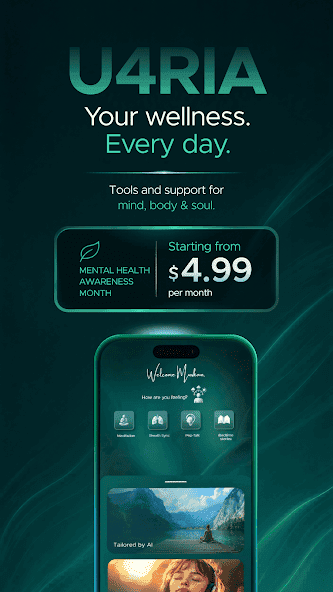
About this app
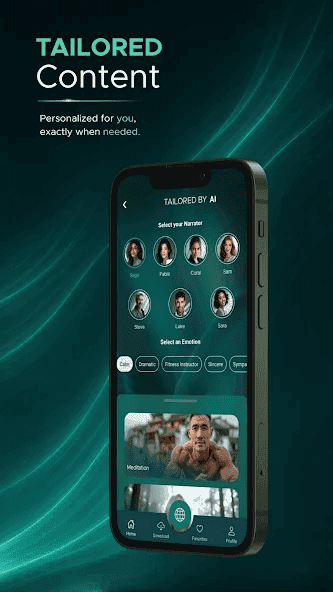
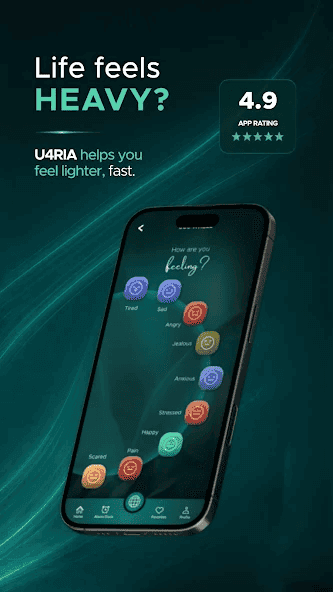
I stumbled onto U4RIA while looking for something that didn't feel like another typical meditation app, and honestly, it caught me off guard in a good way. It calls itself 'more than meditation,' and after spending time with it, I get why. Instead of just dumping a library of guided sessions on you, U4RIA asks a simple question: what do you need right now? From there, it routes you toward tools that actually fit the moment. The headline feature for me is the AI Tailoring engine. You pick a category pep talk, affirmation, or gratitude message choose a voice, set a time, drop in a keyword, and the app generates a custom audio clip on the spot. It genuinely feels like a pocket-sized motivational coach, though it's not perfect. Occasionally the AI output lands a little generic, and the voice selection, while decent, can't match the warmth of a real human narrator. My favorite feature has to be the SOS Wheel. When anxiety hits, the last thing you want is to scroll through menus. You se...
Key features
- 1SOS Wheel: mood-based instant emotional support tool that delivers a crafted message without menu navigation
- 2AI Tailoring: generates custom pep talks, affirmations, and gratitude messages based on voice, time, and keyword inputs
- 3Mood-first routing: homepage asks 'What do you need right now?' and routes to overwhelmed/sleep/energy paths
Target customer profile
Drawn from the product itself, not from a survey.
Demographic
Busy professionals (25-45)
Pain points
Chronic work stress, no time for lengthy practices
Primary needs
Quick, on-demand anxiety relief and resets
Demographic
Adults with sleep issues (30-60)
Pain points
Difficulty falling asleep, racing mind at night
Primary needs
Bedtime stories, sleep architecture, soundscapes
Demographic
Wellness-focused Gen Z & Millennials
Pain points
Overwhelm, emotional dysregulation, loneliness
Primary needs
AI personalization, community, mood-based support
Demographic
HR & workplace wellness leaders
Pain points
Employee burnout and low morale
Primary needs
Scalable B2B wellness toolkit for teams
Scout Review
Written by AI from measured evidence, scored out of 100.
U4RIA is a meditation and sleep app that actually tries something different: instead of dumping a content library on you, it asks what you need right now and routes you to the right tool. The SOS Wheel for instant anxiety relief and the AI Tailoring engine for custom pep talks are genuinely useful differentiators in a category dominated by Calm and Headspace's celebrity-narrated libraries. The app store screenshots show a polished, mood-first interface, and the pricing ($4.99–$11.99/mo) undercuts the major competitors. But the technical execution has real problems: a 32-second mobile LCP makes the app feel broken on phones, security headers are half-configured, and accessibility failures (unnamed buttons, poor contrast) undermine the inclusive wellness positioning. The growth story is promising but crowded — the B2B workplace wellness angle is the most defensible path forward, but it needs security certifications and better mobile performance to be credible to HR buyers. U4RIA has a real idea and a real wedge. It just needs to execute on the fundamentals before it can compete with the giants.
Measure by measure
Usability
62Mood-first entry ('What do you need right now?') and the SOS Wheel reduce time-to-value for anxious users. Pricing page is clear. But only 1 language and no visible onboarding docs limit broader usability.
Design
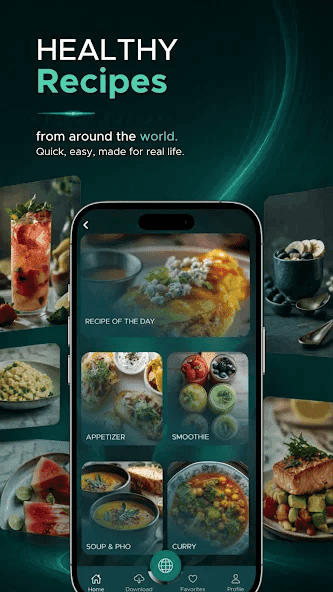
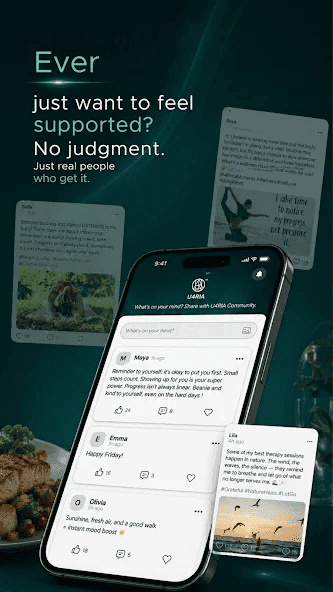
68Judging the app UI from store screenshots: 10 screenshots show a polished mood-based interface with the SOS Wheel and AI Tailoring as visual anchors. Website branding is consistent with Water/Air/Earth tier naming.
Speed
46Lighthouse mobile 57/100 with a brutal 32.2s LCP — the hero content is effectively unusable on mobile. Desktop scores 83/100, so the problem is mobile-specific resource loading.
Security
52HTTPS and HSTS are in place, SPF and DMARC configured. But 6/12 checklist points, no CSP, no frame protection, no X-Content-Type-Options. No SOC 2, ISO, or bug bounty published.
Accessibility
70Lighthouse 90/100 with three real failures: unnamed buttons, poor color contrast, and broken heading hierarchy. Only 1 language localization despite claiming 150+ countries. No a11y statement found.
Growth
58Real problem (on-demand anxiety relief), specific wedge (SOS Wheel + AI Tailoring), and a B2B angle. But it's crowded against Calm, Headspace, and Insight Timer with no clear moat beyond mood-routing.
Improvement areas
- Mobile performance: 32.2s LCP makes the app unusable on phones; optimize images and defer non-critical scripts
- Security posture: 6/12 headers, no CSP, no SOC 2 or bug bounty for an app handling mental health data
- Accessibility: unnamed buttons, poor contrast, broken heading hierarchy; only 1 language for 150+ countries
Design & Usability
U4RIA's design story is told through its app store screenshots, and they show a genuinely thoughtful mood-first interface. The SOS Wheel and AI Tailoring are visual anchors that differentiate it from the wall-of-content approach used by Calm and Headspace. The website carries the same branding with Water/Air/Earth tier naming, though that naming feels more like a yoga retreat than a pricing page. Usability is where the app makes its strongest case: asking 'What do you need right now?' instead of dumping a library on you is a real UX decision that respects anxious users' cognitive load. The SOS Wheel's no-menu-navigation promise is the kind of feature that only comes from someone who's actually had a panic attack. But the pricing page gates Breathwork behind the $7.99 tier, which undercuts the 'instant relief' positioning. And with only one language localization, the 150+ countries claim feels aspirational rather than operational.
Speed & Security
Speed is U4RIA's most visible technical problem. A mobile Lighthouse score of 57/100 with a 32.2-second LCP means the hero content is effectively unusable on phones — the exact device most people reach for during an anxiety moment. Desktop scores a respectable 83/100, which tells us this is a mobile resource-loading problem, not a fundamental architecture issue. The fix is likely image optimization and deferring non-critical scripts, but right now the app's core promise (instant relief) is undermined by the delivery mechanism. Security sits in the middle: HTTPS and HSTS are properly configured, SPF and DMARC are in place, and payments route through Apple's system rather than storing card details. But the site scores 6/12 on security headers, missing CSP, frame protection, and X-Content-Type-Options. For an app handling mental health data — arguably more sensitive than financial data to some users — there's no published SOC 2, ISO certification, or bug bounty program. That's not unusual for a product at this stage, but it's a gap worth closing before pursuing the B2B workplace wellness market they're clearly targeting.
Accessibility & Growth
Accessibility scores 90/100 on Lighthouse's automated audit, which sounds strong until you read the failures: buttons without accessible names, insufficient color contrast, and non-sequential heading order. These are the kind of issues that make the app unusable for screen reader users and difficult for people with low vision — a meaningful gap for a wellness app that should be accessible to everyone. The single-language localization is also a real limitation given the 150+ countries claim. Growth potential is genuinely interesting but crowded. The problem U4RIA names — on-demand anxiety relief for people who don't have time for a 20-minute meditation — is real and underserved by the current leaders. Calm and Headspace are content libraries; Insight Timer is a teacher marketplace; BetterSleep is sleep-specific. U4RIA's mood-routing and AI Tailoring are a different wedge. But the moat is thin: AI-generated pep talks are easy to copy, and the SOS Wheel is a feature, not a platform. The B2B workplace wellness angle is the most promising path — HR buyers care about scalable tools, and U4RIA's toolkit approach fits that need better than consumer-focused competitors. The 150K downloads and 5/5 rating (from just 4 ratings) suggest early traction, but the app store presence is still thin.
Conclusion
If you're a busy professional who's tried Calm and found it too passive, or someone who needs anxiety relief in the moment rather than a 30-minute guided session, U4RIA is worth a download. The SOS Wheel alone justifies the free tier. But if you're on mobile — which is most of us — be prepared for slow load times that undercut the 'instant relief' promise. The app is clearly built by people who understand the problem; the question is whether they can fix the technical gaps before the market moves on. For now, it's a promising indie alternative with a genuinely differentiated approach, held back by execution details that matter more than they should.
Suggestions for improvement
- Fix the mobile LCP crisis: 32.2s is unusable. Optimize hero images, defer non-critical JS, and consider a CDN for static assets.
- Add the missing security headers (CSP, X-Content-Type-Options, Referrer-Policy) and publish a security page with your data handling practices.
- Fix accessibility failures: add accessible names to buttons, improve color contrast, and correct heading hierarchy. Consider a WCAG 2.1 AA audit.
- Expand localization beyond 1 language if you're claiming 150+ countries. Start with Spanish, French, and German for maximum reach.
Alternatives comparison
Named competitors, point by point. Nobody paid to appear here or to be left out.
 U4RIA |  Calm |  Headspace |  Insight Timer |  BetterSleep | |
|---|---|---|---|---|---|
| Pricing (monthly) | $4.99–$11.99/mo across Water/Air/Earth tiers | $14.99/mo or $69.99/yr | $12.99/mo or $69.99/yr | Free core; $9.99/mo for premium | $9.99/mo or $59.99/yr |
| AI personalization | AI Tailoring generates custom pep talks, affirmations, gratitude messages | Limited; mostly curated content library | AI-powered recommendations, not generation | None; teacher-led content | None; soundscape customization only |
| Instant anxiety relief tool | SOS Wheel: mood-based instant message delivery | Emergency calm sessions, but requires navigation | SOS sessions in library, not instant-access | Timer-based; no instant relief feature | Sleep-focused; no anxiety SOS tool |
| B2B workplace wellness | B2B plans listed; HR/workplace wellness targeting | Calm Business; established enterprise offering | Headspace for Work; mature B2B program | Limited B2B; primarily consumer | No significant B2B offering |
| Sleep content | Bedtime stories, soundscapes, sleep architecture programs | Sleep Stories with celebrity narrators; extensive library | Sleepcasts and wind-down exercises | Sleep meditations and music; large library | Core focus; customizable sounds, music, guided relaxation |
Calm
Popular meditation and sleep app with celebrity narrations and a large content library.
Headspace
Science-backed meditation and mindfulness app known for its structured courses.
Insight Timer
Free meditation app with the world's largest library of guided sessions from teachers.
BetterSleep
Sleep-focused app with customizable sounds, music, and guided relaxation.
Comparing options? See U4RIA alternatives, scored side by side
More Health & Wellness apps
View all Health & Wellness
StoryPad
92Privacy-first open source journal app with a continuous t...

Pushup RPG: Fitness Quest
90Pushup RPG is a camera-based push-up counter and fitness RPG for home workouts. Real push-ups and squats become attacks as you defeat 48 foes across 8 biomes, earn XP and loot, join guilds, and battle in live 40-second duels. Free on iOS and Android.

Gryper
89Workout tracker with muscle heatmaps and volume landmarks

Snapkin: Photo Calorie Counter
88Snapkin is a calorie tracker you use by photographing your plate.

Innermost
87An AI-powered emotional support app that acts as a person...

Cat Years to Human Years
86Free cat age calculator converting cat years to human years.

Mantra Meditation Timer
85A minimalist, distraction-free meditation timer for mantr...

TDEE Calculator
84Free TDEE calculator that estimates maintenance calories, weight loss targets, muscle gain calories, and macro recommendations based on your body stats and activity level.

FitLifeBud
84AI meal plans for your week, with one aisle-sorted shopping list

WellWired
84AI explained simply for older adults, with safety lessons...

TheBean.ai
84Adaptive AI personal trainer that evolves with your progr...

SayLift
84Voice workout log and calorie counter for iPhone


A platform dedicated to providing unbiased reviews of newly launched applications, analyzing everything from their features to their full potential.
info@scoutforge.net© 2026 Scoutforge. All rights reserved.
