

A platform dedicated to providing unbiased reviews of newly launched applications, analyzing everything from their features to their full potential.
info@scoutforge.net© 2026 Scoutforge. All rights reserved.
A platform dedicated to providing unbiased reviews of newly launched applications, analyzing everything from their features to their full potential.
info@scoutforge.net© 2026 Scoutforge. All rights reserved.
A platform dedicated to providing unbiased reviews of newly launched applications, analyzing everything from their features to their full potential.
info@scoutforge.net© 2026 Scoutforge. All rights reserved.
Cycling through all six. Tap any point to stop.
Measured on six things
Weekly hunt for indie projects and side products
Basic semantic structure with headings and lists helps screen readers. Contrast seems adequate from text-heavy design. Lacks evidence of ARIA labels, proper alt texts on any images (none prominent), or advanced keyboard navigation cues. Timer may cause issues.
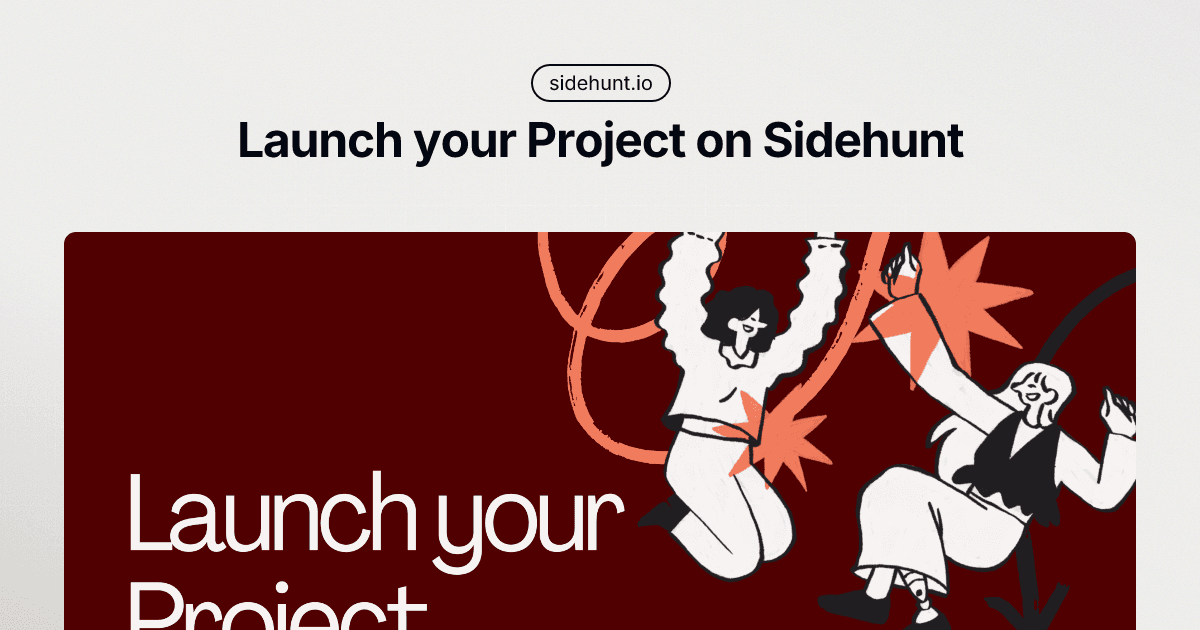
Sidehunt is a vibrant weekly platform where indie builders and makers can submit their side projects and products for a community-driven hunt. Each week, new projects are featured, and the top-voted ones earn badges and dofollow backlinks. It's a fantastic way to get early traction, honest feedback, and visibility among early adopters. The site is clean, focused, and feels like a more intimate, maker-focused alternative to larger launch platforms. I especially love the weekly competition aspect—it gamifies the launch process and keeps the community engaged.
Drawn from the product itself, not from a survey.
Demographic
Indie founders and solo developers
Pain points
Struggle to get initial traction and feedback for new side projects
Primary needs
A platform to showcase their work, gain votes, and connect with early adopters
Demographic
Small startup teams (2-10 people)
Pain points
Limited marketing budget and difficulty standing out among bigger launches
Primary needs
Cost-effective launch channels that target tech-savvy users and provide SEO benefits
Demographic
Product enthusiasts and early adopters
Pain points
Hard to find genuinely new and interesting indie products before they become mainstream
Primary needs
A curated, weekly source of fresh tools and apps to discover and try
Written by AI from measured evidence, scored out of 100.
Sidehunt is a charming, intimate weekly voting platform tailored for indie side projects. Its core loop—submit, compete for votes, earn badges and backlinks—is well-executed for makers seeking targeted feedback and SEO juice without the noise of bigger sites. Strengths include speed, simplicity, and genuine focus on solo builders. Weaknesses are the very small user base (167+), low engagement numbers, basic design, and missing community features. It's a solid 68/100: promising for early traction but not yet a must-use platform. Great concept that needs more users and polish to fulfill its potential as the 'maker-focused Product Hunt'.
Straightforward: browse current hunt, click to visit projects, submit button is prominent. Voting and discovery are simple. However, limited navigation, no prominent search or categories, and past hunts feel buried. Good for quick scans but lacks depth.
Clean minimalist design with simple headings, project lists, countdown timer, and clear vote counts. Uses a straightforward layout focused on this week's submissions. Not particularly vibrant despite the description—feels functional rather than polished or modern.
Static-heavy page with simple lists and a countdown loads quickly. No heavy images, animations, or complex scripts apparent. Performs well even on slower connections; past hunts load without issue.
Uses HTTPS. No obvious security red flags on public pages. However, very little information on data privacy, account security, or moderation for submissions/votes. Small user base reduces attack surface but also transparency.
Basic semantic structure with headings and lists helps screen readers. Contrast seems adequate from text-heavy design. Lacks evidence of ARIA labels, proper alt texts on any images (none prominent), or advanced keyboard navigation cues. Timer may cause issues.
Trusted by 167+ indie builders (very small community). Projects get low vote counts (mostly 1-6 this week, max ~11 recently). New platform launched around April 2026. Offers dofollow backlinks and badges as incentives, which helps SEO traction. Limited marketing signals and low engagement indicate slow growth.
Sidehunt delivers a no-frills, focused experience for indie makers to submit side projects into a weekly voting competition. The clean, minimalist design keeps the focus on current hunts, with prominent 'Submit' calls-to-action and easy project browsing. Usability is solid for discovery—users can quickly see vote counts and click through. However, it feels barebones: navigation is minimal, there's little community interaction beyond voting, and it lacks the polish, categories, or discussion features of larger platforms. It successfully positions itself as a more intimate alternative but needs more visual energy and user engagement tools to stand out. The gamified weekly reset is a genuine strength for keeping things fresh.
Performance is one of Sidehunt's quiet wins—lightweight pages with simple lists and timers load fast without unnecessary animations or trackers. This makes it feel responsive even during peak voting. Security is baseline: HTTPS is present, but there's almost zero transparency around data handling, vote integrity, or user account protection. For a voting platform, this is a missed opportunity. The small scale reduces risk, yet bigger competitors publish clear policies. Overall, reliable for casual use but not enterprise-grade or particularly trustworthy on paper.
Accessibility lags with a text-heavy, list-based interface that doesn't appear optimized for screen readers, dynamic timers, or robust keyboard support. Indie audiences include diverse users who would benefit from higher contrast options and better semantic markup. Growth remains modest with just 167 trusted users and low per-project votes (typically 1-6). The promise of badges and dofollow backlinks is smart for SEO-minded founders, providing real value over pure visibility platforms. Still, the tiny community limits feedback quality and early adopter reach compared to more established alternatives. It has potential as a niche player but needs aggressive community building.
Conclusion
If you're a solo dev tired of getting lost in Product Hunt's flood, Sidehunt offers a calmer pond with real incentives. Submit your next project, but don't expect massive traffic yet. The weekly hunt format is addictive—now it just needs a bigger audience to make those votes meaningful.
Named competitors, point by point. Nobody paid to appear here or to be left out.
 Sidehunt Sidehunt |  Product Hunt Product Hunt |  BetaList BetaList | Hacker News Show | |
|---|---|---|---|---|
| Platform Focus | Indie side projects & weekly hunts | Broad product launches, very crowded | Beta startups directory, no weekly format | HN community showcase, unstructured |
| Voting & Competition | Structured weekly vote-based hunt with rankings | Upvote-driven daily/featured rankings | No competitive voting system | Comment/upvote but no dedicated hunt |
| Rewards for Top Projects | Badges + dofollow backlinks | Visibility, featured status, no guaranteed links | Directory listing only | Discussion traction, no formal rewards |
| Community Size & Noise | Small & intimate (~167 users), low noise | Huge but crowded and noisy | Moderate, startup-focused | Large technical community, high signal |
Product Hunt
The largest product launch platform, but more crowded and less focused on indie/side projects.
BetaList
A directory for beta startups, but lacks the weekly competitive hunt format.
Hacker News Show
A community-driven showcase for projects, but less structured and no voting system like Sidehunt.
Comparing options? See Sidehunt alternatives, scored side by side
What the review was written against. A verdict with no sources is an opinion.

AI-powered spatial hierarchy for Jira backlogs, read-only...

Turn meetings into live web apps by talking.

A specialized platform for agile teams to conduct measurable retrospectives and structured one-on-one meetings, enhancing team collaboration and continuous improvement.

A research platform that identifies real-world problems from online communities and provides AI-generated product solutions for entrepreneurs.

An AI-powered project management platform that cuts project time in half with automation and real-time analytics for teams.

MarsX is an ambitious development platform that bridges visual no-code building with traditional programming through AI, MicroApps, and a full IDE.

A streamlined tool for Agile teams to estimate tasks collaboratively with real-time features and integrations.

AI teammate that turns Jira tickets into merged PRs, auto...

Curated shadcn/ui components & blocks for React, Vue, and...

AI UI design canvas for vibe design – describe, iterate, ...

Open source AI visibility tracking and optimization tool.

A community platform for makers to launch products, gather real-time feedback, and engage with early adopters to refine innovations.
A platform dedicated to providing unbiased reviews of newly launched applications, analyzing everything from their features to their full potential.
info@scoutforge.net© 2026 Scoutforge. All rights reserved.