Cycling through all six. Tap any point to stop.
Measured on six things
Free open-source control panel for a self-hosted CDN
Design
58Restrained infra-appropriate palette and a tidy 4-step install flow, but half the bento tiles render as empty white boxes and the product screenshot is too small to read.
Screenshots
1 / 1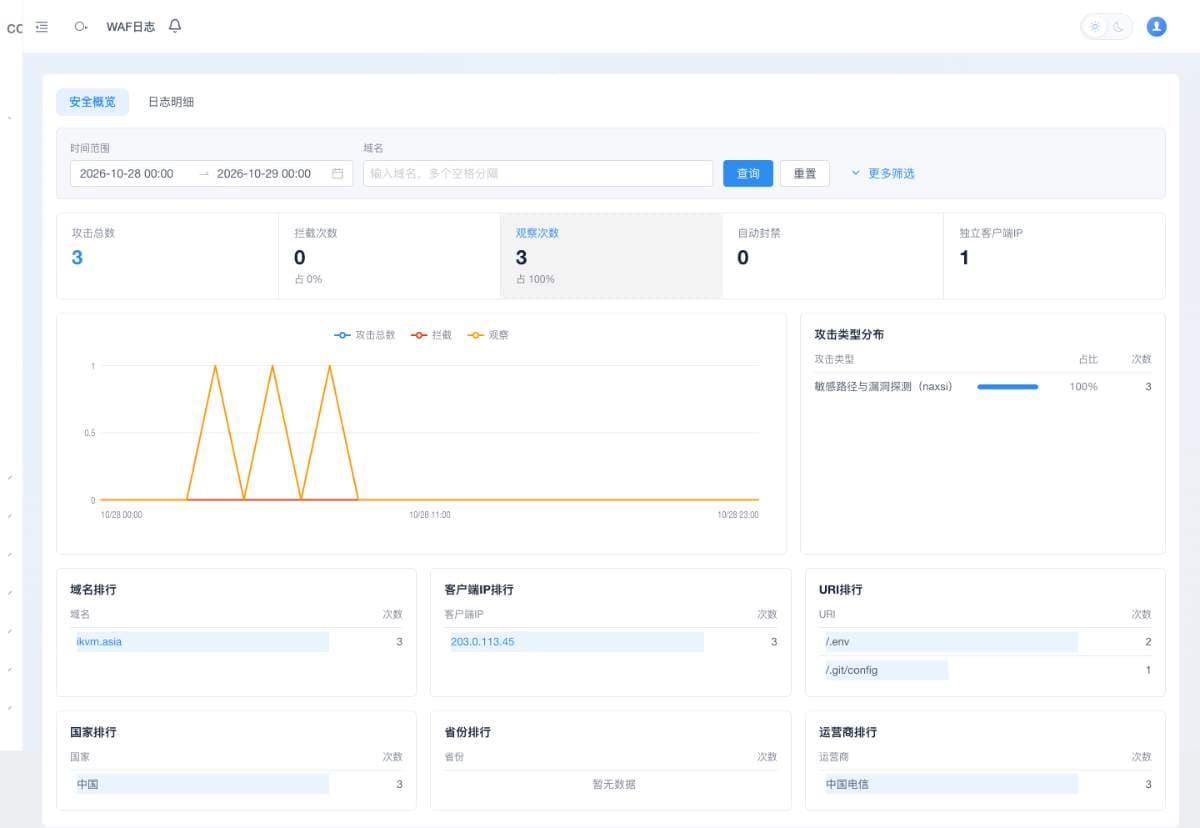
About this app
CDNCA Community Edition is an AGPL-3.0 control panel for operating a CDN on your own Linux infrastructure. It brings edge-node management, reverse proxying, caching, TLS certificate management, WAF/CC policies and monitoring into a web interface available in Simplified Chinese, Traditional Chinese and English. The CE control plane is currently free and requires no activation. Operators provide and pay for their own servers, IP addresses, bandwidth and operations. Some marketplace resources are paid separately. Plus commercial operations, multi-tenant billing and multi-CDN aggregation have a separate scope. Website: https://www.cdnca.com/ Source: https://github.com/CDNCA/cdnca Installation: https://www.cdnca.com/install/ Edition comparison: https://www.cdnca.com/pricing/ Submitted on behalf of the project. AI assistance was used in development and in preparing this listing.
Key features
- 1Self-hosted AGPL-3.0 CDN control panel for your own Linux infrastructure.
- 2Edge node management, reverse proxy (HTTP/HTTPS + TCP/UDP), caching, ACME TLS.
- 3WAF/CC protection, four-layer rules, kernel-level blocking (XDP/nftables).
- 4Node marketplace and plugin marketplace for buying/selling capacity and add-ons.
- 5Multi-CDN aggregation with Cloudflare, CloudFront, EdgeOne, Aliyun ESA (Plus).
- 6Trilingual UI: Simplified Chinese, Traditional Chinese, English.
Target customer profile
Drawn from the product itself, not from a survey.
Demographic
DevOps engineers and system administrators
Pain points
Managing reverse-proxy nodes, cache policies, TLS certificates and security settings across their own servers.
Primary needs
A central web control panel for their own CDN infrastructure, with visibility into node status and traffic.
Demographic
Website operators with their own Linux servers
Pain points
Coordinating cache and certificate settings across multiple self-operated nodes.
Primary needs
A web interface for edge nodes, site settings and monitoring.
Demographic
Teams evaluating self-hosted infrastructure
Pain points
Understanding which parts are included in free software and which infrastructure costs remain.
Primary needs
An inspectable AGPL source repository and clear installation and edition documentation.
Scout Review
Written by AI from measured evidence, scored out of 100.
CDNCA Community Edition is an AGPL-3.0 control panel for running your own CDN on your own Linux servers — edge nodes, reverse proxy, caching, TLS, WAF/CC, monitoring, all in a trilingual web UI. The docs are unusually thorough and the site is genuinely fast (Lighthouse 99/100). The marketing page is the weak link: half the feature tiles are empty white boxes, the product screenshot is unreadable, and body copy is tiny and low-contrast. Security headers are disciplined (11/12). It's a competent, clearly-scoped self-hosted tool with a real differentiator in the node and plugin marketplaces.
Measure by measure
Usability
68Docs are genuinely deep and role-organized, install flow is clear, FAQ answers real operational questions. English is buried behind a tiny 'EN' toggle though.
Design
58Restrained infra-appropriate palette and a tidy 4-step install flow, but half the bento tiles render as empty white boxes and the product screenshot is too small to read.
Speed
88Lighthouse 99/100 mobile and desktop, LCP 1.8s, CLS 0, TBT 0ms. Genuinely fast static site with no measurable lag.
Security
7611/12 security headers (only Permissions-Policy missing), HSTS, CSP, SPF and DMARC all present. AGPL source is inspectable. No SOC 2/ISO claims, which is normal for this stage.
Accessibility
78Lighthouse a11y 100/100, trilingual (zh-CN, zh-TW, EN). No published WCAG statement, and the tiny low-contrast body copy on the marketing page undercuts the automated score.
Growth
62Real problem (self-hosted CDN ops), specific audience (DevOps with own Linux boxes), and a genuine wedge: node + plugin marketplaces plus multi-CDN aggregation in one panel.
Improvement areas
- Empty bento feature tiles make the marketing page look unfinished.
- Product screenshot is too small to read; the panel is the strongest proof point.
- Body copy is small and low-contrast, hurting readability on the marketing page.
- Missing Permissions-Policy header; no published WCAG or security compliance statement.
Design & Usability
The design is competent but visibly unfinished: a restrained white-and-blue palette and a clear 4-step install flow (装主控 → 进管理后台 → 接入节点 → 开始加速) show someone thought about the story. Then half the bento feature tiles — 集群, 多租户, IPv6, 智能 DNS, 可视化, API — render as empty white boxes, and the one product screenshot is scaled so small it's unreadable. Usability is the stronger half: the docs are genuinely deep, organized by role (主控管理员, 网站用户, 节点供货商, 节点订阅方) and by task, with a Ctrl+K search, and the FAQ answers real operational questions. The English toggle being a tiny 'EN' in the corner is the main friction for non-Chinese visitors.
Speed & Security
Speed is the standout: Lighthouse 99/100 on both mobile and desktop, LCP 1.8s, CLS 0, TBT 0ms — a genuinely fast static site with no measurable lag. Security is solid for the stage: 11/12 security headers with only Permissions-Policy missing, HSTS, CSP, frame protection, SPF and DMARC all present, and the AGPL source is inspectable on GitHub. There's no SOC 2 or ISO claim, which is normal for a self-hosted AGPL project, but the header discipline shows someone cares about the basics.
Accessibility & Growth
Accessibility scores 100/100 on Lighthouse's automated axe-core checks and the site ships in Simplified Chinese, Traditional Chinese and English — real multilingual coverage. The catch is that the marketing page's own body copy is small and low-contrast, which undercuts the automated score, and there's no published WCAG statement. Growth is a judgement on the idea: self-hosted CDN control for DevOps teams who already run Linux infra is a real, specific problem, and the node marketplace plus plugin marketplace plus multi-CDN aggregation (Cloudflare, CloudFront, EdgeOne, ESA) is a genuine wedge against Cloudflare's managed model. The limit is that the audience is narrow and the marketplace only works if suppliers show up.
Conclusion
If you're a DevOps engineer who already runs Linux boxes and wants a single panel to manage CDN nodes, cache, certs and WAF across them, this is worth an install — the docs will get you there and the AGPL source is inspectable. If you want a managed global network with zero ops, this is not that, and it says so. The immediate wins are on the marketing side: fill in the empty bento tiles, enlarge the product screenshot, and bump the body copy size and contrast. The product underneath looks more finished than the page selling it.
Suggestions for improvement
- Fill in or remove the empty bento tiles (集群, 多租户, IPv6, 智能 DNS, 可视化, API) — they read as broken.
- Enlarge the 管理面板 product screenshot so the UI is actually legible; it's the strongest proof point.
- Increase body copy size and contrast in the 三件事 columns; 12px grey Chinese text is hard to scan.
- Add a Permissions-Policy header to complete the 12/12 security header set.
Alternatives comparison
Named competitors, point by point. Nobody paid to appear here or to be left out.
 CDNCA Community Edition |  Cloudflare | |
|---|---|---|
| Deployment model | Self-hosted control panel; you provide servers, IPs, bandwidth | Fully managed global CDN network |
| Pricing | CE control plane free (AGPL-3.0); you pay for infra; some marketplace items paid | Free tier plus paid Pro/Business/Enterprise plans |
| Source availability | AGPL-3.0, source on GitHub | Proprietary, closed source |
| WAF / DDoS protection | Rule-engine WAF, CC protection, four-layer rules, kernel blocking (XDP/nftables) | Managed WAF, DDoS mitigation, bot management |
| Multi-CDN aggregation | Plus: aggregate Cloudflare, CloudFront, EdgeOne, Aliyun ESA with own nodes | Single-provider network; no native multi-CDN aggregation |
| Operational burden | You run and maintain the control plane and nodes | Vendor runs the network; you configure |
Comparing options? See CDNCA Community Edition alternatives, scored side by side
More Development & Engineering apps
View all Development & Engineering
Vibe Coding Agent Skills
92A free, open-source platform offering 110 AI agent skills...

CreateMyCoin
92A no-code Solana token creator that deploys SPL tokens in...

CC Switch
91Open-source desktop app for switching AI coding providers...

TaxID
90Fast EU VAT validation API for developers, covering 27 EU...

DemoVexa
90Turn your code into professional product demo videos with AI-generated scripts, animated UI, and natural voiceovers.

FontPlop
89Browser-based font viewer & tester for TTF, OTF, WOFF, WO...

Webfetch
89Web scraping API that turns any URL into HTML, text, Mark...

deed.page
89Permanent web hosting for AI agents, no human step

BeartIMAGE
88BeartIMAGE is a free, web-based image processing platform engineered for fast, bulk photo editing and conversion directly in your browser.

Claw Messenger
88Claw Messenger is an iMessage API service that gives AI a...

DataHabibi
88AI-powered Dubai real estate data platform with 12M+ DLD ...

Cachely
88Managed remote cache for monorepos to slash CI time.


A platform dedicated to providing unbiased reviews of newly launched applications, analyzing everything from their features to their full potential.
info@scoutforge.net© 2026 Scoutforge. All rights reserved.
