Cycling through all six. Tap any point to stop.
Measured on six things
Customer service infrastructure to grow your business.
Growth
30Brand-new (June 2026 launch), minimal social proof (358 LinkedIn followers), zero third-party reviews or GitHub activity.
Screenshots
1 / 3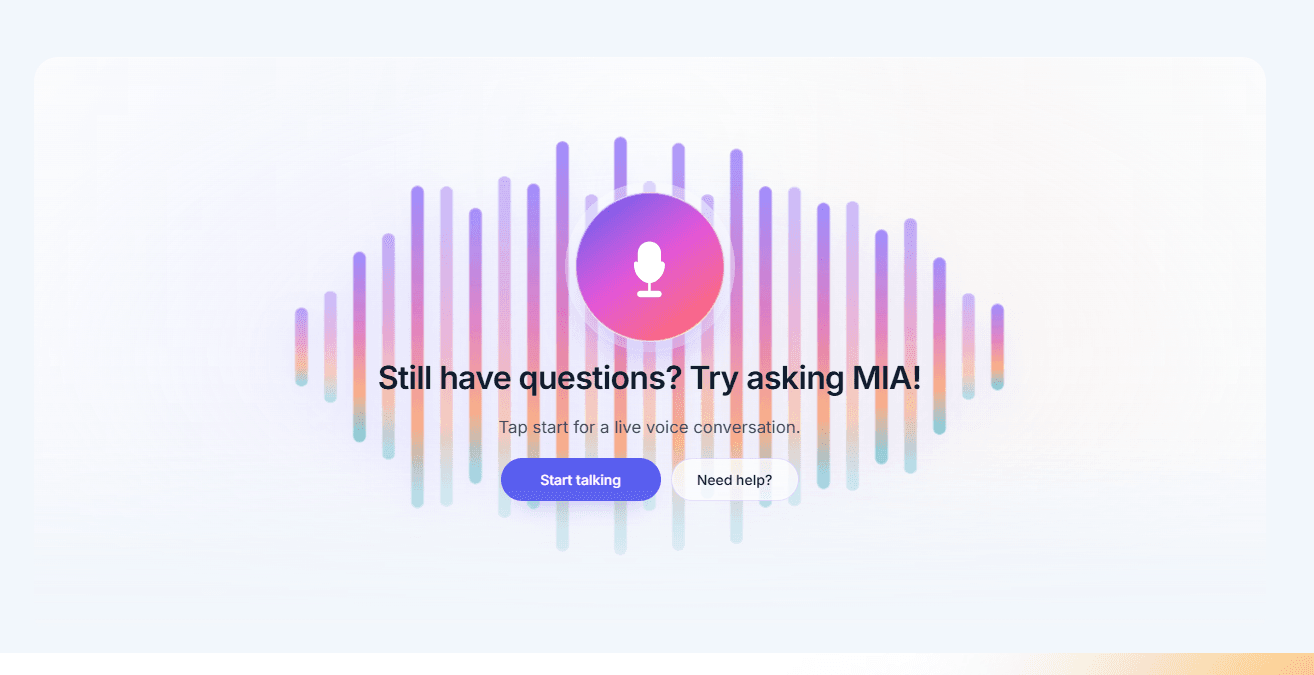
About this app
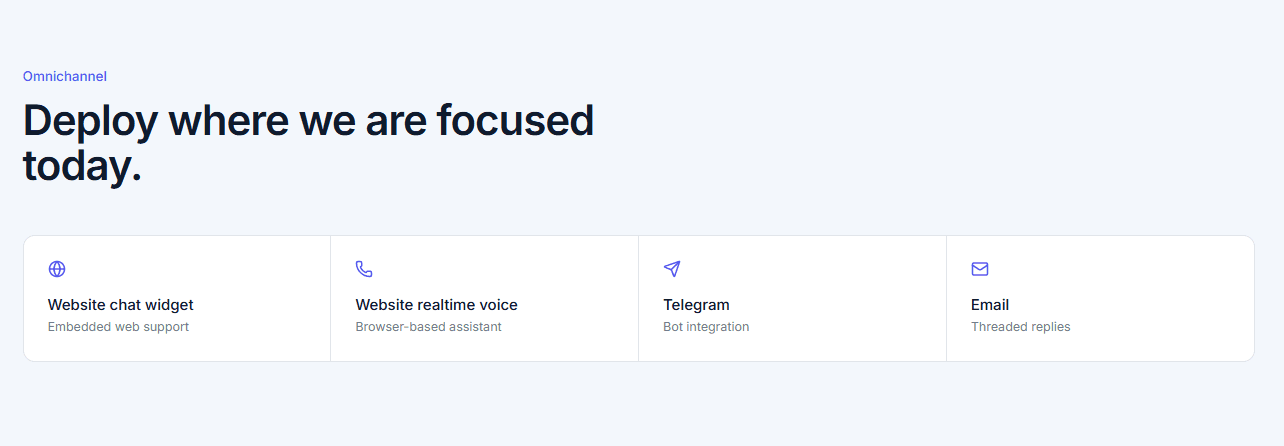
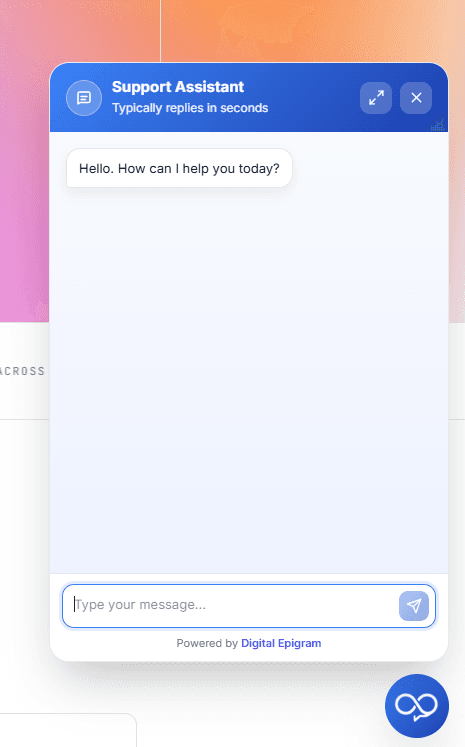
Digital Epigram is an AI-first customer service platform that lets you train an AI agent on your business data—support docs, help centers, PDFs, transcripts—so it can handle repetitive tickets, update orders, process refunds, and answer questions in 95+ languages. It supports web chat, realtime voice, email, and Telegram from a single inbox. The agent can connect to your existing tools (Shopify, DHL, REST APIs) to take actions like order lookups and shipment redirections. Workflows let you simulate and tune the agent's behavior. For human handoffs, the inbox surfaces full context. Measuring 60% self-resolution, 3x faster first response, and 24/7 coverage, it's built for support leaders, CX ops teams, founders, and engineers scaling without hiring an army.
Key features
- 1Train AI on .txt/.md files with automatic embedding and indexing
- 2Connect REST APIs and pre-built tools (Shopify, DHL) for real actions
- 3Unified inbox across web chat, realtime voice, email, and Telegram
Target customer profile
Drawn from the product itself, not from a survey.
Demographic
Support leaders in high-volume ecommerce, SaaS, fintech, or logistics orgs
Pain points
High ticket volume, volatile CSAT, difficulty scaling without headcount
Primary needs
Cut backlog, automate routine tickets, measure performance, maintain quality
Demographic
CX and operations teams at growing companies
Pain points
Inconsistent replies across agents, surfacing recurring issues slowly
Primary needs
Standardize responses, get automated insights, reduce manual QA
Demographic
Founders of early-stage startups
Pain points
No support team yet, need 24/7 coverage without hiring
Primary needs
Ship AI support fast, stay lean, focus on product
Demographic
Engineering teams building customer-facing workflows
Pain points
Building custom chatbots from scratch is time-consuming and fragile
Primary needs
Wire APIs quickly as tools, ship reliable automations, own the stack
Scout Review
Written by AI from measured evidence, scored out of 100.
Digital Epigram is a promising AI-first support platform with strong conceptual focus on autonomous agents that can act via tools, but it remains an unproven early-stage entrant. Its unified omnichannel approach and knowledge-grounded responses differentiate it from heavier ticketing systems, yet the lack of pricing transparency, trials, audits, and external reviews makes adoption a leap of faith. Best suited for founders or small teams willing to book a demo and iterate quickly.
Measure by measure
Usability
60Detailed 4-step workflow and file-upload UI shown, but no self-serve trial or public onboarding flow; demo-only access.
Design
76Clean, modern landing with polished demo screenshots and consistent branding across homepage and product pages.
Speed
53No benchmarks or tech-stack hints; marketing claims 3× faster responses but site itself offers no verifiable speed data.
Security
46Basic encryption-in-transit and audit logs mentioned; no third-party audits, SOC 2, or compliance badges found.
Accessibility
37No a11y statements, WCAG claims, or contrast/keyboard details; 95+ language support is the only positive signal.
Growth
30Brand-new (June 2026 launch), minimal social proof (358 LinkedIn followers), zero third-party reviews or GitHub activity.
Improvement areas
- No public pricing or self-serve trial visible
- Missing third-party security audits and compliance certifications
- Zero independent customer reviews or case studies
Design & Usability
Digital Epigram presents a sleek, modern interface with clear demo screenshots of its unified inbox and agent workflows. The product page breaks down capabilities into digestible cards and a logical four-step process, making the value proposition easy to grasp visually. However, usability is hampered by the absence of a public free trial or self-serve signup—everything funnels through a demo request, which slows down evaluation for busy support teams. The knowledge upload flow looks intuitive with token counts and file previews, and tool integrations are positioned as quick REST API wiring, but without hands-on access these remain promises rather than proven experiences.
Speed & Security
Speed claims rest entirely on marketing copy (3× faster first response) with no independent benchmarks or technical details about the underlying stack. The site itself loads cleanly, suggesting decent optimization, but realtime voice and multi-channel performance remain unverified. Security is similarly thin: the product page mentions encryption in transit and audit logs, yet there are no SOC 2 reports, penetration test summaries, or compliance certifications. For a platform handling customer data and tool actions like refunds, this basic foundation is table stakes but far from reassuring for regulated industries.
Accessibility & Growth
Accessibility receives almost no attention—no WCAG mentions, alt-text practices, or keyboard navigation details appear on the site. The 95+ language support for end customers is a genuine strength for global teams, but the dashboard and admin experience lack any documented a11y features. Growth metrics paint a picture of an extremely early-stage product: launched in June 2026, modest LinkedIn following, zero presence on review platforms, and no open-source footprint. While the polished site and founder activity on social channels show promise, the complete absence of independent validation or community signals limits credibility compared with mature alternatives.
Conclusion
If you need 24/7 coverage without headcount and are comfortable starting with a demo, Digital Epigram could accelerate your support automation. Just temper expectations around enterprise-grade security and proven scale until more signals emerge.
Suggestions for improvement
- Publish transparent pricing tiers and a self-serve trial to reduce friction.
- Add SOC 2 or equivalent audit documentation for trust-building.
- Create public case studies with measurable before/after metrics.
- Implement and document basic accessibility features on the dashboard.
Alternatives comparison
Named competitors, point by point. Nobody paid to appear here or to be left out.
 Digital Epigram |  Intercom |  Zendesk |  Freshdesk | |
|---|---|---|---|---|
| Autonomous tool-using AI agents | Yes – REST API wiring and pre-built connectors for order lookups, refunds, shipments | Fin AI answers questions; limited native tool actions compared to full API wiring | AI features exist but heavier ticketing focus; less emphasis on autonomous workflows | Freddy AI for suggestions; fewer flexible tool integrations and no realtime voice |
| Omnichannel support (chat, voice, email, Telegram) | Website chat, realtime voice, email, Telegram from single agent and inbox | Strong chat + email; voice via add-ons, limited Telegram | Broad channel support including voice; more enterprise-oriented | Chat, email, voice; no native Telegram focus |
| Public pricing transparency | None found – demo-only | Published plans starting ~$39/mo; known for higher tiers | Transparent plans with AI add-ons | Affordable published pricing with Freddy AI included |
Intercom
Conversational support platform with Fin AI, but can be costly and complex for simple setups.
Zendesk
Mature ticketing system with AI features, but heavier and less focused on autonomous agent workflows.
Freshdesk
Affordable helpdesk with Freddy AI, but less flexible tool-action integrations and voice support.
Comparing options? See Digital Epigram alternatives, scored side by side
Sources
What the review was written against. A verdict with no sources is an opinion.
More AI Chatbots apps
View all AI Chatbots
Notion
92All-in-one AI workspace for docs, projects, and knowledge...

Gerty
91Private, local AI assistant for Mac that runs offline

MindMarks
88A free browser extension that organizes AI conversations ...

Claw Messenger
88Claw Messenger is an iMessage API service that gives AI a...

Evoriqa
88White-label AI customer service agent for small businesse...

robodocxs.ai
87AI-agents work right inside your systems. You decide what they handle on their own and what your team approves.

UncensoredLabs
87Uncensored language models through an OpenAI-compatible API.

Plori
87Cloud AI agents with persistent disk, memory, and real CL...

Nautis
87Nautis is an AI-native operating system that helps founders manage finance, fundraising, sales, teams, and operations with an AI Chief of Staff.

VibeBot
86AI-powered no-code Discord bot maker

VoiceFleet
86AI voice receptionist answering calls 24/7, booking appoi...

Trust Me Bro
86Trust Me Bro checks one claim against published research and publishes a public receipt: a verdict, sources for and against, and the limits of the check. Free: 5 checks a month, no card. Also Chrome extension, API, MCP.


A platform dedicated to providing unbiased reviews of newly launched applications, analyzing everything from their features to their full potential.
info@scoutforge.net© 2026 Scoutforge. All rights reserved.
