

A platform dedicated to providing unbiased reviews of newly launched applications, analyzing everything from their features to their full potential.
info@scoutforge.net© 2026 Scoutforge. All rights reserved.
A platform dedicated to providing unbiased reviews of newly launched applications, analyzing everything from their features to their full potential.
info@scoutforge.net© 2026 Scoutforge. All rights reserved.
A platform dedicated to providing unbiased reviews of newly launched applications, analyzing everything from their features to their full potential.
info@scoutforge.net© 2026 Scoutforge. All rights reserved.
Is this your app?
Claim LicenseDNS to manage its page, add your badge and see your traffic — free, and it stays free.
Cycling through all six. Tap any point to stop.
Measured on six things
LicenseDNS simplifies software licensing with DNS-based validation, offering secure and cross-platform solutions for developers.
Minimal accommodations beyond basic keyboard navigation, lacks screen reader optimization and multilingual support
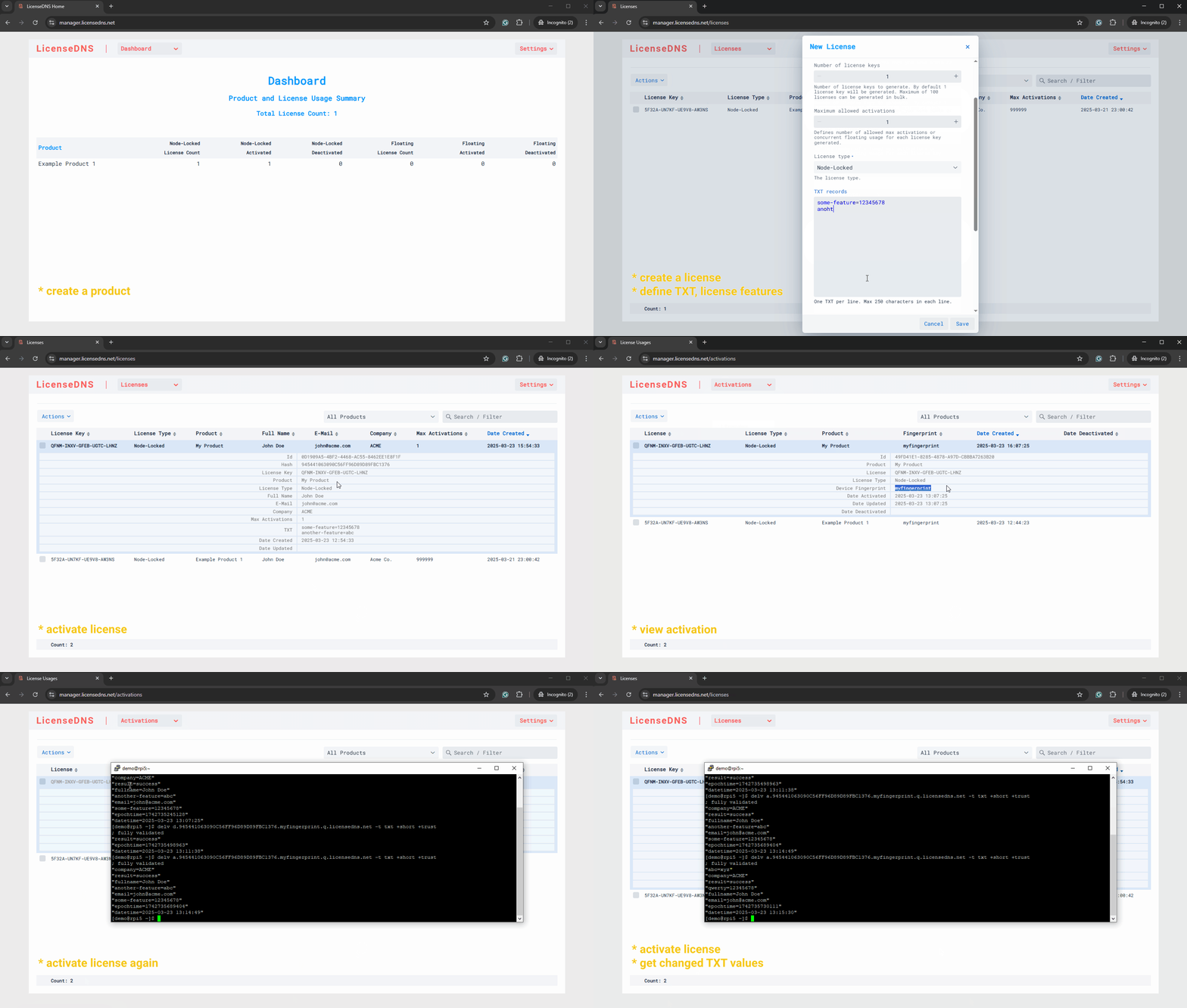
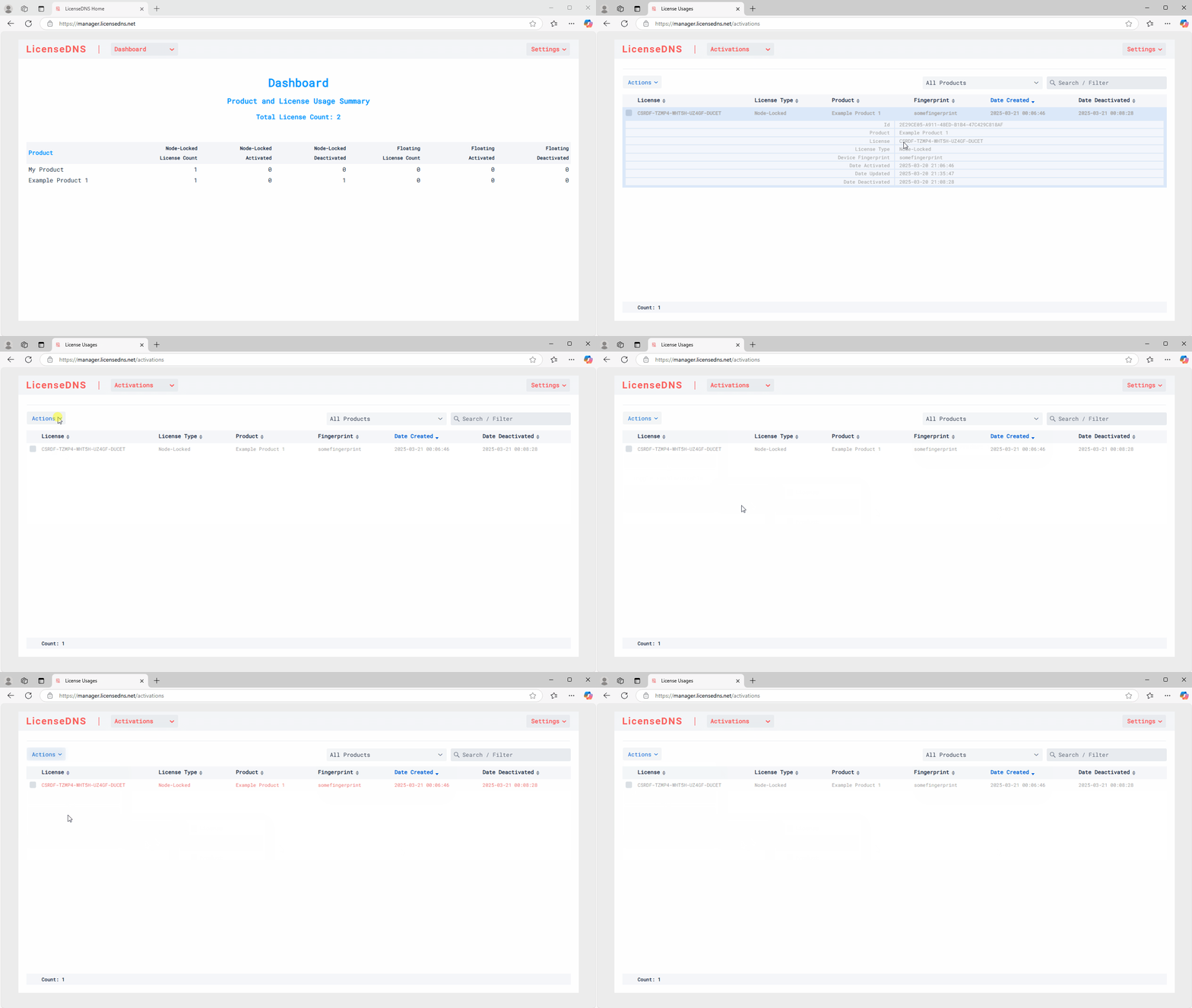
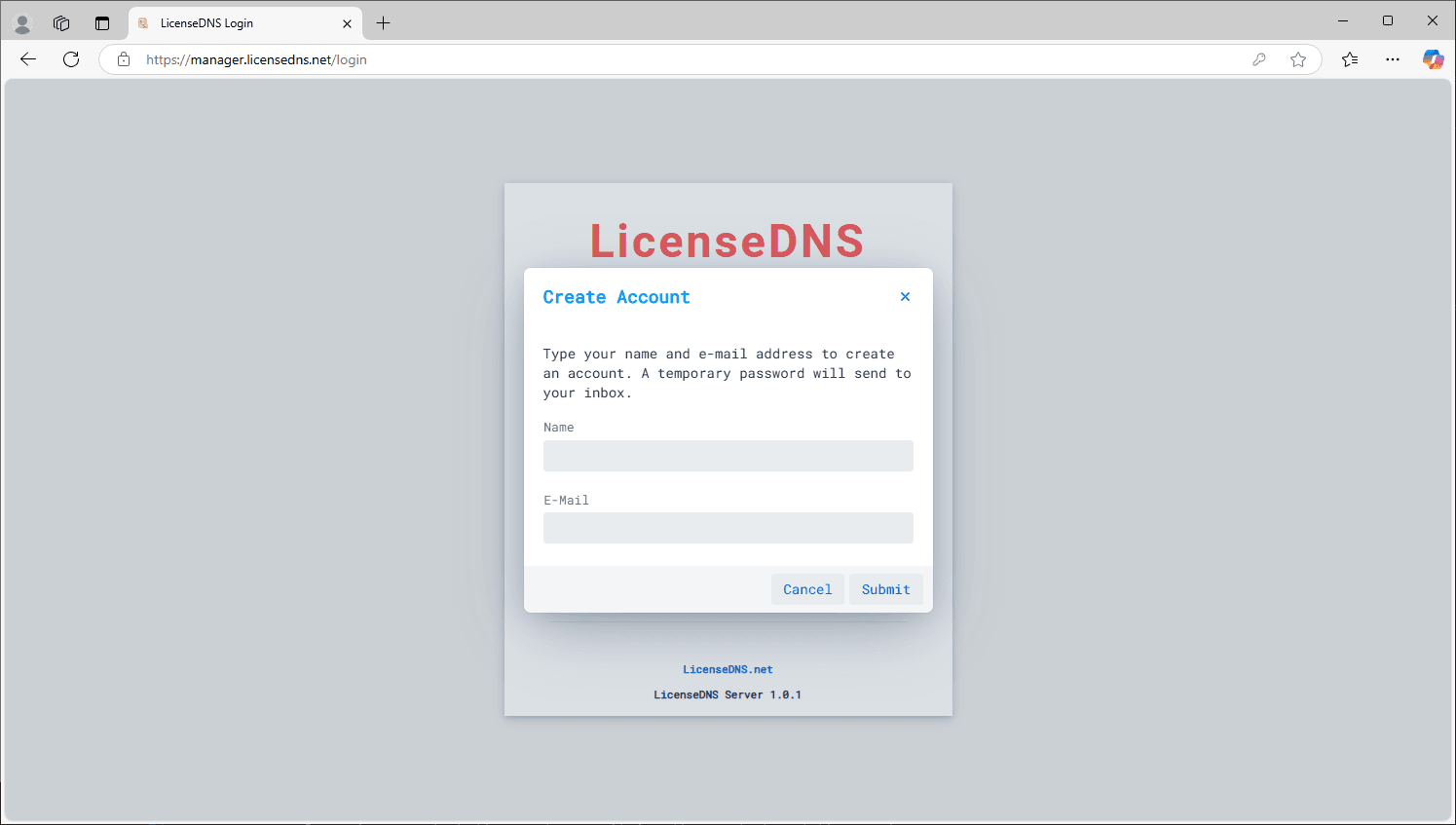
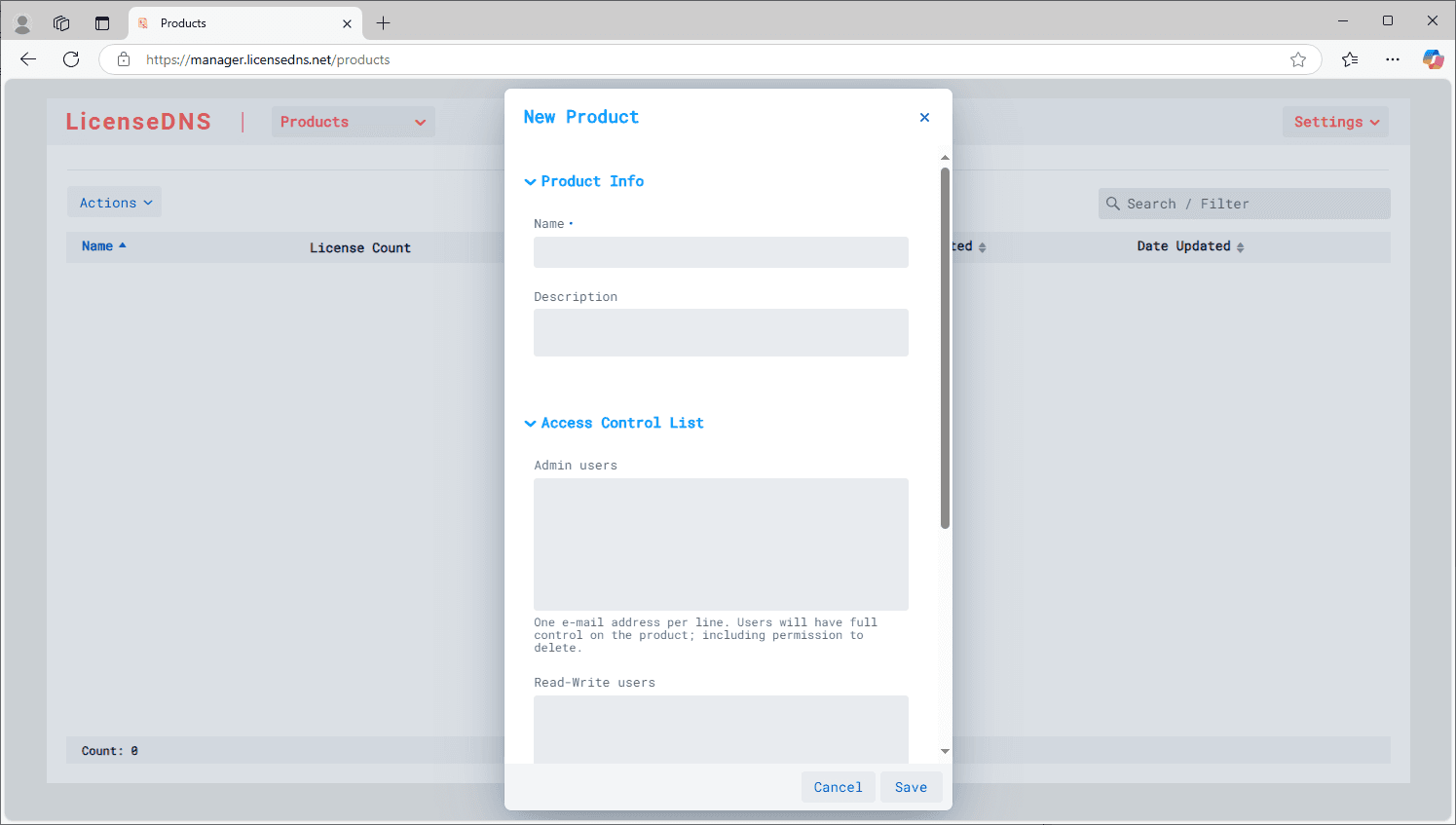
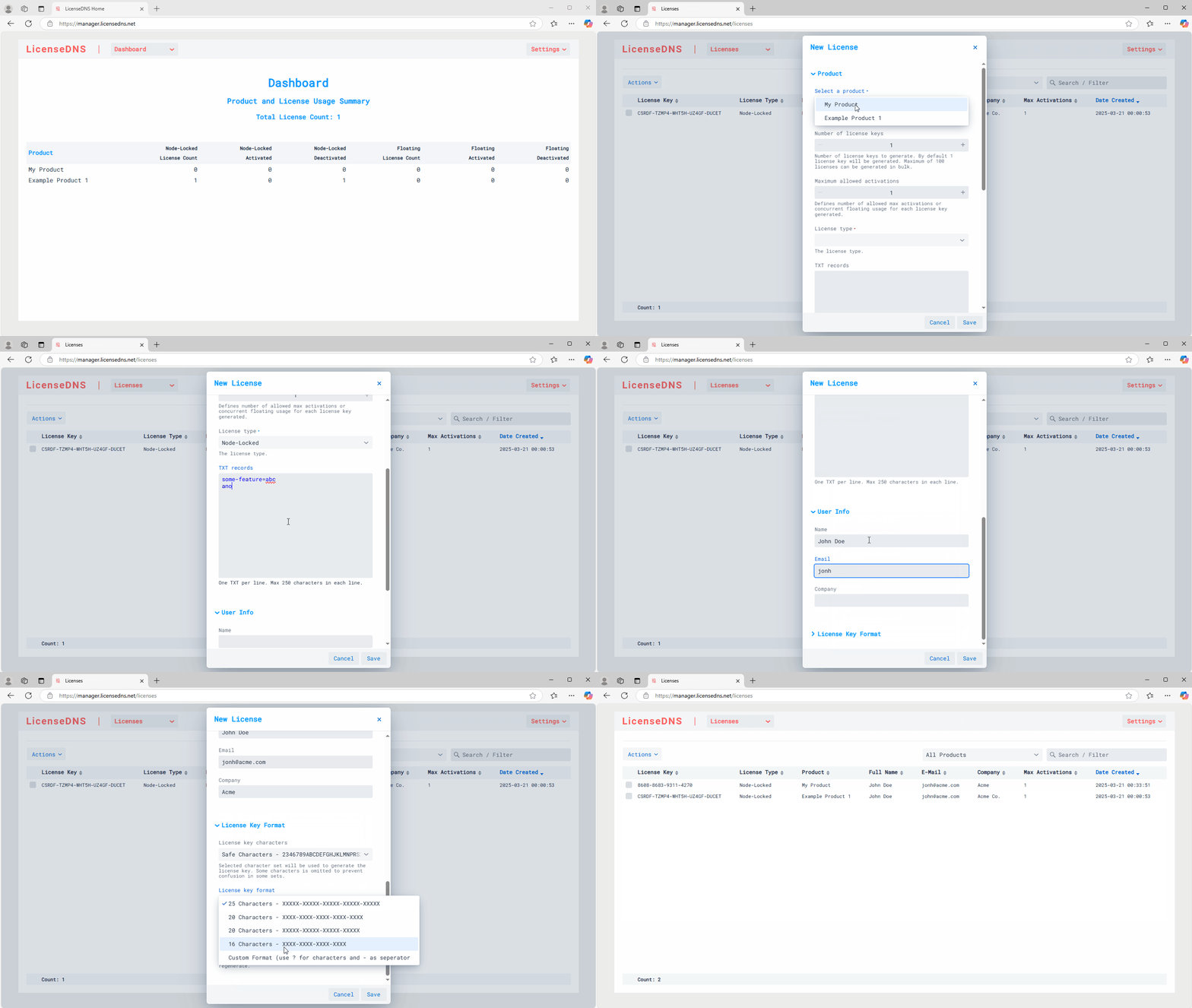
LicenseDNS is a game-changer for software developers tired of complex licensing systems. By leveraging DNS infrastructure and DNSSEC, it provides a lightweight, universal method for license validation that works across all platforms and programming languages without the need for bulky cryptographic methods or platform-specific SDKs. The web-based License Manager offers centralized control, making it easy to handle activations and deactivations. It's particularly beneficial for indie developers, SMBs, and enterprise teams dealing with scalability and security issues in legacy systems. With a focus on simplicity and security, LicenseDNS reduces implementation overhead and ensures tamper-proof validations, though it could improve in areas like UI modernization and accessibility features. Overall, it's an innovative tool that fills a unique niche in the devtools ecosystem, perfect for those building for diverse environments like IoT or legacy systems.
Drawn from the product itself, not from a survey.
Demographic
Indie developers and small to medium businesses (SMBs)
Pain points
High overhead from maintaining platform-specific licensing systems and complex cryptography integration
Primary needs
A lightweight, universal licensing solution that is easy to implement and manage
Demographic
Enterprise software teams
Pain points
Scalability challenges with legacy licensing systems and security vulnerabilities
Primary needs
DNSSEC-backed validation for enhanced security and centralized license management for better control
Demographic
Developers working with IoT or niche platforms
Pain points
Incompatibility with traditional licensing frameworks and difficulty in cross-platform deployment
Primary needs
A flexible, platform-agnostic licensing system that ensures reliability and ease of use
Written by AI from measured evidence, scored out of 100.
LicenseDNS offers a genuinely innovative approach to software licensing that eliminates much of the traditional complexity. By leveraging DNS infrastructure that's already universally available, it provides a lightweight, cross-platform solution that works everywhere from embedded IoT devices to legacy systems. The security through DNSSEC is robust, the performance is generally excellent, and the reduction in implementation overhead is substantial. While the user interface could use modernization and accessibility features are lacking, the core value proposition is compelling for the right audience.
DNS integration dramatically reduces code complexity, though navigation could use search functionality
Functional but dated interface with clean menus, lacks modern visual polish and dark mode support
DNS queries are inherently fast but performance depends entirely on network infrastructure and resolver proximity
DNSSEC provides robust tamper-proof verification with no known vulnerabilities in the approach
Minimal accommodations beyond basic keyboard navigation, lacks screen reader optimization and multilingual support
Strong niche appeal for cross-platform and IoT development, fills unique gap in devtools ecosystem
LicenseDNS takes a practical approach to design that prioritizes function over form. The License Manager interface features clean, straightforward menus and controls that get the job done without unnecessary complexity. While the visual design feels somewhat dated and lacks modern touches like dark mode, the real usability win comes from the DNS-based approach itself. Developers appreciate not having to wrestle with platform-specific SDKs or complex cryptographic integrations. The documentation is thorough with helpful code snippets for popular languages, though the interface could benefit from a search function to improve navigation efficiency. Overall, it's a tool built for developers who value simplicity and effectiveness over flashy aesthetics.
The security foundation of LicenseDNS is genuinely impressive - by leveraging DNSSEC's cryptographic guarantees, it provides tamper-proof license validation without reinventing the security wheel. This clever reuse of existing internet infrastructure means responses are cryptographically verified and resistant to manipulation. Performance-wise, DNS queries are inherently fast and lightweight, though actual speed depends on network infrastructure and resolver proximity. The service doesn't explicitly mention rate-limiting or DDoS protections in public documentation, which could be a consideration for high-volume applications. However, the distributed nature of DNS infrastructure provides some inherent resilience against single points of failure.
Accessibility is where LicenseDNS shows room for improvement. The web-based License Manager lacks screen reader optimization, multilingual support, and comprehensive accessibility features beyond basic keyboard navigation. However, the API-first design does allow developers to build custom accessibility layers if needed. The growth potential is significant given the unique niche it fills - particularly for IoT, cross-platform, and legacy system development where traditional licensing frameworks struggle. The approach is innovative enough to attract developers tired of complex licensing solutions, though broader adoption might require more polished user experiences and expanded language support.
Conclusion
If you're building software for diverse environments - especially IoT, cross-platform, or legacy systems - and want a licensing solution that just works without the usual headaches, LicenseDNS is absolutely worth exploring. It's particularly valuable for indie developers and teams who need to support multiple platforms without maintaining multiple licensing systems. Give it a try if you value simplicity and universal compatibility over flashy dashboards.
Named competitors, point by point. Nobody paid to appear here or to be left out.
 LicenseDNS LicenseDNS |  Flexera Software Monetization Flexera Software Monetization |  Sentinel License Manager Sentinel License Manager | |
|---|---|---|---|
| Implementation Complexity | Low - DNS-based, no cryptographic methods needed | High - Requires significant infrastructure | High - Crypto-heavy, platform-dependent |
| Cross-Platform Support | Excellent - Works anywhere DNS works | Variable - Platform-specific implementations | Limited - Platform-dependent solutions |
| Security Approach | DNSSEC-based verification | Enterprise-grade cryptographic | Cryptographic methods with hardware options |
| Target Audience | Indie devs, SMBs, cross-platform teams | Large enterprises | Enterprise with high security needs |
Flexera Software Monetization
An enterprise-grade licensing solution that offers robust features but requires significant infrastructure and can be complex to implement.
Sentinel License Manager
A feature-rich licensing tool that provides strong protection but is platform-dependent and relies heavily on cryptographic methods, adding to implementation complexity.
Comparing options? See LicenseDNS alternatives, scored side by side

A no-code Solana token creator that deploys SPL tokens in...

A free, open-source platform offering 110 AI agent skills...

Open-source desktop app for switching AI coding providers...

Fast EU VAT validation API for developers, covering 27 EU...

Claw Messenger is an iMessage API service that gives AI a...

PERM Processing Time is an independent data analysis platform that helps users navigate the U.S. Department of Labor’s permanent labor certification process.

AI-powered Dubai real estate data platform with 12M+ DLD ...

BeartIMAGE is a free, web-based image processing platform engineered for fast, bulk photo editing and conversion directly in your browser.

macOS app for App Store screenshots: 3D mockups, auto-tra...

Real-time monetization infrastructure for AI products tha...

A native macOS process explorer and advanced monitor that...

A developer-first financial data API providing structured...
A platform dedicated to providing unbiased reviews of newly launched applications, analyzing everything from their features to their full potential.
info@scoutforge.net© 2026 Scoutforge. All rights reserved.