

A platform dedicated to providing unbiased reviews of newly launched applications, analyzing everything from their features to their full potential.
info@scoutforge.net© 2026 Scoutforge. All rights reserved.
A platform dedicated to providing unbiased reviews of newly launched applications, analyzing everything from their features to their full potential.
info@scoutforge.net© 2026 Scoutforge. All rights reserved.
A platform dedicated to providing unbiased reviews of newly launched applications, analyzing everything from their features to their full potential.
info@scoutforge.net© 2026 Scoutforge. All rights reserved.
Is this your app?
Claim OpenSyte to manage its page, add your badge and see your traffic — free, and it stays free.
Cycling through all six. Tap any point to stop.
Measured on six things
OpenSyte is an open-source, all-in-one business management platform integrating CRM, HR, Finance, and Project tools to streamline operations.
No performance benchmarks available; web-based application with unproven real-world efficiency.
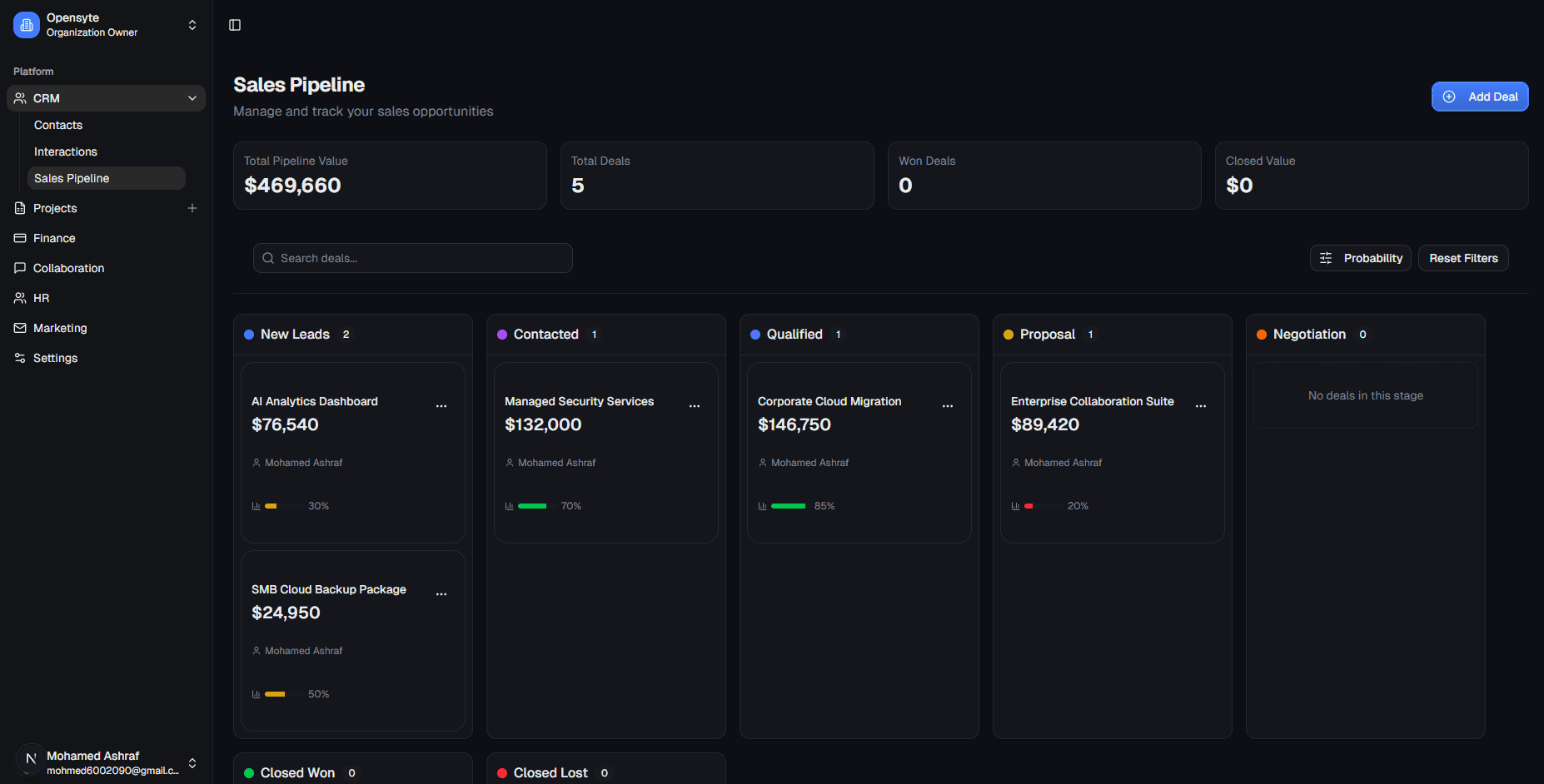
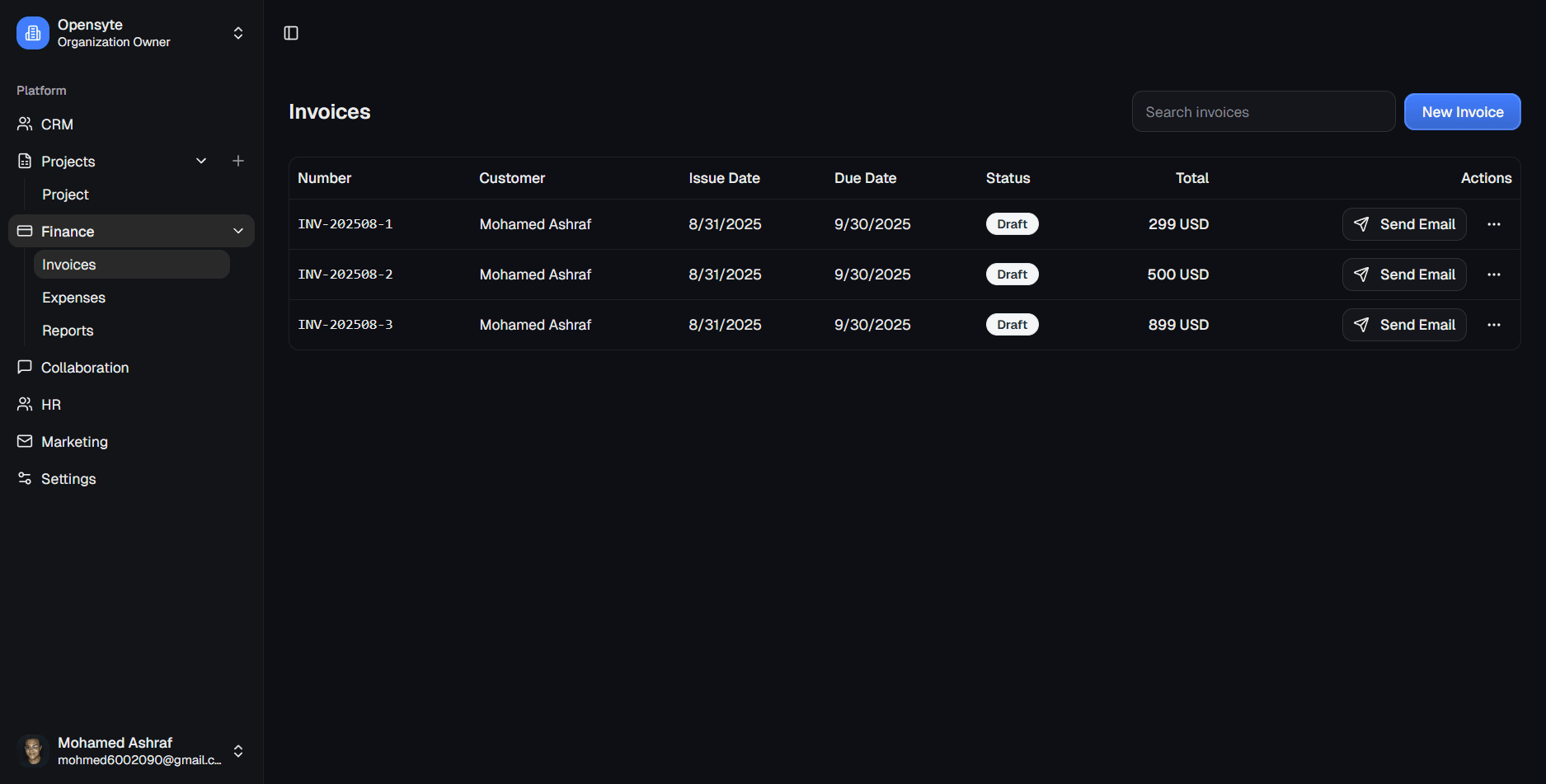
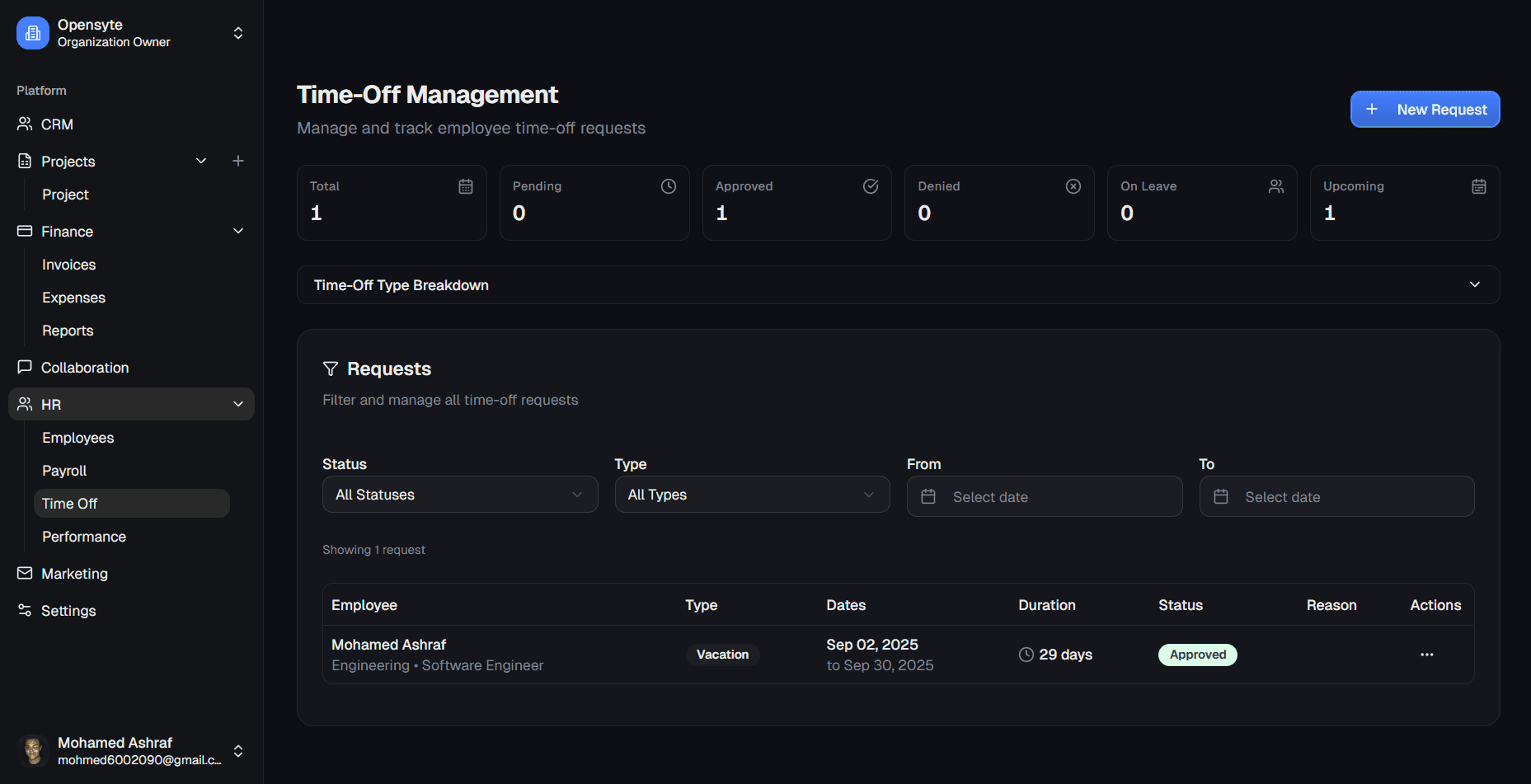
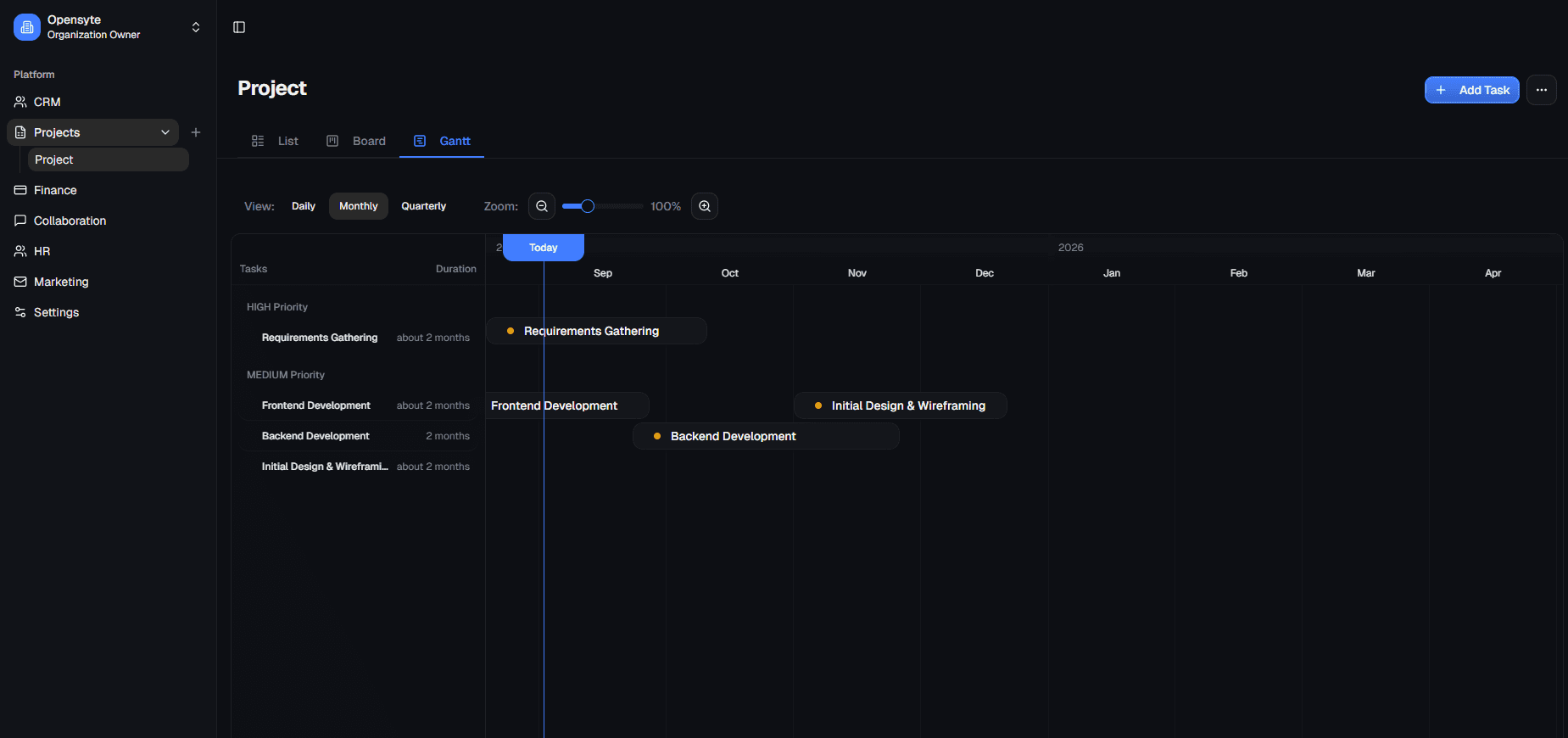
As a tech-savvy reviewer, I find OpenSyte's unified approach refreshing for tackling app overload in business workflows. This open-source platform combines CRM, HR, Finance, and Project Management into a single system, targeting small to medium businesses, startups, and IT teams. Key features include an intuitive interface, customizable user roles with a visual access matrix for easy permission management, and the flexibility of open-source code for deep customization. Currently in pre-launch with a waitlist, it emphasizes community-driven development. While promising for integration and cost savings, it's unproven in real-world performance and lacks detailed accessibility features. SEO keywords: open-source business software, integrated CRM, HR tools, project management platform, cost-effective ERP, customizable business apps, startup productivity tools.
Drawn from the product itself, not from a survey.
Demographic
Small to medium businesses
Pain points
High costs from multiple software subscriptions, data silos between departments, inefficient workflows
Primary needs
Integrated system, cost-effective solution, scalable operations
Demographic
Startups and entrepreneurs
Pain points
Limited budgets, need for rapid setup, lack of customization in proprietary tools
Primary needs
Affordable platform, open-source flexibility, easy integration
Demographic
IT and development teams
Pain points
Complex integrations, security concerns with closed-source apps
Primary needs
Customizable code, role-based security, community support
Written by AI from measured evidence, scored out of 100.
OpenSyte represents an ambitious attempt to solve the app overload problem that plagues many small to medium businesses. By combining CRM, HR, finance, and project management into a single open-source platform, it addresses key pain points around cost, integration complexity, and data silos. The intuitive design and visual permission management show promise for user adoption, while the open-source model offers unprecedented customization potential for tech-savvy teams. However, as a pre-launch product, it faces the classic chicken-and-egg problem: it needs real-world testing to refine features, but businesses may hesitate to adopt until it's proven.
User-friendly with customizable roles and graphical permission controls suitable for non-technical users.
Clean, minimalist interface with intuitive navigation and visual access matrix for permission management.
No performance benchmarks available; web-based application with unproven real-world efficiency.
Role-based permissions provide basic security, but lacks detailed encryption policies and relies on community auditing.
No mentioned support for screen readers, keyboard navigation, or multilingual options in current pre-launch phase.
Strong market demand for open-source business tools with active GitHub development and community-driven approach.
OpenSyte's design philosophy centers on simplicity and functionality. The platform showcases a clean, minimalist interface that prioritizes ease of navigation, which is crucial for businesses overwhelmed by complex software ecosystems. The visual access matrix stands out as a particularly thoughtful feature, allowing administrators to manage permissions through an intuitive graphical interface rather than buried settings menus. This approach makes role customization accessible even for non-technical users, potentially reducing training time and support costs. The unified dashboard integrating CRM, HR, finance, and project management modules suggests a cohesive user experience, though the actual implementation remains theoretical until real user feedback emerges from the pre-launch phase.
Security in OpenSyte relies heavily on role-based permissions to compartmentalize data access, a solid foundation for business applications. The open-source nature provides transparency, allowing community auditing of the codebase, though this also means security depends on active contributor vigilance. No specific encryption standards or detailed privacy policies are documented yet, which is typical for pre-launch projects but warrants attention before full deployment. Performance metrics remain unspecified, though as a web-based platform, it should target responsive load times and efficient data handling. The lack of real-world testing makes it difficult to assess how the integrated modules will perform under typical business workloads, especially as data volumes grow.
Accessibility receives minimal attention in OpenSyte's current documentation, with no mention of screen reader compatibility, keyboard navigation enhancements, or multilingual support. This oversight limits inclusivity for users with disabilities and non-English speaking teams, areas where established competitors often excel. However, the growth potential is substantial, driven by increasing demand for cost-effective, open-source business solutions. The active GitHub repository and community-driven development model suggest ongoing enhancements, while the integrated approach addresses real pain points for SMBs dealing with app fragmentation. The platform's flexibility could position it well in markets where customization and budget constraints are primary concerns.
Conclusion
OpenSyte is best suited for small to medium businesses, startups, and IT teams who value customization over polish and are willing to embrace an evolving platform. If you're tired of juggling multiple subscriptions and dealing with integration headaches, joining the waitlist could position you to benefit from this cost-effective alternative. The community-driven approach means early adopters can influence development direction, making it particularly appealing for organizations with specific workflow needs. Give OpenSyte a try once it launches if you're seeking an integrated solution that grows with your business rather than constraining it.
Named competitors, point by point. Nobody paid to appear here or to be left out.
 OpenSyte OpenSyte |  HubSpot HubSpot |  Zoho One Zoho One |  Odoo Odoo | |
|---|---|---|---|---|
| Pricing Model | Free and open-source | Proprietary with subscription tiers | Subscription-based pricing | Freemium with paid enterprise features |
| Customization Level | Full code access and modification | Limited customization through APIs | Moderate customization options | Extensive customization with community modules |
| Integration Scope | Unified native modules (CRM, HR, Finance, Projects) | CRM-focused with marketing and sales integrations | Comprehensive suite with 40+ integrated apps | Modular approach with extensive app ecosystem |
| Target Business Size | SMBs, startups, and IT teams | SMBs to enterprises | Businesses of all sizes | SMBs with growth potential |
HubSpot
A comprehensive CRM and marketing platform, but it's proprietary and can become expensive with add-ons, whereas OpenSyte offers an open-source alternative.
Zoho One
An all-in-one suite of business applications similar to OpenSyte, but Zoho operates on a subscription model, while OpenSyte is free and open-source.
Odoo
Another open-source ERP system, but OpenSyte aims for a more streamlined integration of core modules like CRM, HR, and Finance in a single interface.
Comparing options? See OpenSyte alternatives, scored side by side

An all-in-one hospitality software for restaurants and ba...

AI-native accounting platform that automates financial cl...

AI-powered tool to turn long videos into engaging shorts ...

Field service management software that simplifies operati...

Hopted automates data sync between business apps and Google Sheets, eliminating manual CSV exports for real-time updates.

A specialized transportation management system for carriers, streamlining dispatch, payroll, compliance, and real-time fleet tracking.

A practice management tool for chartered accountants and audit firms, automating workflows and compliance.

An all-in-one platform for rental car companies to optimi...

A cloud-based construction management platform with 500+ features for project tracking, safety compliance, and team coordination on mobile and desktop.

An AI-driven cloud ERP platform simplifying operations for manufacturing, retail, and construction industries with integrated tools.

A dynamic platform for agile problem-solving in businesses, streamlining processes and fostering innovation.

An incentive compensation management platform automating sales commissions, rebates, and royalties with deep ERP integration.
A platform dedicated to providing unbiased reviews of newly launched applications, analyzing everything from their features to their full potential.
info@scoutforge.net© 2026 Scoutforge. All rights reserved.