Cycling through all six. Tap any point to stop.
Measured on six things
Wires engineering decisions & memory into AI coding agent...
Speed
58Mobile Lighthouse 72/100 with LCP 9.5s — slow above-the-fold load. Desktop scores 87/100. CLS is 0 and TBT is low (24ms), so interactivity is fine; the bottleneck is hero content weight.
Screenshots
1 / 4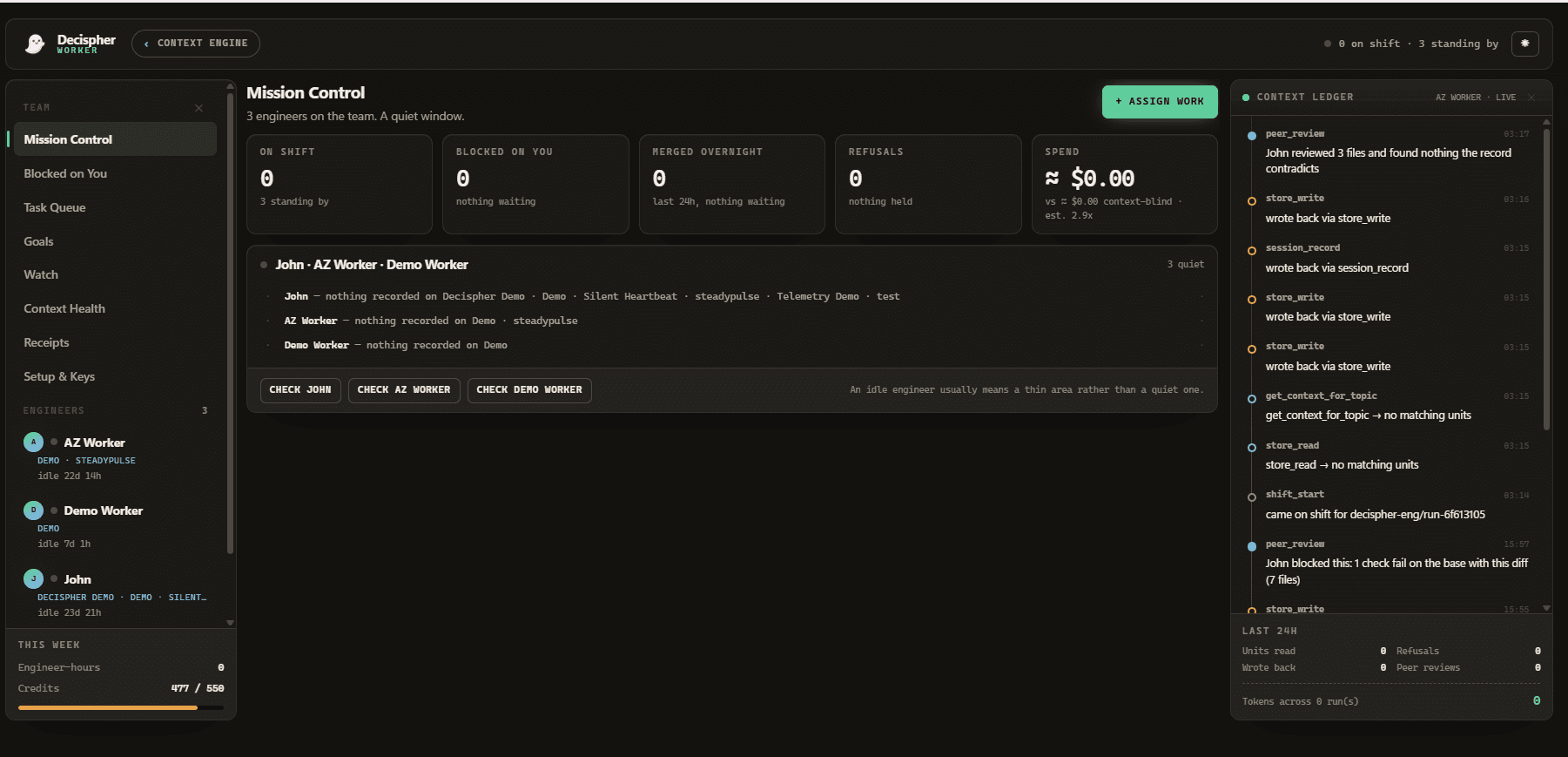
About this app
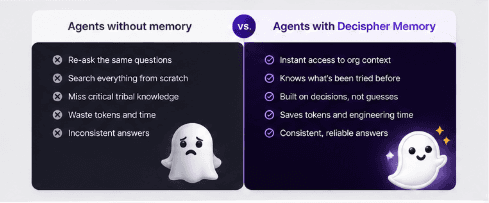
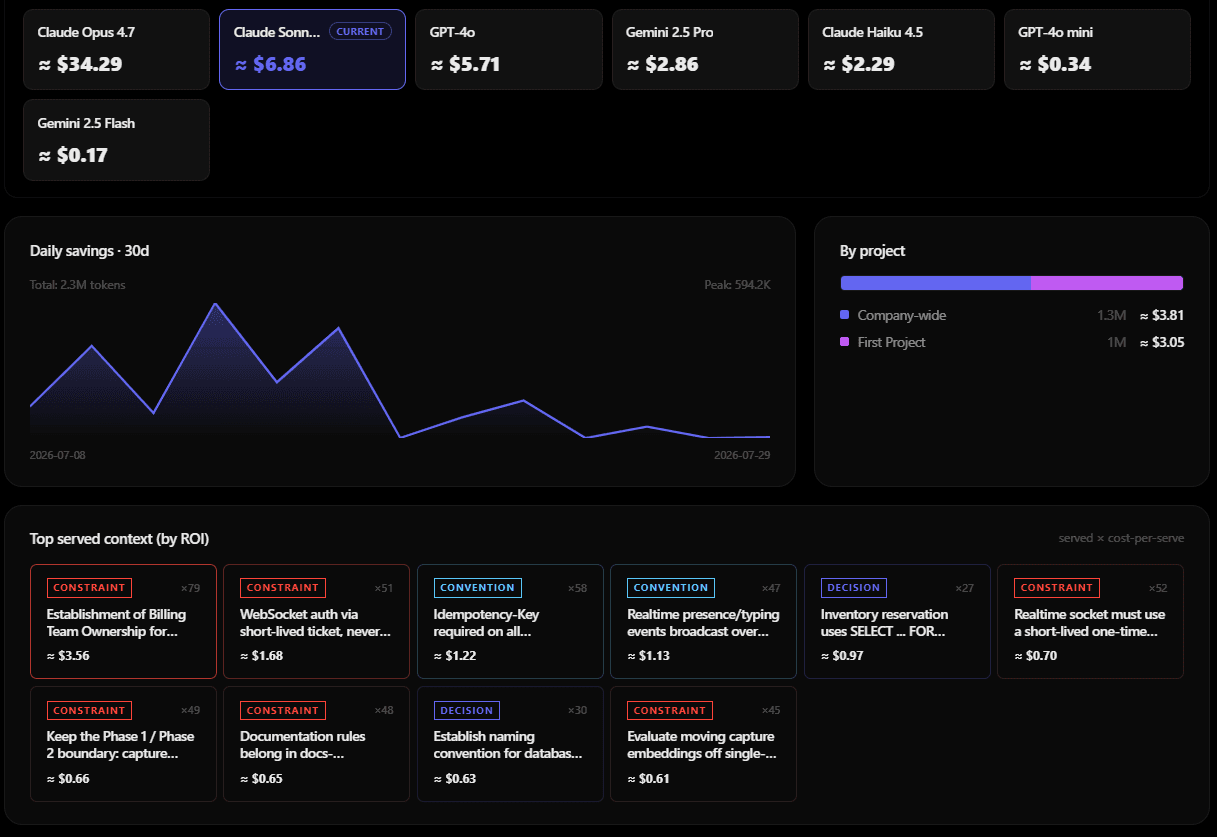
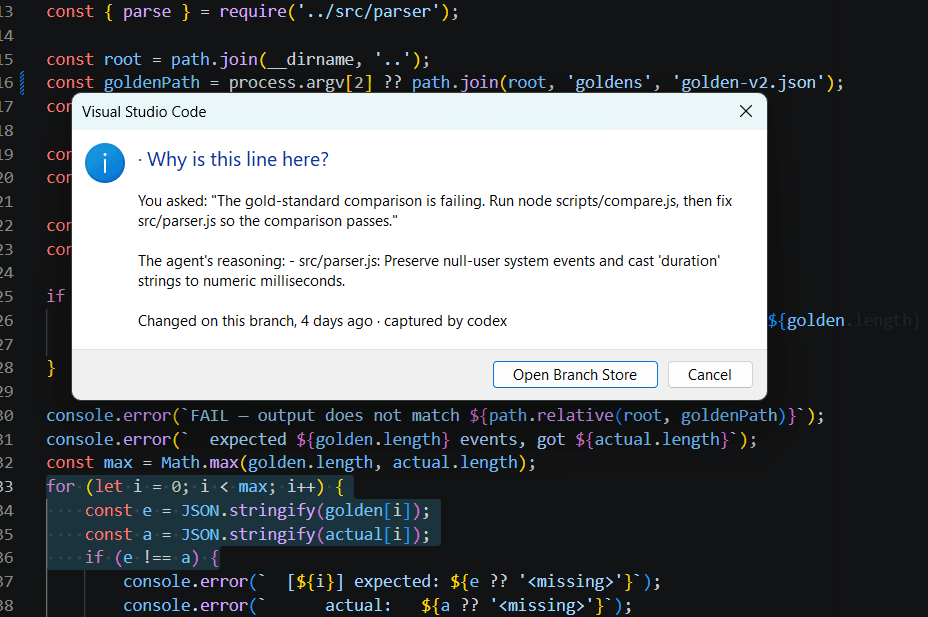
Decispher is a context and memory platform for AI coding agents. It solves the problem of AI agents lacking team context by capturing engineering decisions (Context Engine), storing developer and project preferences (Memory), and running an autonomous worker (Worker) that uses this context to create pull requests. It integrates with Slack, GitHub, Jira, and popular coding tools like Cursor, Claude Code, and Codex. The platform offers a free tier, uses credits rather than seats, and promises no code cloning and full auditability.
Key features
- 1Context Engine: Captures decisions from Slack, GitHub, and Jira, fusing them into enforceable rules with confidence scoring
- 2Memory: Stores developer and project preferences, scoped to user, project, or company, injected before prompts
- 3Worker: Autonomous agent that reads context before creating PRs, with full audit trails and credit-based metering
Target customer profile
Drawn from the product itself, not from a survey.
Demographic
Engineering managers and tech leads in software dev teams using AI coding tools
Pain points
AI agents produce PRs that fail review due to missing team context; repetitive explanations across sessions; wasted time and tokens.
Primary needs
Improve AI code acceptance rates, streamline onboarding of AI agents, maintain consistent standards without manual rule files.
Demographic
Senior engineers and developers who regularly use AI assistants like Cursor, Claude Code, or Copilot
Pain points
Repeating project conventions and personal preferences to each session; AI forgets decisions made in Slack or Jira.
Primary needs
Persistent memory for personal work style, context-aware suggestions, less manual context re-establishing.
Demographic
Platform engineering or DevOps teams focused on developer productivity and automation
Pain points
Managing multiple AI tools and rule files (CLAUDE.md, .cursorrules) that drift; ensuring compliance and decision enforcement.
Primary needs
Centralized decision capture, automated rule file generation, open-source enforcement in CI, and audit trails.
Scout Review
Written by AI from measured evidence, scored out of 100.
Decispher is an ambitious early-stage platform tackling a genuinely painful problem: AI coding agents that lack team context and produce PRs that fail review. The product's core insight — capturing decisions from Slack, GitHub, and Jira and fusing them into enforceable rules — is differentiated from memory-only competitors like Mem0 and Zep. The design is polished with a cohesive dark theme, and the docs are surprisingly thorough for a product at this stage. Performance on mobile needs work (9.5s LCP), and security headers are missing CSP and frame protection. Accessibility is strong at 97/100 with one contrast issue. Growth potential is real, but the 0.6-year-old domain and minimal social presence mean it's early days. The credit-based pricing is a thoughtful departure from seat-based models.
Measure by measure
Usability
68Clear CTAs and tangible app UI showing memory features. Docs are structured with setup guide and real screenshots. Navigation has some complexity with product dropdown and many footer links, but core flows are straightforward.
Design
70Coherent dark dev-tool aesthetic with purple/green accents. App dashboard is clean and well-organized. Homepage text is dense with minimal breathing room; embedded mockups have tiny labels that strain readability.
Speed
58Mobile Lighthouse 72/100 with LCP 9.5s — slow above-the-fold load. Desktop scores 87/100. CLS is 0 and TBT is low (24ms), so interactivity is fine; the bottleneck is hero content weight.
Security
60HTTPS, HSTS, X-Content-Type-Options, Referrer-Policy, SPF, and DMARC are set. Missing CSP, frame protection, and Permissions-Policy. No SOC 2/ISO certifications found. Standard for early-stage SaaS.
Accessibility
78Lighthouse accessibility score 97/100 with only one failing audit: insufficient color contrast. No explicit WCAG statement or multi-language support found, but the site is keyboard-navigable with standard HTML structure.
Growth
72Solves a real, painful problem (AI PR acceptance at 32.7%) with a differentiated approach: capturing decisions from Slack/Jira/GitHub, not just storing memory. Early stage with clear wedge.
Improvement areas
- Mobile performance: LCP of 9.5s needs optimization of hero images and embedded mockups
- Security headers: Missing CSP and frame protection; add Permissions-Policy for defense in depth
- Accessibility: Fix color contrast issue on dark theme; publish explicit WCAG statement
Design & Usability
Decispher presents a polished, dark-themed developer tool aesthetic that feels modern and cohesive across both marketing and product surfaces. The Mission Control dashboard is well-structured with clear navigation and a tangible context ledger. However, the homepage suffers from dense text blocks and tiny labels in embedded mockups that reduce scannability. Usability is generally strong: clear CTAs, a structured docs site with real screenshots, and a logical setup flow. The main friction is navigation complexity — the product dropdown and extensive footer links create menu sprawl that could overwhelm new users. The pricing page is transparent with credit-based metering, which is refreshingly honest for an AI tool.
Speed & Security
Performance is a mixed bag: mobile Lighthouse scores 72/100 with a sluggish 9.5s LCP, while desktop hits 87/100. The CLS of 0 and TBT of 24ms indicate the page is technically well-built; the bottleneck is likely heavy hero imagery and embedded workflow graphics. Security posture is standard for an early-stage SaaS: HTTPS, HSTS, and email authentication are in place, but CSP, frame protection, and Permissions-Policy are missing. No SOC 2 or ISO certifications are published, which is typical for a product at this stage. The absence of a CSP is a notable gap for a tool that promises 'full auditability' — the irony isn't lost.
Accessibility & Growth
Accessibility is a genuine strength with a 97/100 Lighthouse score, though the single failing audit — insufficient color contrast on the dark theme — is worth addressing. No explicit WCAG statement or multi-language support is mentioned, but the site is keyboard-navigable with standard HTML. Growth potential is promising: Decispher addresses a real, quantified problem (32.7% AI PR acceptance vs. 84.4% human) with a differentiated approach — capturing decisions from Slack, GitHub, and Jira rather than just storing agent memory. This positions it against Mem0, Zep, and Supermemory with a clearer wedge: it's not just memory, it's organizational memory with provenance. The credit-based pricing model is innovative and aligns with actual usage patterns.
Conclusion
Decispher is worth watching. The problem it solves is real, quantified, and growing as AI agents become more prevalent in development workflows. The approach — capturing decisions at the source and fusing them into enforceable rules — is more compelling than generic memory layers. The main risks are execution: mobile performance needs improvement, security headers need hardening, and the team needs to build community and trust. If they can deliver on the 'full auditability' promise and make the setup genuinely painless, they have a strong shot at becoming the system of record for engineering decisions. For now, it's a promising beta with a clear thesis and a solid foundation.
Suggestions for improvement
- Optimize hero images and embedded mockups to reduce mobile LCP from 9.5s to under 3s
- Add Content-Security-Policy and frame protection headers to strengthen security posture
- Fix the color contrast issue flagged by Lighthouse, especially purple text on navy backgrounds
- Publish a clear accessibility statement and consider multi-language support for global teams
Alternatives comparison
Named competitors, point by point. Nobody paid to appear here or to be left out.
 Decispher |  Mem0 |  Zep | Supermemory | |
|---|---|---|---|---|
| Decision capture from Slack/Jira/GitHub | Yes — captures decisions from Slack, GitHub, Jira, and fuses them into context units | No — stores agent memory but doesn't capture from external tools | No — focuses on long-term memory and semantic search, not decision capture | No — knowledge base for agents, not decision capture from dev tools |
| Rule file generation (CLAUDE.md, .cursorrules) | Yes — generates and syncs 10+ agent rule files via PR | No — memory layer only, no rule file generation | No — memory infrastructure, not rule file management | No — knowledge base, not rule file generation |
| Pricing model | Credit-based, $0.09-$0.05/credit, free tier with 50 credits | Open source with cloud offering; pricing not prominently displayed | Usage-based pricing; details on request | Freemium model; paid plans for advanced features |
| Open source components | Decision Guardian (MIT) — open source CI enforcement | Yes — fully open source on GitHub | Yes — open source core with cloud offering | Partially — some components open source |
| MCP (Model Context Protocol) support | Yes — MCP server with 25 tools, per-call credit costs | Yes — MCP integration available | Yes — MCP support for memory retrieval | Yes — MCP server for knowledge retrieval |
Mem0
Open-source memory layer for AI agents and assistants, offering persistent memory across sessions.
Zep
Memory infrastructure for AI agents, providing long-term memory and semantic search.
Supermemory
AI knowledge base and memory tool that helps agents remember information.
Comparing options? See Decispher alternatives, scored side by side
More Development & Engineering apps
View all Development & Engineering
CreateMyCoin
92A no-code Solana token creator that deploys SPL tokens in...

Vibe Coding Agent Skills
92A free, open-source platform offering 110 AI agent skills...

CC Switch
91Open-source desktop app for switching AI coding providers...

TaxID
90Fast EU VAT validation API for developers, covering 27 EU...

BeartIMAGE
88BeartIMAGE is a free, web-based image processing platform engineered for fast, bulk photo editing and conversion directly in your browser.

ButterKit
82macOS app for App Store screenshots: 3D mockups, auto-tra...

DataHabibi
88AI-powered Dubai real estate data platform with 12M+ DLD ...

PERM Processing Time: Current DOL Queue & History
88PERM Processing Time is an independent data analysis platform that helps users navigate the U.S. Department of Labor’s permanent labor certification process.

Claw Messenger
88Claw Messenger is an iMessage API service that gives AI a...

Credyt
87Real-time monetization infrastructure for AI products tha...

ProcessSpy
87A native macOS process explorer and advanced monitor that...

StockFit API
87A developer-first financial data API providing structured...


A platform dedicated to providing unbiased reviews of newly launched applications, analyzing everything from their features to their full potential.
info@scoutforge.net© 2026 Scoutforge. All rights reserved.
