Is this your app?
Claim GribStream to manage its page, add your badge and see your traffic — free, and it stays free.
Cycling through all six. Tap any point to stop.
Measured on six things
GribStream offers a high-speed API for accessing NOAA's historical weather forecasts, designed for developers needing efficient and affordable data streaming.
Accessibility
60API-first approach with minimal accessibility features - no screen reader optimization or multilingual support.
Screenshots
1 / 3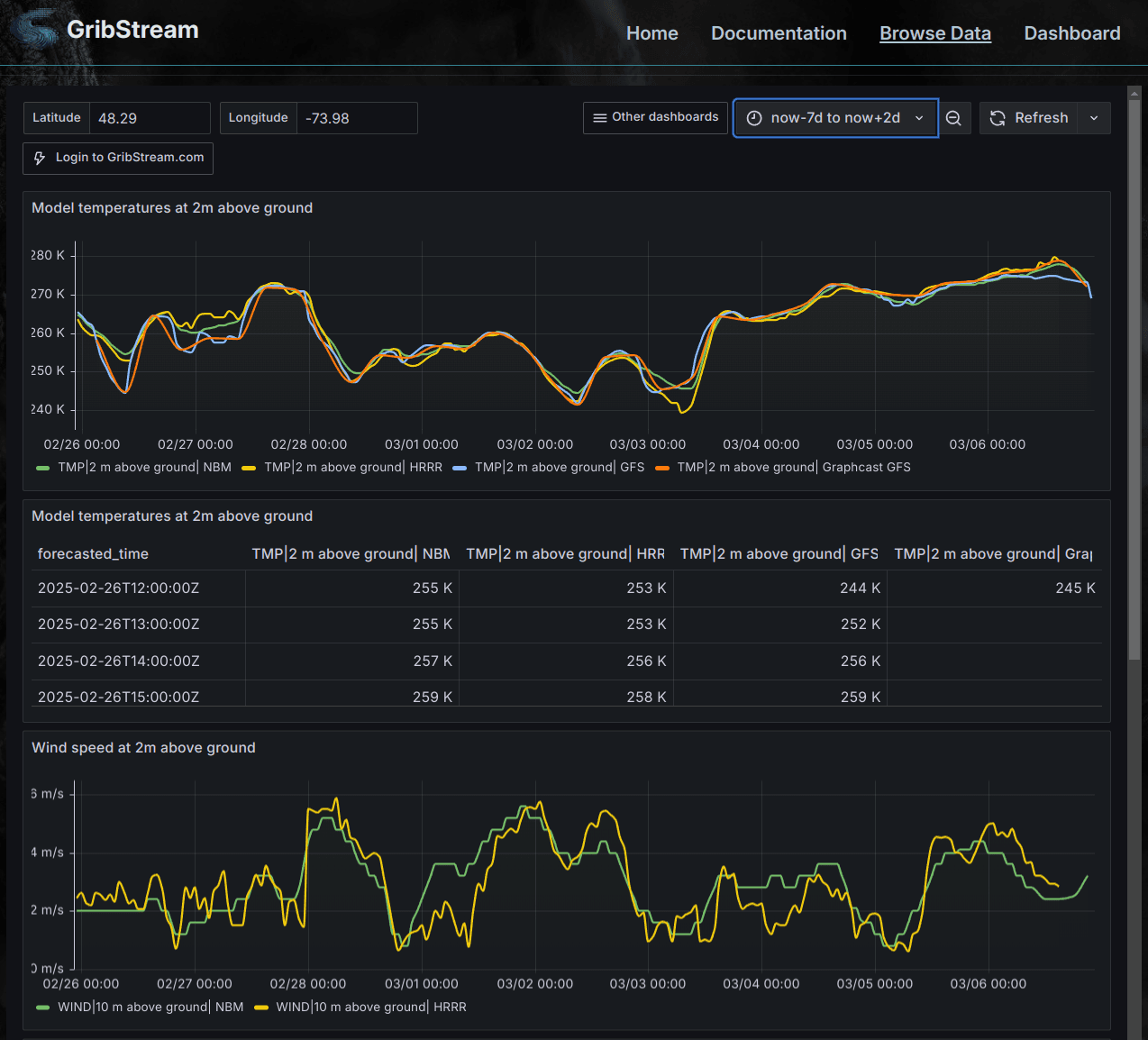
About this app
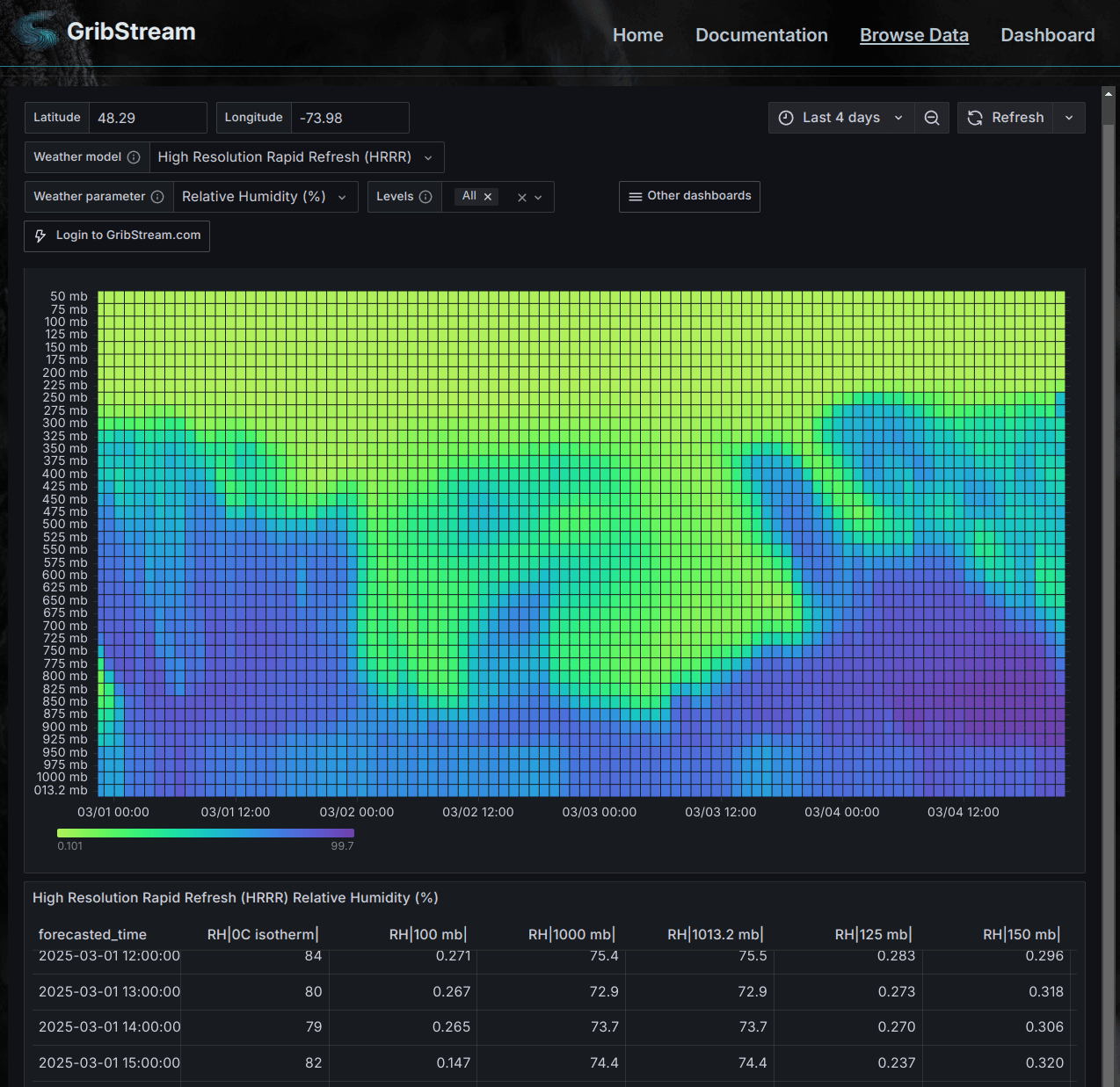
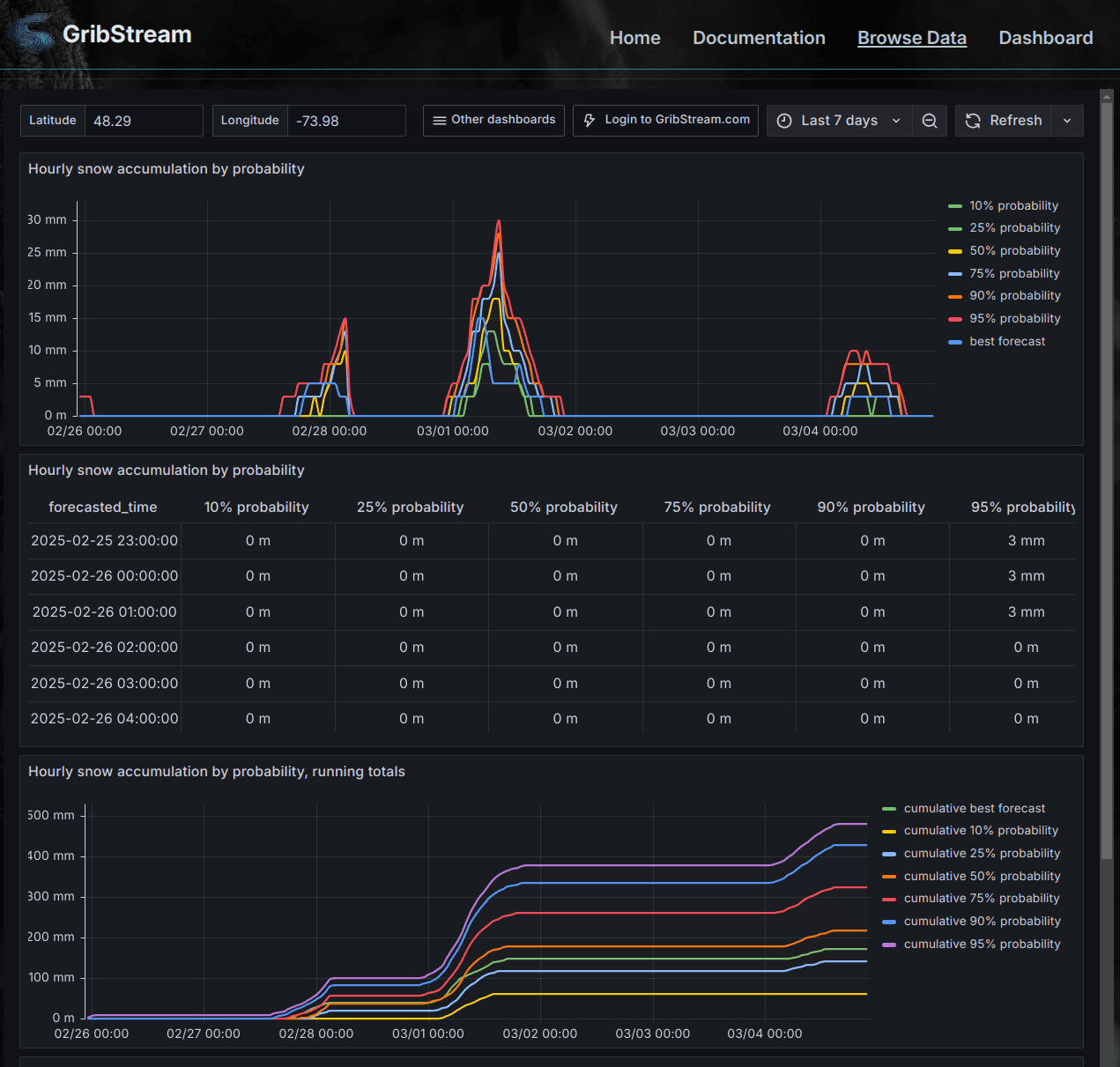
GribStream is a developer-first weather data API that leverages NOAA's advanced models like NBM and HRRR, providing on-demand access to hyper-specific historical weather data. It's ideal for applications in solar energy, ski resorts, and research, featuring pay-as-you-stream pricing and open-source libraries. While it lacks a flashy UI, its focus on speed and granularity makes it a powerful tool for technical users.
Key features
- 1Direct NOMADS data pipeline enables blazing fast streaming without bulk downloads, outperforming competitors.
- 2Strong position in climate tech with unique NOAA partnerships and ML-driven models like GraphCast GFS.
- 3Clean, well-organized documentation for developers, making integration straightforward for experienced users.
Target customer profile
Drawn from the product itself, not from a survey.
Demographic
Developers at SaaS startups
Pain points
High costs of commercial weather APIs, limited model diversity
Primary needs
Affordable, model-specific data; easy integration
Demographic
Meteorology researchers
Pain points
Bulk data downloads slowing workflows
Primary needs
On-demand streaming, ensemble forecasts (GEFS)
Demographic
Outdoor/travel businesses
Pain points
Generic forecasts lacking location specificity
Primary needs
Ski resort snow accumulation data, long-range climate trends (CFS)
Scout Review
Written by AI from measured evidence, scored out of 100.
GribStream delivers exceptional value for technical users who prioritize data granularity and speed over user experience polish. Its access to NOAA's advanced models like NBM and HRRR, combined with affordable streaming pricing, makes it a powerhouse for developers building weather-dependent applications. The trade-off is a steep learning curve and minimal hand-holding, but for those who know what they're doing, it's arguably the most capable weather API available at this price point.
Measure by measure
Usability
80Clean documentation for developers but assumes significant technical expertise - no hand-holding for beginners.
Design
70Professional dark-blue scheme but lacks interactive demos or visual data explorers - pure documentation focus.
Speed
90Direct NOMADS data pipeline enables blazing fast streaming without bulk downloads - outperforms competitors.
Security
70Standard HTTPS encryption and token authentication, but no mention of SOC2 compliance or penetration testing.
Accessibility
60API-first approach with minimal accessibility features - no screen reader optimization or multilingual support.
Growth
90Strong position in climate tech with unique NOAA partnerships and ML-driven models - high market demand potential.
Improvement areas
- Lacks interactive demos or visual data explorers, making it difficult for beginners to use without hand-holding.
- No screen reader optimization or multilingual support, limiting accessibility for diverse users.
- Absence of published SOC2 compliance or penetration testing details may concern enterprise clients.
Design & Usability
GribStream's design philosophy is unapologetically developer-centric, featuring a professional dark-blue color scheme that prioritizes function over form. The interface is essentially a comprehensive documentation portal without interactive sandboxes or visual data explorers. Navigation follows a GitHub-style markdown approach that technical users will appreciate, but it lacks the polish of more consumer-facing APIs. The usability shines through clean, well-organized documentation that makes integration straightforward for experienced developers, though beginners might find the learning curve steep without visual guides or interactive testing environments.
Speed & Security
Performance is where GribStream truly excels, leveraging direct NOMADS data pipelines to deliver weather data streaming without the overhead of bulk downloads. The pay-as-you-stream model ensures rapid response times that outperform traditional weather APIs. Security follows industry standards with HTTPS encryption and token-based authentication, providing adequate protection for most use cases. However, the absence of published SOC2 compliance or penetration testing details might give enterprise users pause. The speed-to-security balance leans heavily toward performance, making it ideal for applications where data delivery speed is critical.
Accessibility & Growth
Accessibility takes a backseat in this developer-focused tool, with no screen reader optimization, multilingual support, or beginner-friendly tutorials. The open-source client libraries in Python and JavaScript help bridge some accessibility gaps for non-backend developers. Growth potential is exceptionally strong given the unique NOAA partnerships and support for machine learning-driven models like GraphCast GFS. As climate tech continues expanding, GribStream's specialized focus on high-resolution, model-specific data positions it perfectly to capture growing demand from renewable energy, agriculture, and research sectors.
Conclusion
If you're building climate analytics tools, optimizing renewable energy systems, or creating hyperlocal weather applications, GribStream offers unmatched capability without enterprise price tags. The lack of visual interfaces means it's not for casual users, but developers will appreciate the raw power and flexibility. For teams needing granular control over historical weather data with specific model requirements, this API is worth immediate exploration.
Suggestions for improvement
- Adding an interactive API playground would significantly lower the barrier to entry for new users.
- Publishing uptime statistics and response time metrics would build trust with enterprise clients.
- Expanding documentation with practical use-case tutorials (e.g., building ski resort snowfall trackers or solar energy optimizers) would help users understand implementation patterns.
- Offering multilingual documentation would tap into international developer markets currently underserved by English-only technical content.
Alternatives comparison
Named competitors, point by point. Nobody paid to appear here or to be left out.
 GribStream |  Open-Meteo |  OpenWeatherMap History API |  Visual Crossing | |
|---|---|---|---|---|
| NOAA NBM/HRRR Model Support | Full support | Not supported | Partial support | Not supported |
| Pricing Model | Pay-as-you-stream | Free non-commercial | Premium rates | Subscription-based |
| Data Granularity | Hyper-specific hourly | Basic historical | High-resolution | General forecasts |
| Machine Learning Models | GraphCast GFS supported | Limited ML support | Basic algorithms | Not supported |
| Target User | Developers/Researchers | Hobbyists/Students | Business users | Non-technical users |
Open-Meteo
Free for non-commercial use but lacks NOAA's NBM and HRRR models, better for basic historical data.
OpenWeatherMap History API
Offers CSV exports but charges premium rates for high-resolution data, less specialized in probabilistic forecasts.
Visual Crossing
User-friendly for non-developers but doesn't support machine learning-driven models like GraphCast GFS.
Comparing options? See GribStream alternatives, scored side by side
More API Service apps
View all API Service
CC Switch
91Open-source desktop app for switching AI coding providers...

TaxID
90Fast EU VAT validation API for developers, covering 27 EU...

SiftingIO - Market Data API
88Real-time & historical market data API for stocks, forex,...

Claw Messenger
88Claw Messenger is an iMessage API service that gives AI a...

OBVELO
88Privacy gateway that masks personal data in LLM traffic

tradutor de mangá com IA
88O tradutor de mangá com IA traduz capítulos em lote, personaliza textos e oferece edição visual para estúdios.

Giftronaut
87.5gift card software, international gift card, international visa gift card, gift card API

QRocodile
87Design And Animate QR Codes People Want to Scan

StockFit API
87A developer-first financial data API providing structured...

Plori
87Cloud AI agents with persistent disk, memory, and real CL...

QVeris AI
86Connect AI agents to 10,000+ real-world tools and APIs

Split Forms
86Free contact form backend for any website


A platform dedicated to providing unbiased reviews of newly launched applications, analyzing everything from their features to their full potential.
info@scoutforge.net© 2026 Scoutforge. All rights reserved.
