

A platform dedicated to providing unbiased reviews of newly launched applications, analyzing everything from their features to their full potential.
info@scoutforge.net© 2026 Scoutforge. All rights reserved.
A platform dedicated to providing unbiased reviews of newly launched applications, analyzing everything from their features to their full potential.
info@scoutforge.net© 2026 Scoutforge. All rights reserved.
A platform dedicated to providing unbiased reviews of newly launched applications, analyzing everything from their features to their full potential.
info@scoutforge.net© 2026 Scoutforge. All rights reserved.
Cycling through all six. Tap any point to stop.
Measured on six things
Connect AI agents to 10,000+ real-world tools and APIs
Real problem (agent capability routing), specific finance wedge (market data, KYC, on-chain) that general tools like Zapier and Composio don't own. Early stage — domain registered Aug 2025.
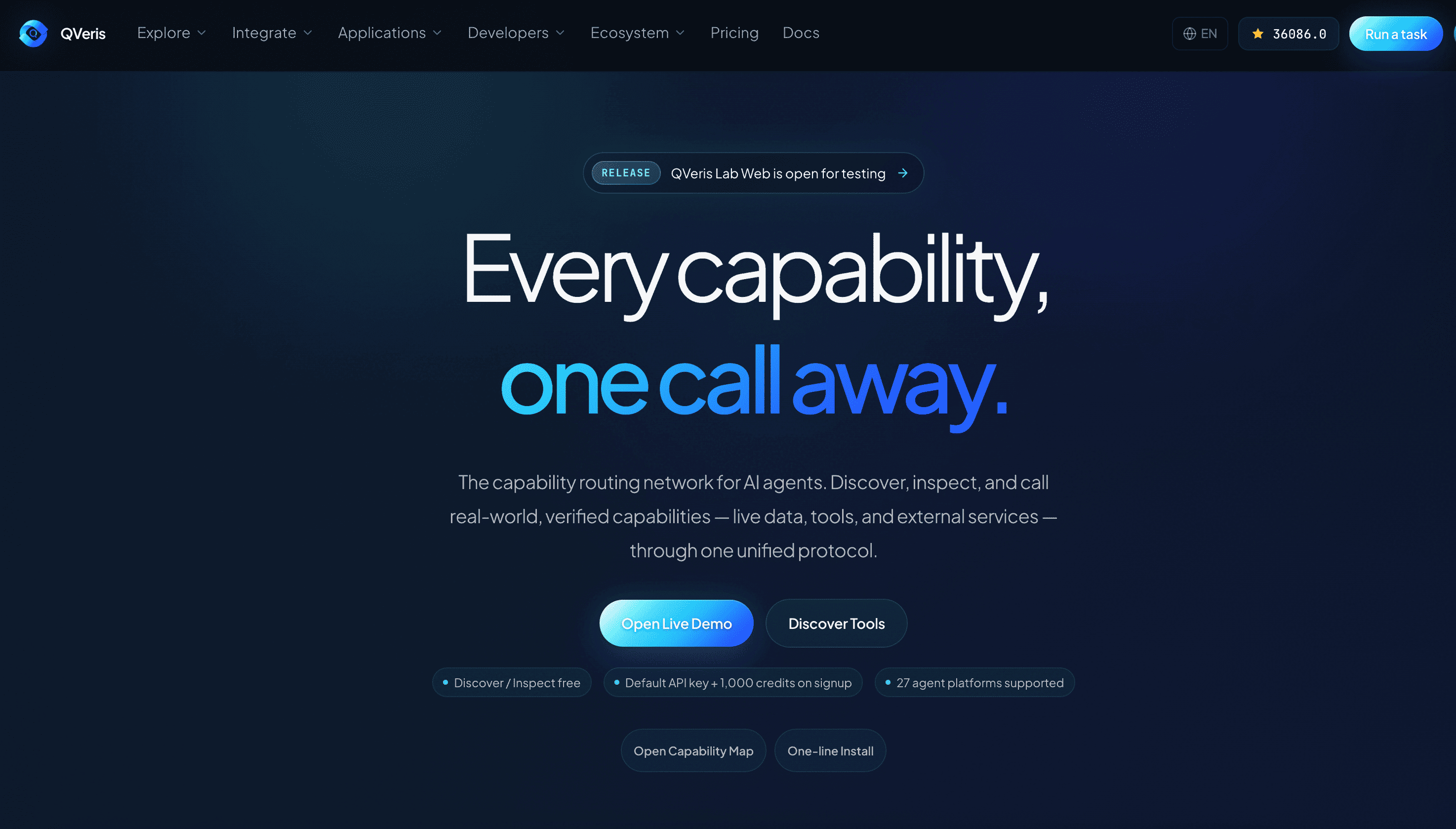
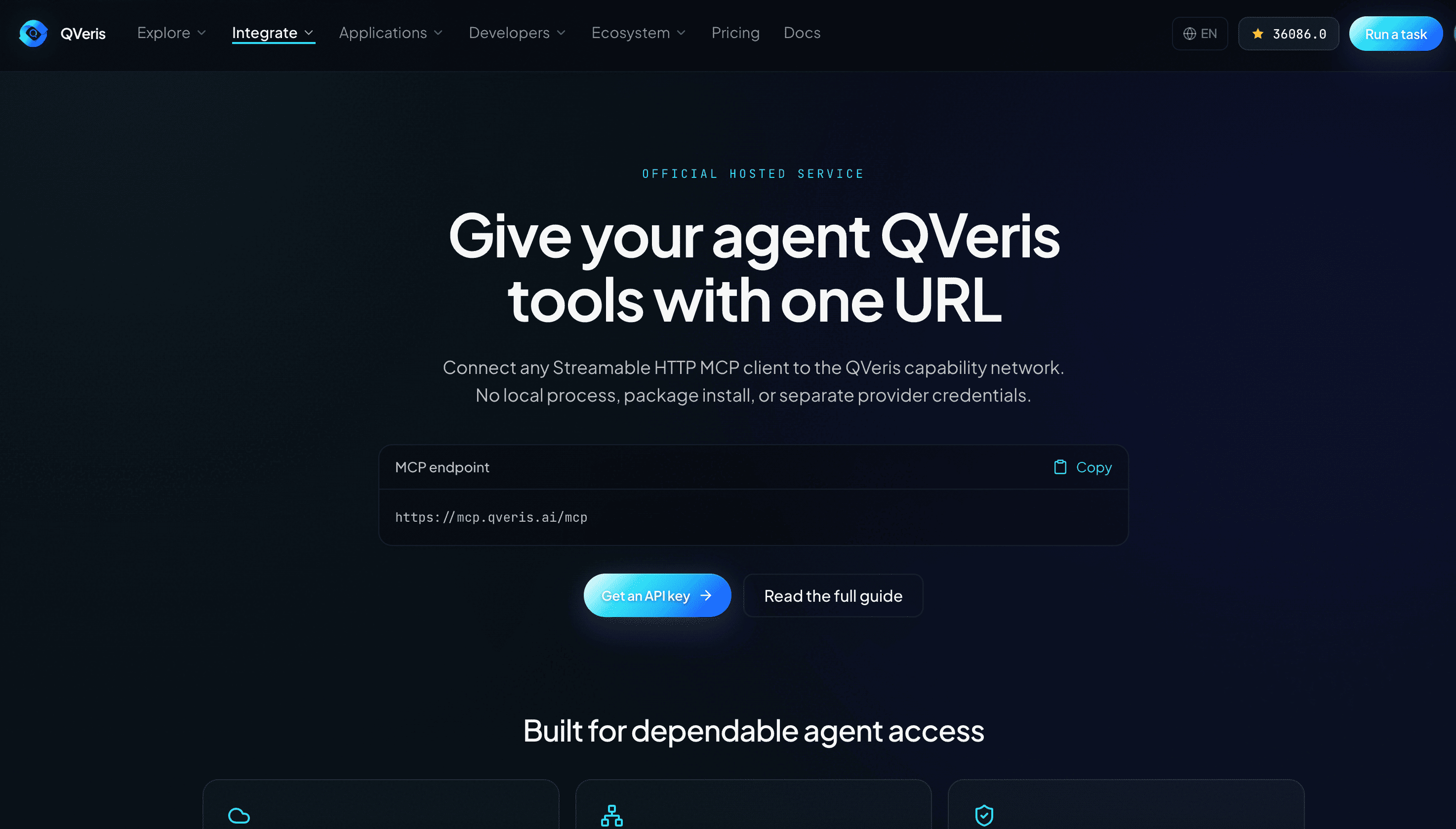
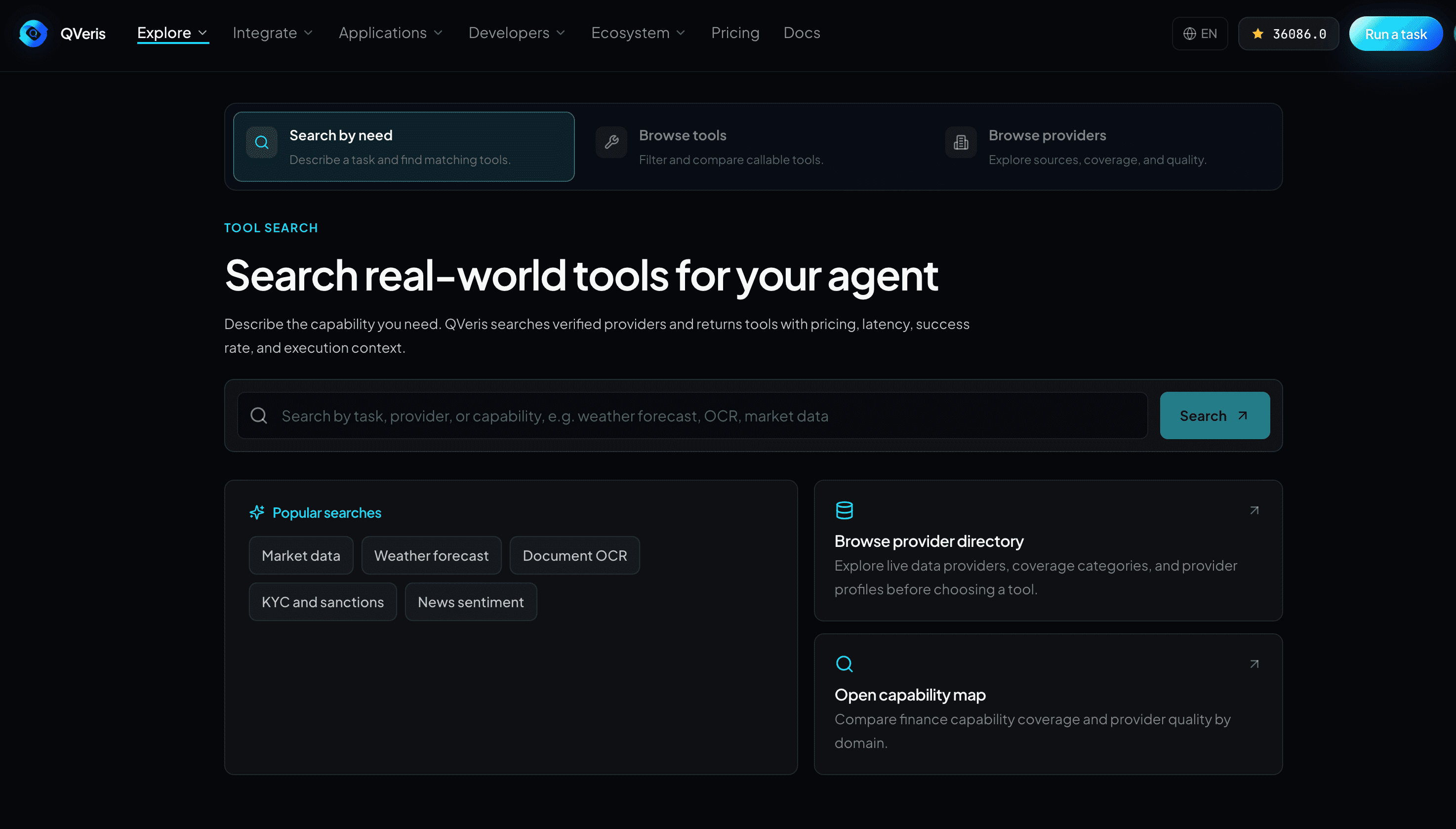
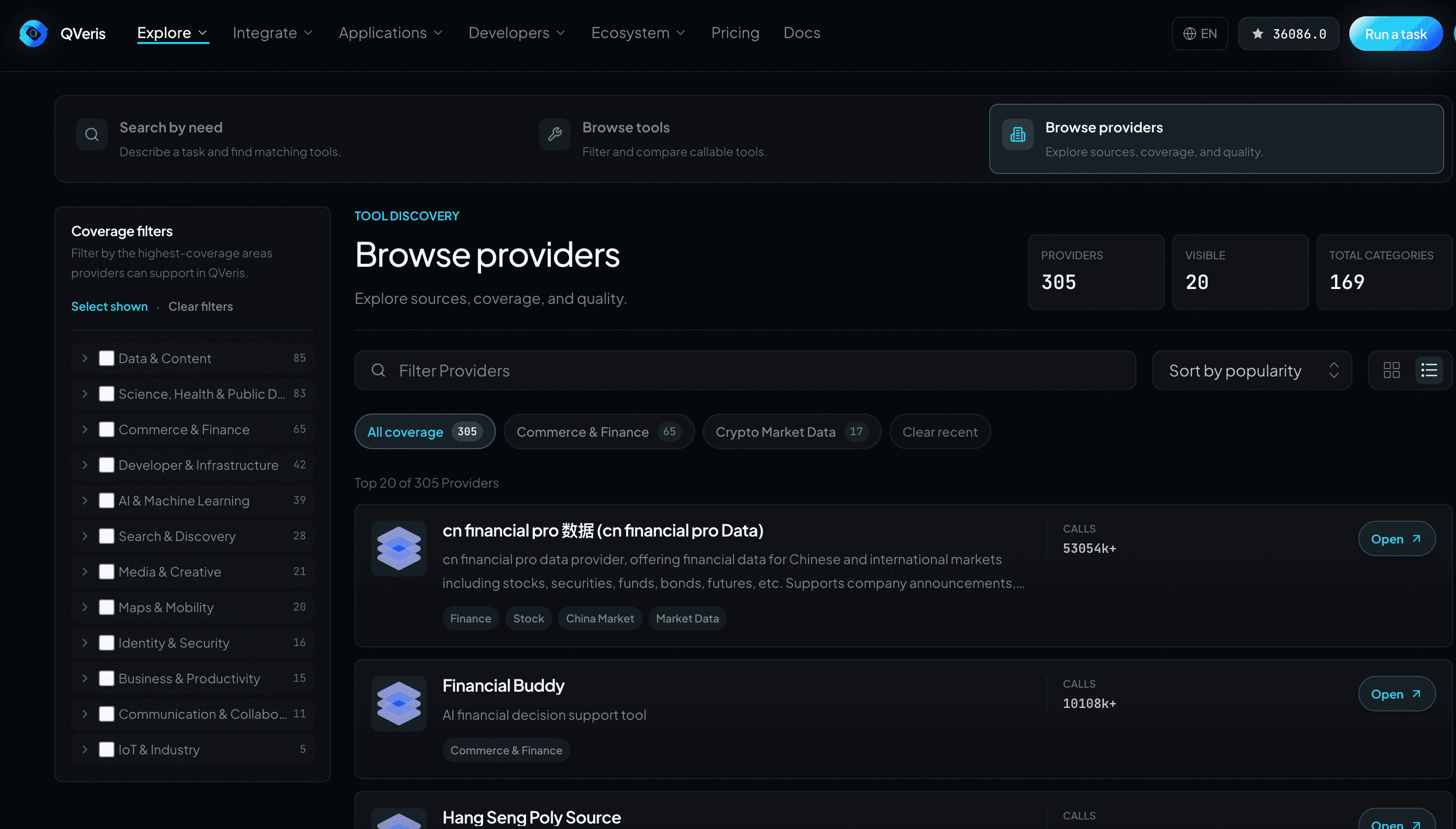
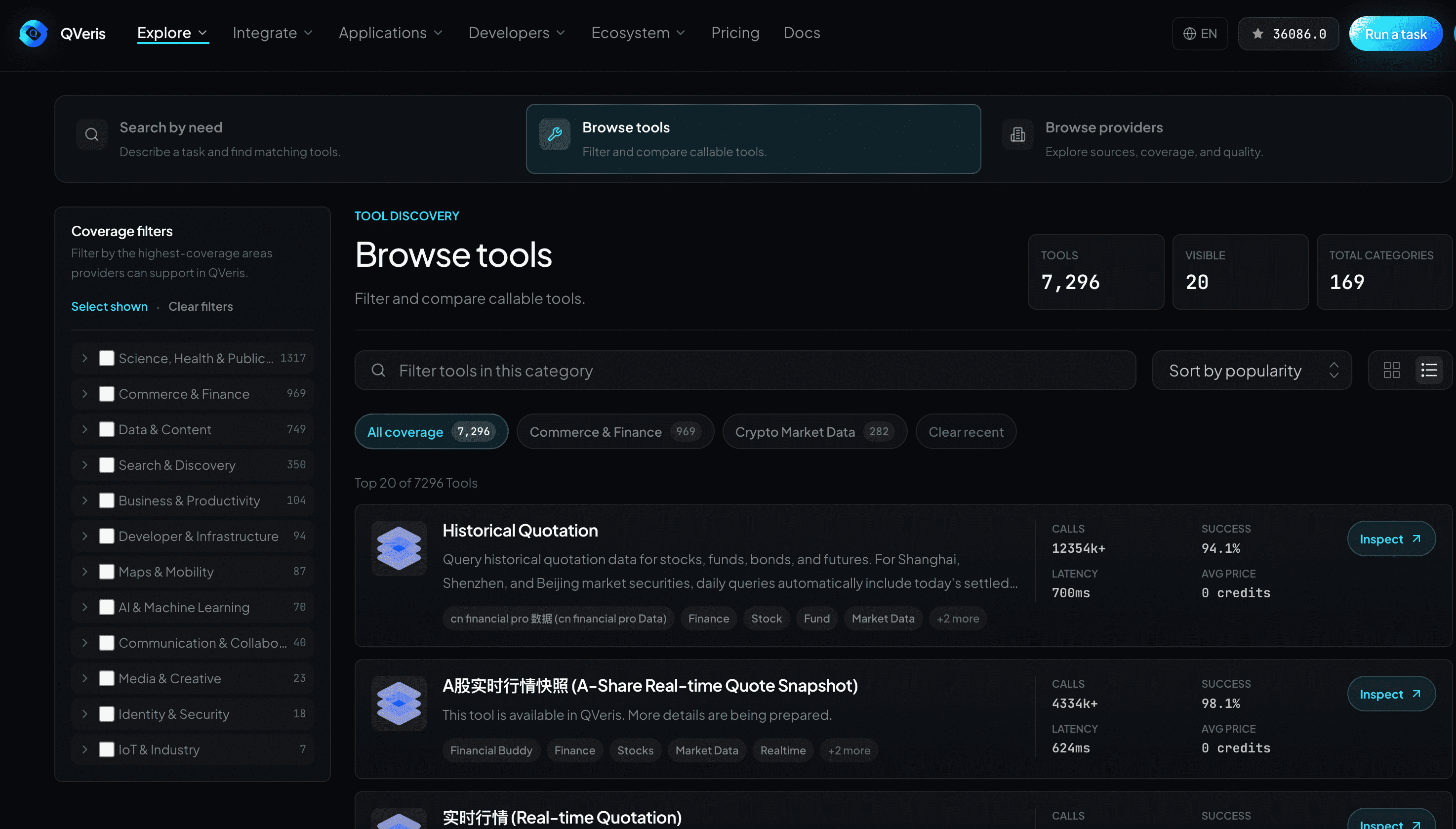
QVeris AI positions itself as the capability routing network for AI agents, solving a problem that's becoming increasingly obvious as agent-based workflows mature: the gap between what an agent can reason about and what it can actually *do* in the real world. Instead of hardcoding provider integrations for every data source or tool an agent might need, QVeris offers a unified protocol to discover, inspect, and call real-world capabilities — live data, financial feeds, KYC services, on-chain signals, and more. The workflow is deliberately simple: agents (or developers) run a natural-language discovery query, inspect each returned capability for latency, success rate, and credit cost, then execute a call that returns structured JSON. Discovery and inspection are free; execution costs credits, with 1,000 free credits on signup. Pricing is pay-per-call rather than subscription-based, which is refreshing in a space full of seat-based SaaS traps. Where QVeris shines is in finance-focuse...
Drawn from the product itself, not from a survey.
Demographic
Quant developers and hedge fund engineers
Pain points
Hardcoding market data providers, dealing with flaky APIs and rate limits
Primary needs
Reliable, low-latency routing to market data with fallback and audit
Demographic
AI agent builders and MCP developers
Pain points
Every integration is bespoke; no unified way for agents to discover tools
Primary needs
One protocol for discovery, inspection, and execution with SDKs
Demographic
Compliance and risk analysts in finance
Pain points
KYC, sanctions, and counterparty checks scattered across vendors
Primary needs
Traceable, auditable capability calls with clear billing evidence
Demographic
Investment research teams and analysts
Pain points
Context lost between chats; sources and tool calls untracked
Primary needs
Resumable research workspace with evidence and source lineage
Written by AI from measured evidence, scored out of 100.
QVeris AI is a capability routing network for AI agents — discover, inspect, call — with a finance-focused wedge. The pitch is clean: instead of hardcoding every data provider, your agent runs a natural-language discovery query, inspects latency/success-rate/credit-cost, then executes a call that returns structured JSON. Discovery and inspection are free; execution costs credits, with 1,000 free on signup and pay-per-call pricing ($19 for 10,000 credits, no subscription). The site is polished, the docs are unusually thorough for an early-stage product (CLI, Hosted MCP, stdio fallback, 27 platform setup prompts), and the security headers are fully locked down. Mobile Lighthouse performance is 92/100, though desktop drops to 75. Accessibility scores 100/100 on automated checks but has no WCAG statement. The real question is growth: the finance wedge is specific and defensible against general-purpose tools like Zapier and Composio, but the product is early — domain registered August 2025 — and the category is crowded with well-funded data incumbents. A competent, well-positioned early-stage product with a clear thesis and room to prove it.
Clear onboarding: 1,000 free credits, free discover/inspect, sign-in only for execution. Docs cover CLI, Hosted MCP and stdio fallback, plus 27 platform setup prompts.
Dark terminal-style hero with a live discover/inspect/call demo, consistent branding across homepage, pricing and docs. Polished developer-tool aesthetic, though no visual audit was captured to confirm rendering.
Lighthouse mobile 92/100 (LCP 1.8s, CLS 0.023, TBT 153ms). Desktop drops to 75/100 — solid overall, but the desktop gap is worth a look.
Full security-header sweep: HTTPS, HSTS, CSP, frame protection, X-Content-Type-Options, Referrer-Policy, Permissions-Policy, SPF, DMARC — 12/12. No SOC 2 or pen-test claim published.
Lighthouse accessibility 100/100 and an EN language toggle in the header. No WCAG statement or dedicated accessibility page published yet.
Real problem (agent capability routing), specific finance wedge (market data, KYC, on-chain) that general tools like Zapier and Composio don't own. Early stage — domain registered Aug 2025.
QVeris AI presents itself as a capability routing network for AI agents, and the site backs that up with a coherent dark developer-tool aesthetic — a terminal-style hero running a live discover/inspect/call demo, consistent typography and nav across homepage, pricing and docs. No screenshot-based visual audit was captured, so the rendering itself is judged from structure and copy rather than pixels. Usability is where the product earns its keep: 1,000 free credits on signup, discover and inspect permanently free, execution gated behind sign-in. The docs page is genuinely useful — CLI install via curl, npm or npx, Hosted MCP config JSON, and a local stdio fallback for clients without remote HTTP. Twenty-seven agent platforms are listed with copy-paste setup prompts for ChatGPT Codex, Claude, Cursor, Cherry Studio and WorkBuddy. The onboarding path from 'what is this' to 'my agent just called a capability' is short and well-lit.
Speed is a mixed bag with a clear split: Lighthouse mobile performance lands at 92/100 with an LCP of 1.8s, CLS of 0.023 and TBT of 153ms — genuinely snappy on phones. Desktop, however, drops to 75/100, which is a real gap worth investigating; the same content should not be meaningfully slower on a bigger screen. No published benchmarks or user lag complaints surfaced in the collected evidence, so the desktop number is the main signal. Security is strong on the fundamentals: the HTTP probe returned 12/12 checklist points, with HTTPS enforced, HSTS, CSP, frame protection, X-Content-Type-Options, Referrer-Policy and Permissions-Policy all present, plus SPF and DMARC configured. What's missing is the compliance layer — no SOC 2, ISO 27001, pen-test report or bug bounty is published anywhere on the site. For a product handling financial data, KYC and sanctions screening, that's a gap worth closing before enterprise buyers show up.
Accessibility scores well on automated checks: Lighthouse returned a perfect 100/100, and the site ships an EN language toggle in the header, suggesting some i18n groundwork. What's absent is the human layer — no WCAG conformance statement, no dedicated accessibility page, no documented keyboard-navigation or screen-reader testing. Automated audits catch roughly a third of real WCAG issues, so 100/100 is a floor, not a ceiling. Growth is the more interesting question. QVeris names a real problem — agents need a unified way to discover, inspect and call external capabilities instead of hardcoding provider integrations — and it picks a specific wedge: finance. Market data, macro, KYC/sanctions, on-chain signals and investment research are domains where Zapier's no-code automations and Composio's general SaaS tool library are structurally weaker. LangChain Tools offers flexibility but no hosted routing, quality signals or usage billing. The pay-per-call pricing (1,000 free credits, $19 for 10,000, credits never expire) is a sensible fit for bursty agent workloads. The limit is that the wedge is narrow: finance capability routing is a real market, but it's also one where incumbents like Bloomberg, Refinitiv and Polygon already own the data relationships. QVeris's bet is that agents will route through a protocol layer rather than direct integrations — plausible, but unproven, and the domain is only about a year old.
Conclusion
QVeris AI is the kind of product that makes sense the moment you've built an agent that needs live market data and you're tired of writing a new provider integration every Tuesday. The discover/inspect/call protocol is a genuinely useful abstraction, the free tier is generous enough to evaluate properly, and the docs respect your time. The gaps are the usual early-stage ones: no published compliance certifications despite handling financial and KYC data, a desktop performance score that trails mobile by 17 points, and no accessibility statement to back up the perfect automated score. None of these are dealbreakers for a developer evaluating the tool today. They are the things that will decide whether QVeris stays a clever indie project or becomes infrastructure that a hedge fund's compliance team will actually sign off on. Worth a look if you're building finance agents; worth watching if you're not.
Named competitors, point by point. Nobody paid to appear here or to be left out.
 QVeris AI QVeris AI |  Zapier Zapier |  Composio Composio |  LangChain Tools LangChain Tools | |
|---|---|---|---|---|
| Primary purpose | Capability routing network for AI agents — discover, inspect, call real-world tools via one protocol | No-code workflow automation connecting thousands of business apps | Tool integration platform for AI agents with pre-built actions and auth management | Open-source framework providing tool abstractions for LLM agents |
| Finance-specific capability depth | Deep: market data, macro/fixed income, KYC/sanctions, on-chain, investment research domains | None specific — general business app connectors | Broad SaaS tools, light on finance-specific depth | None built-in — developer supplies their own tools |
| Hosted routing with quality signals | Yes — inspect shows live latency, success rate and credit cost before calling | No — workflow automation, not latency-aware routing | Partial — hosted actions but limited provider quality signals | No — self-hosted framework, no routing layer |
| Pricing model | Pay-per-call credits: 1,000 free, $19 for 10,000, credits never expire | Tiered subscription based on task volume | Subscription tiers for agent tool access | Free open source; paid LangSmith/LangGraph platform tiers |
| Agent integration paths | Hosted MCP, CLI (curl/npm/npx), stdio fallback, setup prompts for 27 platforms | No-code workflows plus API; limited native agent/MCP support | SDKs and MCP support for agent frameworks | Python/JS SDKs, tool abstractions for LLM agents |
| Audit trail and billing evidence | Full call audit trail, metered billing evidence, credits ledger | Task history and usage logs per workflow | Action logs; billing evidence less granular | Tracing via LangSmith; no built-in billing layer |
Zapier
Widely used automation platform connecting thousands of apps with no-code workflows. Strong for business automation, weaker for agent-native capability discovery and financial data routing.
Composio
Tool integration platform for AI agents offering a large library of pre-built actions and auth management. Closer in spirit to QVeris but broader in general SaaS tools, lighter on finance-specific depth.
LangChain Tools
Open-source framework providing tool abstractions for LLM agents. Flexible and developer-friendly, but doesn't offer hosted routing, provider quality signals, or usage-based billing.
Comparing options? See QVeris AI alternatives, scored side by side

A no-code Solana token creator that deploys SPL tokens in...

A free, open-source platform offering 110 AI agent skills...

Open-source desktop app for switching AI coding providers...

Fast EU VAT validation API for developers, covering 27 EU...

Claw Messenger is an iMessage API service that gives AI a...

PERM Processing Time is an independent data analysis platform that helps users navigate the U.S. Department of Labor’s permanent labor certification process.

AI-powered Dubai real estate data platform with 12M+ DLD ...

BeartIMAGE is a free, web-based image processing platform engineered for fast, bulk photo editing and conversion directly in your browser.

macOS app for App Store screenshots: 3D mockups, auto-tra...

Real-time monetization infrastructure for AI products tha...

A native macOS process explorer and advanced monitor that...

A developer-first financial data API providing structured...
A platform dedicated to providing unbiased reviews of newly launched applications, analyzing everything from their features to their full potential.
info@scoutforge.net© 2026 Scoutforge. All rights reserved.