Cycling through all six. Tap any point to stop.
Measured on six things
RESUL is a customer growth platform that unifies customer data, identity, and engagement into one real-time system, powered by its intelligence layer, Genie.
Design
30Live homepage hero is a blurry, low-res texture with no focal point; sections 1-2 render no legible content. Maker media shows a clean hero and dashboard, so the gap is the live site itself.
Screenshots
1 / 7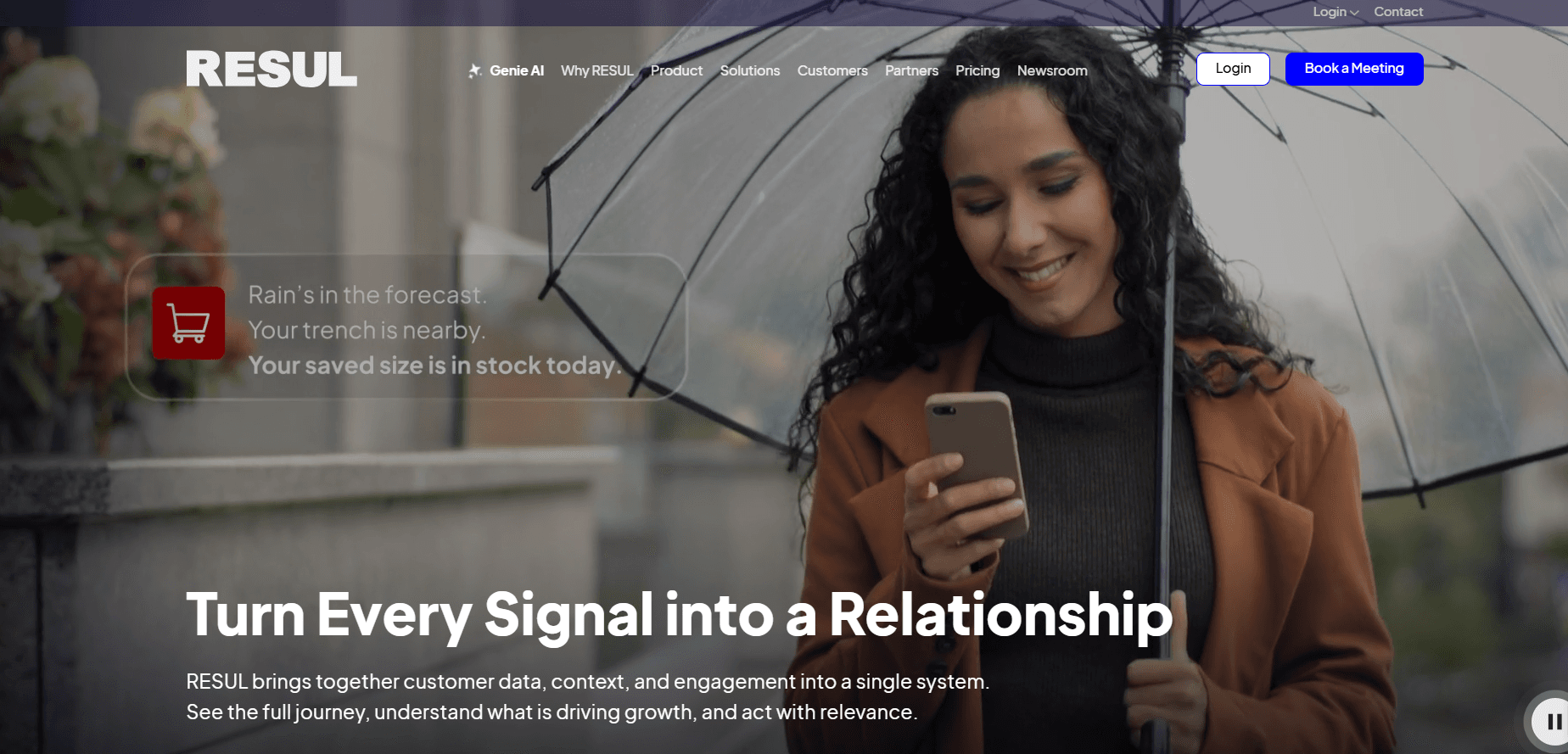
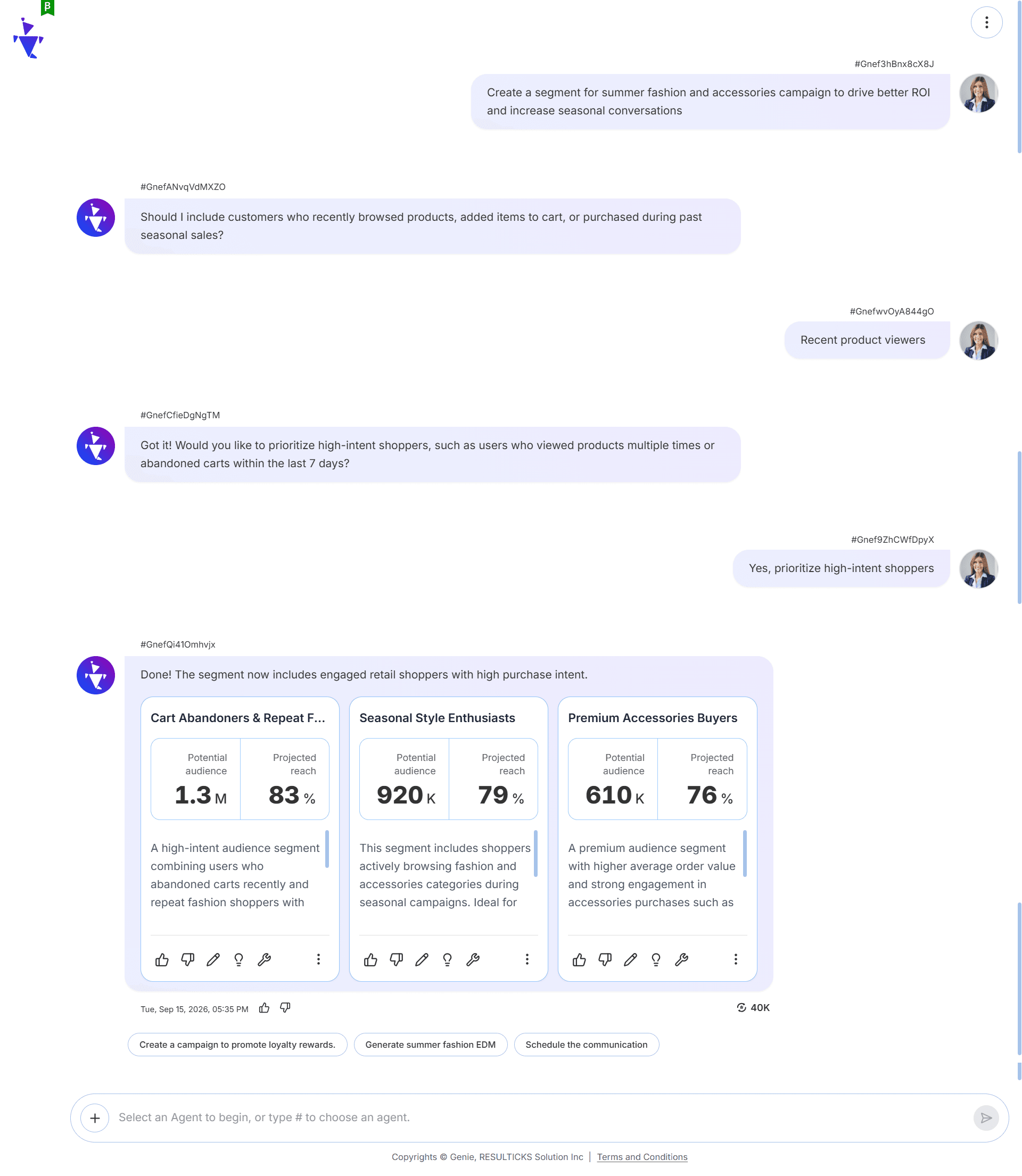
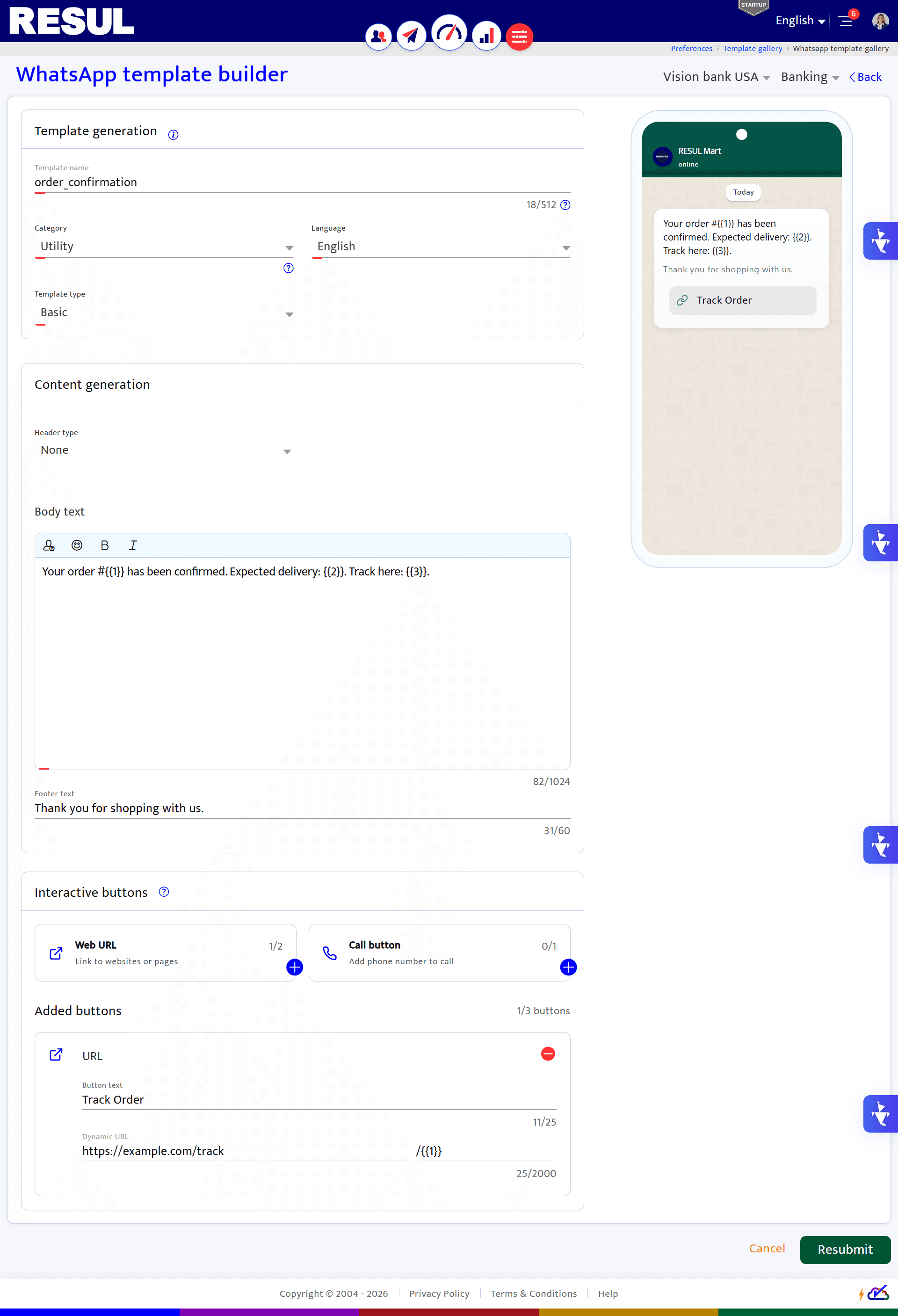
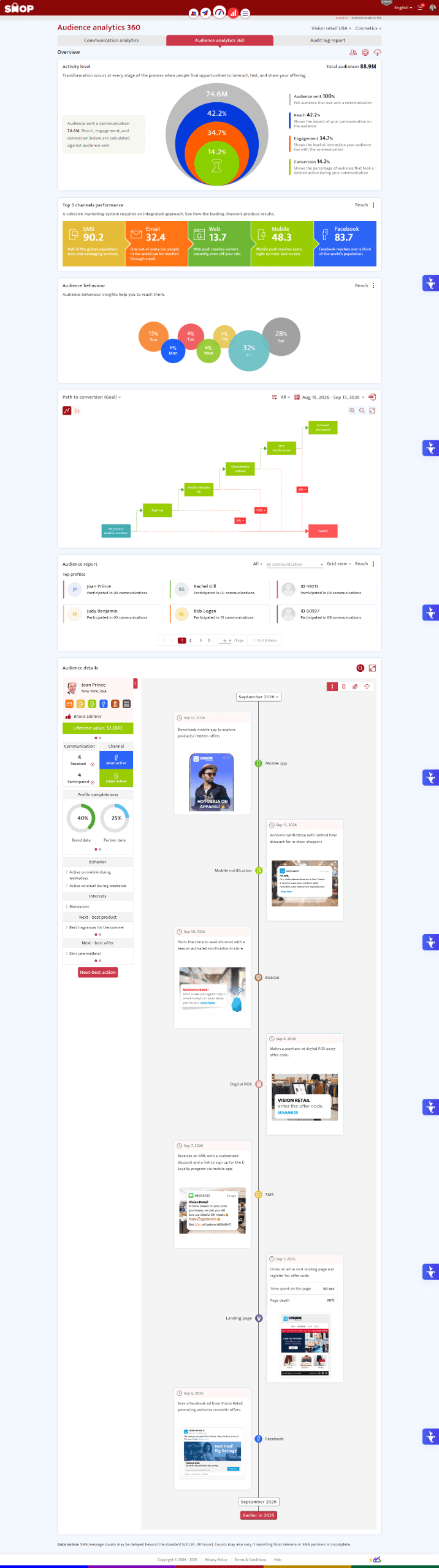
About this app
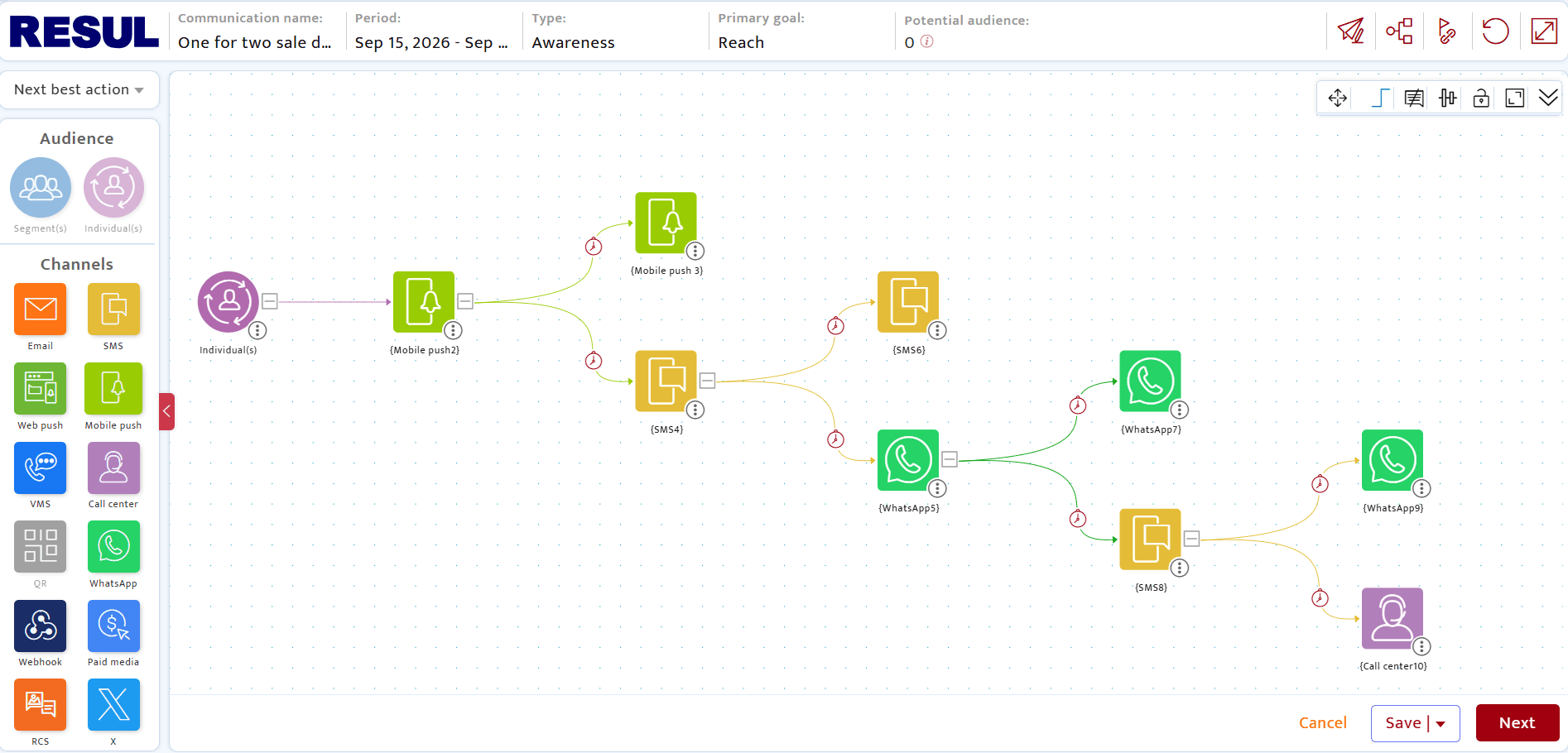
RESUL is an AI-powered customer growth platform that unifies customer data, identity, decisioning, journey orchestration, and omnichannel engagement in real time. It replaces separate CDP, campaign, and analytics tools with a connected customer view across email, SMS, WhatsApp, mobile app, web, branches, kiosks, and QR codes. Powered by Genie, its intelligence layer, RESUL analyzes customer behavior and conversion signals to recommend the next best action, offer, and channel. It connects known and anonymous identities into a unified customer profile in under 50ms. Built for enterprises, RESUL offers multi-brand governance and flexible cloud, hybrid, and on-premise deployment. It is trusted by 200+ enterprises across 50+ countries and powers over 1 billion customer interactions daily.
Key features
- 1Real-time CDP with identity resolution under 50ms, unifying known and anonymous profiles across email, SMS, WhatsApp, app, web, branches, kiosks, and QR codes
- 2Genie AI layer with five specialized agents for data ingestion, segmentation, journey orchestration, content creation, and reporting
- 3Multi-touch attribution and real-time conversion suppression across ad platforms, plus multi-brand governance and cloud/hybrid/on-prem deployment
Target customer profile
Drawn from the product itself, not from a survey.
Demographic
CMO & Growth Lead
Pain points
Difficulty proving ROI, fragmented data across channels, budget allocation based on last-click attribution
Primary needs
Revenue attribution, ROI reporting, budget optimization
Demographic
CRM & Lifecycle Lead
Pain points
High churn rates, one-time buyers not converting to repeat customers, manual intervention for retention
Primary needs
Retention journeys, churn signals, repeat purchase automation
Demographic
Digital Channel Lead
Pain points
Inconsistent messaging across channels, conflicting campaigns, customer annoyance
Primary needs
Cross-channel logic, real-time triggers, message governance
Demographic
Data & Platform Lead
Pain points
Siloed data systems, slow activation, dependency on IT for segmentation
Primary needs
Unified profiles, no-code segments, faster activation
Demographic
CTO & CIO
Pain points
Managing multiple point solutions, identity resolution challenges, security concerns
Primary needs
Identity resolution, hybrid deployment, enterprise security
Scout Review
Written by AI from measured evidence, scored out of 100.
RESUL is an enterprise customer growth platform that unifies CDP, identity resolution, journey orchestration, and omnichannel engagement, powered by a Genie AI layer. The pitch is coherent and the problem is real: fragmented customer data, last-click attribution, and wasted outreach spend. The site content is well-argued, with problem/fix pairs and role-based sections for five buyer personas. But the live homepage fails to render — the hero is a blurry texture and the first two sections show no legible content — which is a catastrophic first impression for a product asking enterprises to book a meeting. Speed is poor (mobile Lighthouse 44/100, LCP 12.7s). Security headers are strong (10/12) but no SOC 2 or ISO report is published. Accessibility is 96/100 with two real contrast and labeling failures. Growth potential is moderate: a specific on-prem and multi-brand wedge in a category owned by Adobe, Salesforce, and Segment. The bones are there; the execution on the live site is not.
Measure by measure
Usability
48Nav, Login, and 'Book a Meeting' CTA are clear, but the live page renders no readable content below the nav, so a first-time visitor learns nothing. No self-serve signup or free trial visible.
Design
30Live homepage hero is a blurry, low-res texture with no focal point; sections 1-2 render no legible content. Maker media shows a clean hero and dashboard, so the gap is the live site itself.
Speed
42Lighthouse mobile 44/100 with LCP 12.7s and TBT 770ms; desktop 53/100. CLS is a clean 0, so the problem is raw load weight, not layout shift.
Security
74Probe shows HTTPS, HSTS, CSP, frame protection, X-Content-Type-Options, SPF and DMARC — 10/12. Missing Referrer-Policy and Permissions-Policy; no published SOC 2 or ISO report found.
Accessibility
78Lighthouse accessibility 96/100, but two real failures: insufficient color contrast and visible text labels without matching accessible names. No WCAG statement or language switcher found.
Growth
58Real, expensive problem (fragmented customer data) with a specific enterprise wedge: sub-50ms identity resolution plus hybrid/on-prem deployment. But Adobe, Salesforce, and Segment own this category.
Improvement areas
- Live homepage hero renders as a blurry, low-res texture with no legible content in the first two sections — replace the asset and fix the render
- Mobile Lighthouse performance 44/100 with LCP 12.7s — compress and lazy-load hero media to reach the sub-2.5s threshold
- No published SOC 2, ISO 27001, or pen-test report despite 'Enterprise Security' claims; Referrer-Policy and Permissions-Policy headers missing
- Two Lighthouse accessibility failures (contrast ratio, accessible names) and no WCAG conformance statement or language switcher
Design & Usability
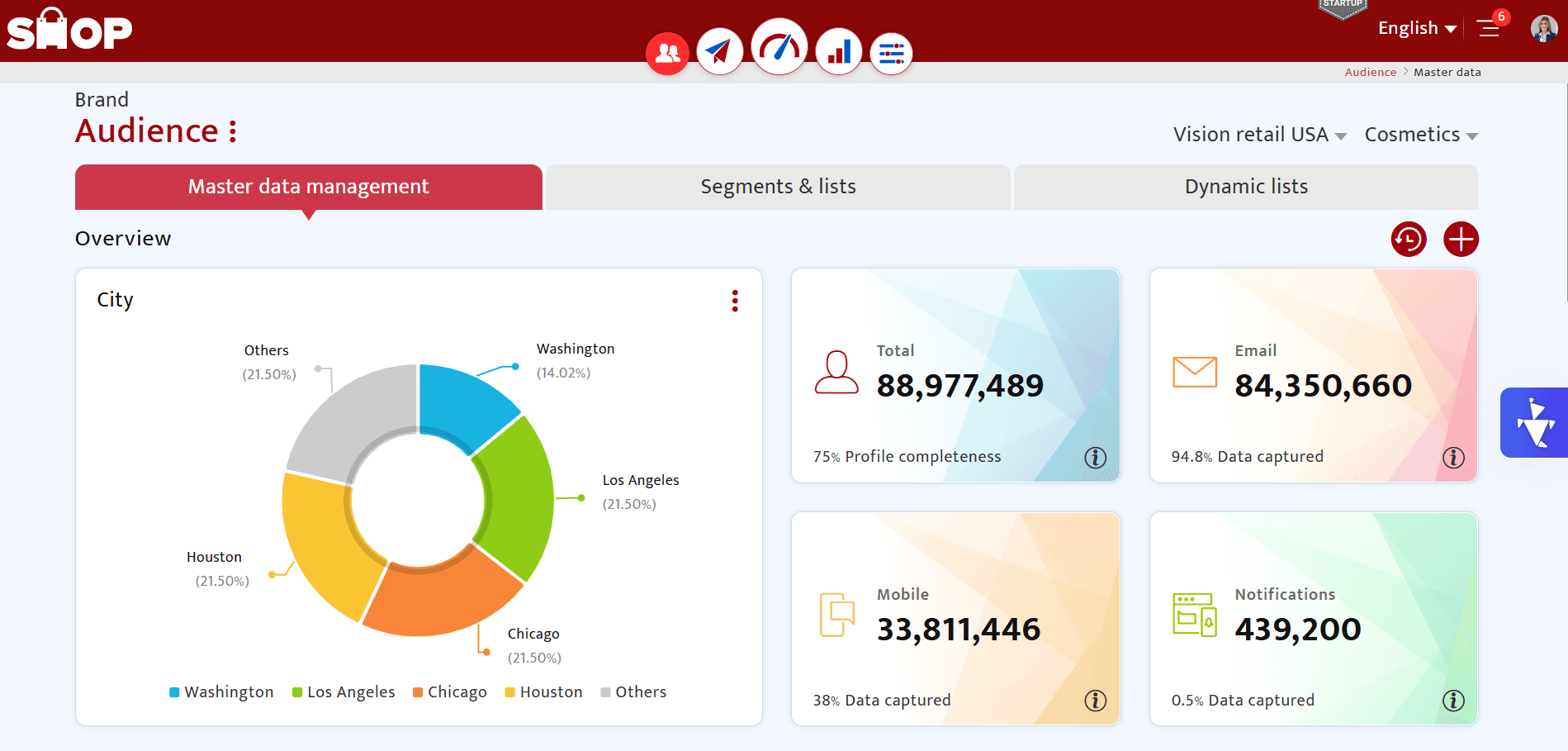
The live homepage is the problem. The nav is clean — logo, Genie AI badge, Login, blue 'Book a Meeting' CTA — and then the hero is a blurry, low-resolution texture with no focal point, followed by a second section that renders no legible content at all. The maker's own media shows what it should look like: a sharp hero with 'Turn Every Signal into a Relationship' and a dashboard with colored metric cards and a readable pie chart. That gap is damning because it means the design exists; the live render just fails. Usability suffers downstream: a visitor cannot read the value proposition, cannot see the five-persona pitch, and has no self-serve signup or free trial to try. The only path forward is 'Book a Meeting,' which is a high-friction ask for someone who just landed and learned nothing. The content itself is well-structured — problem/fix pairs, role-based sections, six differentiators — but none of it survives the render failure. Fix the hero asset and the page becomes competent; leave it and every other investment is wasted.
Speed & Security
Speed is the weakest measured dimension. Lighthouse mobile performance is 44/100 with an LCP of 12.7 seconds — roughly five times the 'good' threshold — plus TBT 770ms and FCP 3.0s. Desktop is 53/100. CLS is a clean 0, so the layout is stable; the problem is sheer asset weight, likely the same oversized hero media that breaks the design. For an enterprise platform, a 12.7s LCP on mobile is a credibility problem before a single feature is evaluated. Security is the strongest measured dimension: the HTTP probe found HTTPS enforced, HSTS, CSP, frame protection, X-Content-Type-Options, SPF, and DMARC — 10 of 12 checklist points. Missing are Referrer-Policy and Permissions-Policy, both easy wins. The site claims 'Enterprise Security' and hybrid/on-prem deployment, which is a real differentiator for regulated buyers, but no SOC 2, ISO 27001, or pen-test report is published on the fetched pages. For a product selling to CTOs and CIOs, the headers are a good start and the missing audit is the gap.
Accessibility & Growth
Accessibility scores 96/100 on Lighthouse, which is strong, but two real failures remain: insufficient background/foreground contrast and visible text labels without matching accessible names. Those are exactly the issues automated tools catch and humans still hit. There is no accessibility statement, no WCAG conformance claim, and no language switcher in the fetched content — notable for a platform claiming 50+ countries. Growth is a judgement on the idea, not the traction. The problem RESUL names is real and expensive: customer data fragmented across a dozen systems, last-click attribution funding the wrong channels, and 30-40% of outreach hitting people who already converted. The target customer is specific — enterprise CMOs, CRM leads, data platform leads, and CIOs — and the wedge is concrete: sub-50ms identity resolution, multi-brand hierarchy, and hybrid/on-prem deployment. That last one matters because Adobe, Salesforce, and Segment are cloud-first, and regulated industries still need on-prem. The limit is that this is a crowded, incumbent-heavy category where the alternatives have deeper ecosystems and sales machines. RESUL can win the on-prem and multi-brand governance niches; it will not out-generic Adobe.
Conclusion
RESUL has the ingredients of a serious enterprise platform: a clear problem statement, a specific wedge in hybrid and on-prem deployment, strong security headers, and a coherent AI layer in Genie. What it does not have is a working homepage. A 12.7-second LCP and a hero that renders as a blurry texture will lose enterprise buyers before they read a single differentiator. The fix list is short and unglamorous: replace the hero asset, compress the media, publish a SOC 2 or ISO report, add Referrer-Policy and Permissions-Policy, fix the two accessibility failures, and add an accessibility statement. None of that is hard. All of it is table stakes for selling to CIOs. Do those five things and RESUL competes on its actual merits — identity resolution speed, multi-brand governance, and on-prem flexibility — against incumbents that structurally cannot match the deployment story. Leave them and the platform stays invisible behind a broken first screen.
Suggestions for improvement
- Replace the live homepage hero asset — it renders as a blurry, low-res texture with no focal point and no legible content in the first two sections.
- Cut mobile LCP from 12.7s: compress and lazy-load hero media, serve next-gen formats, and target under 2.5s.
- Publish a SOC 2 Type II or ISO 27001 report and add Referrer-Policy and Permissions-Policy headers to complete the security story.
- Fix the two Lighthouse accessibility failures (contrast ratio and accessible names) and publish a WCAG conformance statement.
Alternatives comparison
Named competitors, point by point. Nobody paid to appear here or to be left out.
 RESUL |  Adobe Experience Platform |  Salesforce CDP |  Segment | |
|---|---|---|---|---|
| Identity resolution speed | Claims unified customer profile in under 50ms across known and anonymous identities | Real-time customer profile with identity graph; latency not publicly specified | Unified customer profiles via Data Cloud; near-real-time, not sub-50ms claimed | Identity resolution via Unify; near-real-time, no sub-50ms claim |
| Deployment options | Cloud, hybrid, and on-premise deployment supported | Cloud-only (Adobe Experience Platform on Adobe cloud infrastructure) | Cloud-only (Salesforce Data Cloud on Salesforce infrastructure) | Cloud-only SaaS; no on-prem option |
| AI / intelligence layer | Genie: five specialized agents for ingestion, segmentation, journeys, content, and reporting | Adobe Sensei AI and Agentic AI capabilities across the platform | Einstein AI and Agentforce integrated across Salesforce ecosystem | AI-powered features via Twilio Segment; less agentic positioning |
| Multi-brand / account hierarchy | Multi-level account hierarchy for regions, brands, and business units with granular attribution | Multi-brand support via sandboxes and org structure; complex to configure | Multi-brand via Salesforce orgs and Data Cloud; enterprise-grade but heavy | Workspace-level separation; limited native multi-brand governance |
| Omnichannel engagement (digital + physical) | Email, SMS, WhatsApp, mobile app, web, branches, kiosks, QR codes, and IoT touchpoints | Digital channels via Adobe Journey Optimizer; physical touchpoints via integrations | Email, SMS, push, and web via Marketing Cloud; physical via partner ecosystem | Data pipeline to downstream tools; engagement depends on connected destinations |
| Attribution and ROI reporting | Multi-touch attribution across full journey with real-time conversion suppression | Customer Journey Analytics with multi-touch attribution models | Attribution via Marketing Cloud Intelligence (Datorama) integration | Attribution via downstream analytics tools; not native to Segment |
Adobe Experience Platform
A comprehensive customer data platform that enables real-time personalization and journey orchestration.
Salesforce CDP
Customer data platform that unifies data from multiple sources to create a single view of the customer.
Segment
Customer data platform that collects, cleans, and controls customer data to power personalized marketing.
Comparing options? See RESUL alternatives, scored side by side
More Marketing Automation apps
View all Marketing Automation
QRBliss
91Branded QR codes with AI Brand Sync, 15 free dynamic code...

WAButton
90WhatsApp website leads, forms and contact routing

PodRescale
89Every episode becomes two weeks of posts. In your voice. Posted for you.

Opus Growth
89Opus Growth is a single MCP server for Google Ads, Meta Ads, TikTok Ads, LinkedIn Ads, Microsoft Ads and ChatGPT Ads. ChatGPT, Claude, Codex, Perplexity, Cursor and other assistants connect with the same address.

NudgeWin
89Automated quote follow-up for trades and service businesses.

AI Comment Exporter
88YouTube comment exporter to CSV, Excel and JSON, with AI reports

Indexaro
88AI visibility tracker for SEO, AEO, and GEO

TranscriptYou
88Free YouTube transcript generator with timestamps and AI ...

Spek
88Grow your app with self-learning ASO agents

Spotwise
88AI-powered radio ad monitoring platform that tracks compe...

Fenn
88AI visibility tracker that checks if ChatGPT recommends y...

HiFiveStar
88HiFiveStar helps local businesses get more Google reviews with review requests, a review link and QR code, and AI replies.


A platform dedicated to providing unbiased reviews of newly launched applications, analyzing everything from their features to their full potential.
info@scoutforge.net© 2026 Scoutforge. All rights reserved.
