Cycling through all six. Tap any point to stop.
Measured on six things
Fast & affordable cloud sandboxes for AI agents
Growth
62Sharp wedge: agent-native sandboxes with per-second billing and a published boot-time benchmark, aimed at the Claude Code / Codex / Cursor crowd. Real category headroom; early-stage traction (domain ~0.6 years old).
Screenshots
1 / 3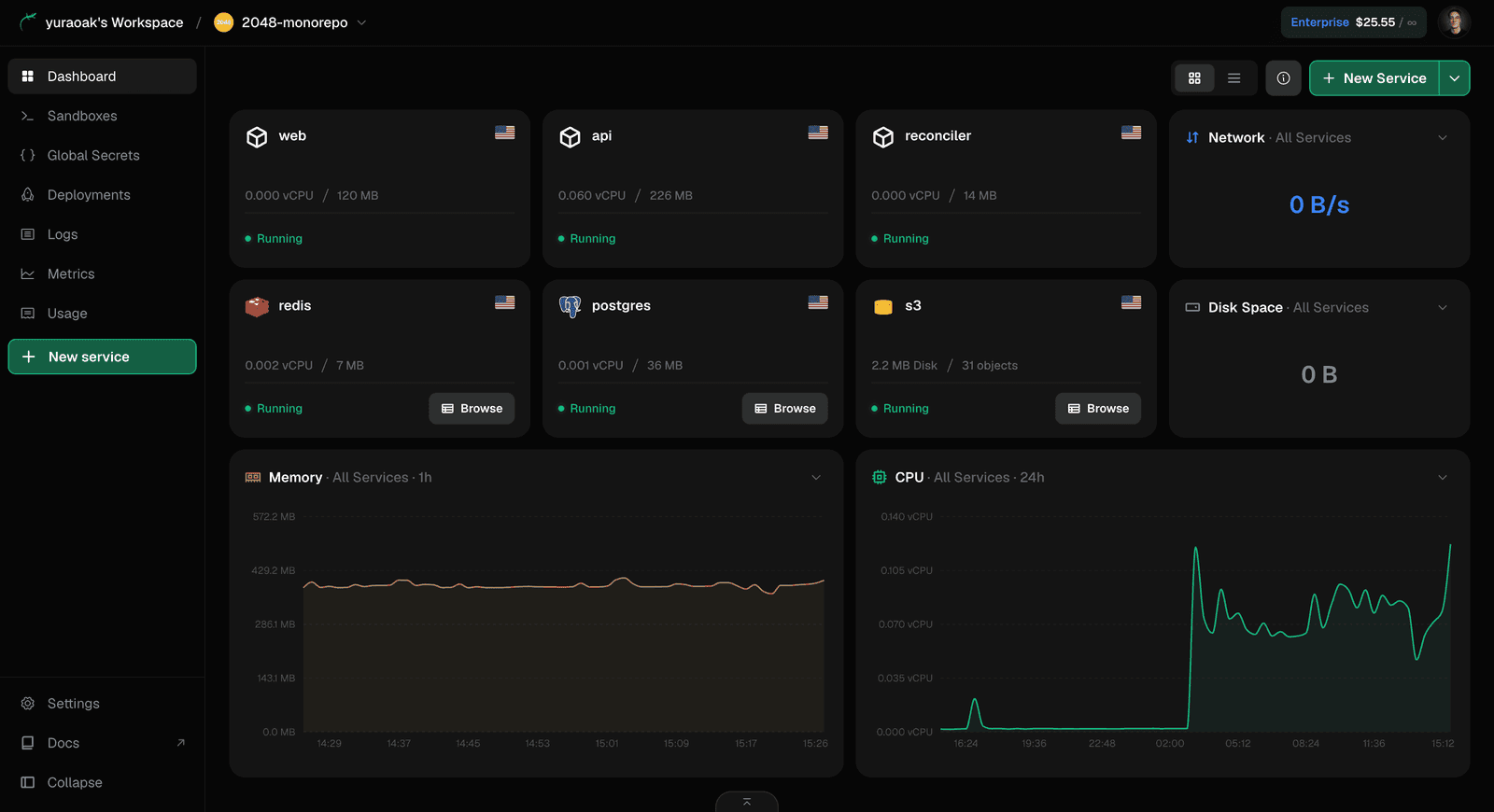
About this app
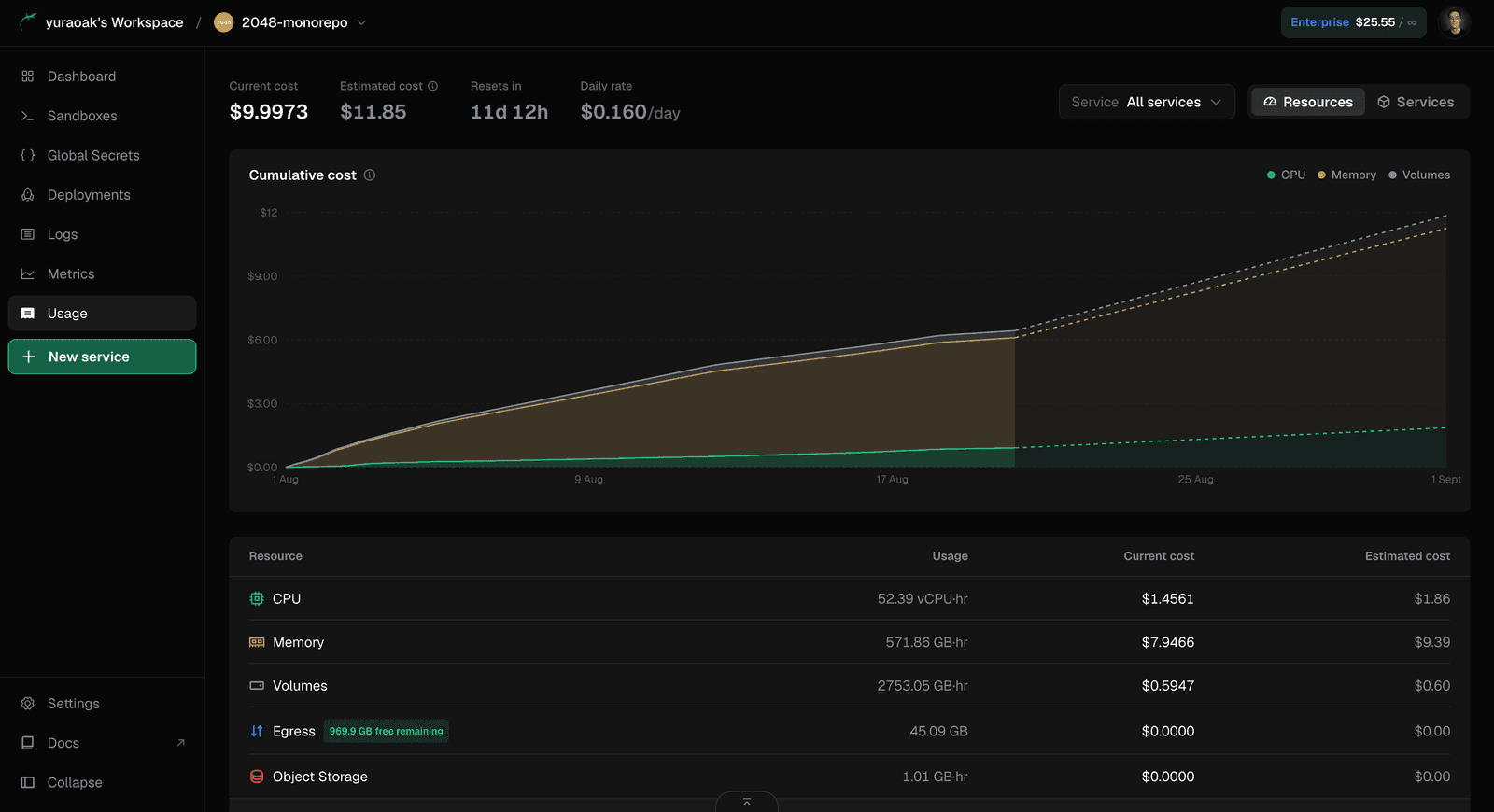
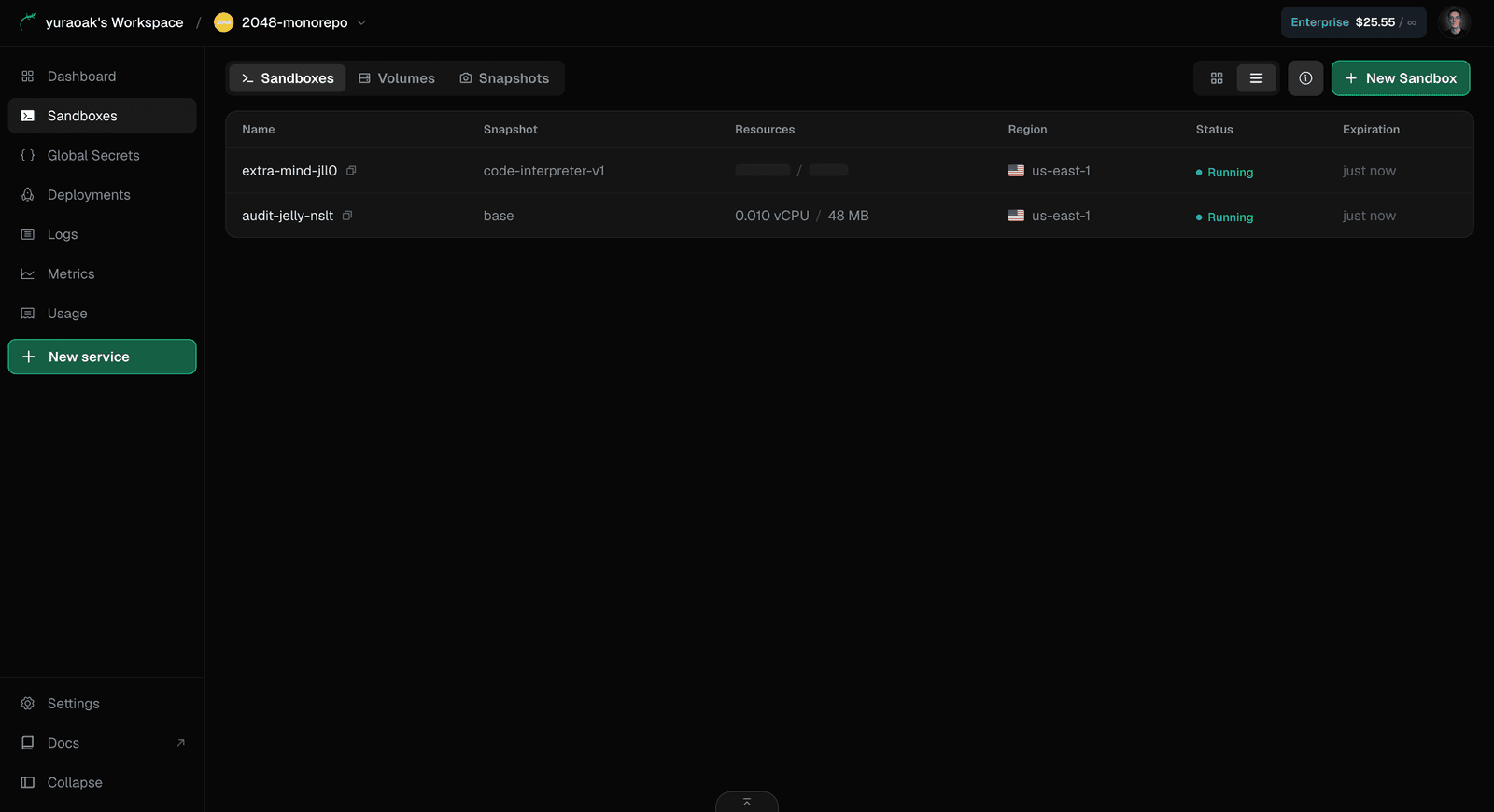
Lizard gives AI agents cloud sandboxes to run code, work with files, browse the web and test apps. Lizard Sandboxes run as Firecracker microVMs with their own kernel, a shell, HTTPS URLs for open ports, and a built-in desktop and browser. Persistent Volumes keep files between runs. Lizard SDK for TypeScript and Python, Lizard CLI, Lizard MCP and Lizard Skill connect sandboxes to code and coding agents.
Key features
- 1CLI-first deploys (`lizard up`) with stack auto-detection and managed Postgres, Redis, and S3.
- 2Firecracker microVM sandboxes with 228ms median boot; Pro runs up to 40 vCPU of sandboxes at once (20 Small, 10 Medium or 5 Large), Pro 5x 220 vCPU and Pro 20x 1,200 vCPU.
- 3Per-second billing with $19/month Pro plan including $19 of usage; pay-as-you-go above.
- 4Agent-native: machine-readable logs, JSON CLI output, and integrations for Claude Code, Codex, Cursor.
Target customer profile
Drawn from the product itself, not from a survey.
Demographic
Solo developers and indie hackers
Pain points
Overwhelmed by cloud complexity, paying for idle resources, spending too much time on DevOps
Primary needs
Simple deployment, cost efficiency, quick setup for side projects
Demographic
AI developers and coding agent enthusiasts
Pain points
Existing platforms lack agent-friendly APIs, manual integration with agents, opaque deployment processes
Primary needs
Seamless integration with Claude Code, Codex, Cursor; machine-readable logs; agent-readable commands
Demographic
Small startups and scale-ups
Pain points
Budget constraints, need for fast iteration, managing multiple services efficiently
Primary needs
Scalable infrastructure, managed databases, easy collaboration, audit logs for compliance
Scout Review
Written by AI from measured evidence, scored out of 100.
Re-reviewed Oct 28, 2026 · previously 82/100
Lizard is a cloud sandbox platform built for AI coding agents, and it mostly delivers on that premise: a CLI-first workflow, deep framework docs, per-second billing, and a published benchmark showing 228ms median sandbox boots. The site is polished and dense, the security headers are complete, and the pricing page is unusually honest — SOC 2 is 'coming soon', not claimed, and the calculator spells out that running sandboxes bill even while idle. The weak spots are the trial's card requirement before any value, two real accessibility failures on a dark theme, and a growth story that leans on a benchmark competitors can rerun. It's a competent, well-positioned product in a crowded category — not a category leader yet, but not pretending to be.
Measure by measure
Usability
68Docs are genuinely deep — framework guides for a dozen stacks plus full CLI reference. Onboarding is CLI-first and fast for its audience, but the 7-day trial demands a card before you see anything work.
Design
76Dark, terminal-flavored landing page with monospace accents, an embedded sandbox preview mock, and a clean pricing calculator. Dense but coherent; branding holds across homepage, docs, and pricing.
Speed
72Lighthouse mobile 86/100 (LCP 2.1s, CLS 0), desktop 74/100. The site also publishes a 300-run sandbox boot benchmark: 228ms median vs E2B 264ms, Daytona 819ms, Modal 929ms.
Security
74Full security-header sweep (HSTS, CSP, frame protection, Referrer-Policy, Permissions-Policy, SPF, DMARC) — 12/12. Enterprise offers signed DPA, SSO/SAML, RBAC and audit log. SOC 2 is explicitly 'coming soon', not claimed.
Accessibility
70Lighthouse accessibility 94/100, but two real failures: aria-hidden containers with focusable descendants, and insufficient color contrast. No WCAG statement, no multi-language support.
Growth
62Sharp wedge: agent-native sandboxes with per-second billing and a published boot-time benchmark, aimed at the Claude Code / Codex / Cursor crowd. Real category headroom; early-stage traction (domain ~0.6 years old).
Improvement areas
- Trial requires a card before any value — friction for developers comparison-shopping clouds.
- Two Lighthouse accessibility failures (aria-hidden focusable descendants, contrast) and no WCAG statement.
- SOC 2 is 'coming soon' — no published audit, pen-test, or bug bounty for enterprise buyers.
- Growth story leans on a benchmark competitors can rerun; no visible community or ecosystem moat yet.
Design & Usability
Lizard's site reads like it was built by someone who actually uses the product: dark terminal aesthetic, monospace accents, an embedded sandbox preview, and a pricing calculator that lets you drag sliders and watch the number move. It's dense — hero, benchmark table, provider comparison, and pricing all compete on one scroll — but the branding is consistent and the docs match the tone. Usability is where the product earns its keep: framework guides for Next.js, Django, FastAPI, Rails, Go and more, a full CLI reference, and a `lizard up` flow that's genuinely one command. The friction is at the front door — the 7-day trial requires a card before you can run anything, which is a real tax on a developer evaluating three clouds in an afternoon.
Speed & Security
Speed is solid but not spectacular on the marketing site: Lighthouse mobile 86/100 with LCP 2.1s and CLS 0, desktop 74/100 with 379ms TBT. The more interesting number is the one Lizard publishes about itself — 228ms median sandbox boot across 300 runs, ahead of E2B (264ms), Daytona (819ms) and Modal (929ms). Security is clean at the transport layer: HTTPS enforced, HSTS, CSP, frame protection, Referrer-Policy, Permissions-Policy, SPF and DMARC all present, 12/12 on the header checklist. Compliance is where it gets honest — SOC 2 is listed as 'coming soon' under Enterprise, not claimed, and the Enterprise tier offers signed DPA, SSO/SAML, RBAC and audit logs. No bug bounty or pen-test report is published.
Accessibility & Growth
Accessibility lands at 94/100 on Lighthouse, which sounds great until you read the failing audits: aria-hidden containers with focusable descendants, and insufficient color contrast. Both are fixable, both are common on dark-themed dev tools, and neither is acknowledged anywhere on the site — no WCAG statement, no accessibility page, English-only UI. Growth is the more interesting story. Lizard is aimed at a specific, growing segment — developers shipping code through Claude Code, Codex and Cursor — and its differentiator is concrete: per-second sandbox billing plus a published boot-time benchmark against E2B, Daytona and Modal. That's a real wedge. The honest limit is that the wedge is a benchmark table any competitor can rerun, and the category is crowded with well-funded sandbox providers. Early-stage signals (domain ~0.6 years old, minimal social presence) are context, not a verdict.
Conclusion
If you're already shipping through Claude Code or Cursor and you're tired of hand-holding AWS, Lizard is worth the trial — the docs will get you to `lizard up` in minutes and the per-second billing is genuinely cheaper than the alternatives on paper. Go in knowing the trial wants a card, SOC 2 isn't there yet, and the accessibility story is unfinished. For a solo dev or small team, that's a reasonable trade. For anyone with compliance requirements, wait for the SOC 2 report before you migrate anything real.
Suggestions for improvement
- Drop the card requirement for the 7-day trial, or at least let users run one sandbox before asking for payment details.
- Fix the two Lighthouse accessibility failures: aria-hidden focusable descendants and dark-theme contrast ratios.
- Publish an accessibility statement and a WCAG conformance target — dev tools get audited by enterprise buyers.
- Ship the SOC 2 report or a public security page with pen-test summary; 'coming soon' caps enterprise deals.
Alternatives comparison
Named competitors, point by point. Nobody paid to appear here or to be left out.
 Lizard |  Render |  Fly.io |  DigitalOcean | |
|---|---|---|---|---|
| Primary positioning | Cloud sandboxes and deploys built for AI coding agents | General-purpose PaaS for web apps and services | Full-stack apps and databases close to users | Droplets, managed databases, and Kubernetes |
| Billing model | $19/mo Pro with $19 usage included; per-second sandbox billing | Per-service monthly plans plus usage-based add-ons | Per-second VM billing with monthly plan tiers | Hourly droplet billing with monthly caps |
| AI agent integration | Native CLI + SDK + skills for Claude Code, Codex, Cursor, opencode | No first-class agent integration; standard Git deploys | CLI and API; no dedicated agent skills | API and CLI; no agent-native workflow |
| Managed databases | Managed Postgres, Redis, and S3-compatible storage | Managed Postgres and Redis | Managed Postgres and Redis (Upstash) | Managed Postgres, MySQL, Redis, MongoDB |
| Compliance / SOC 2 | SOC 2 'coming soon'; DPA and security review on Enterprise | SOC 2 Type 2 and HIPAA available | SOC 2 Type 2 and HIPAA available | SOC 2, ISO 27001, HIPAA, PCI-DSS |
Render
A cloud platform that simplifies deployment with a focus on ease of use and automatic scaling.
Fly.io
A platform for running full-stack apps and databases close to users, with per-app scaling.
DigitalOcean
A cloud provider offering droplets, managed databases, and Kubernetes with a user-friendly interface.
Comparing options? See Lizard alternatives, scored side by side
More Development & Engineering apps
View all Development & Engineering
CreateMyCoin
92A no-code Solana token creator that deploys SPL tokens in...

Vibe Coding Agent Skills
92A free, open-source platform offering 110 AI agent skills...

CC Switch
91Open-source desktop app for switching AI coding providers...

DemoVexa
90Turn your code into professional product demo videos with AI-generated scripts, animated UI, and natural voiceovers.

TaxID
90Fast EU VAT validation API for developers, covering 27 EU...

Olevx
89112 free client-side web tools plus a private autosaving ...

FontPlop
89Browser-based font viewer & tester for TTF, OTF, WOFF, WO...

deed.page
89Permanent web hosting for AI agents, no human step

Denpex
89AI-powered GPU failure diagnosis for distributed ML training

Webfetch
89Web scraping API that turns any URL into HTML, text, Mark...

BeartIMAGE
88BeartIMAGE is a free, web-based image processing platform engineered for fast, bulk photo editing and conversion directly in your browser.

Claw Messenger
88Claw Messenger is an iMessage API service that gives AI a...


A platform dedicated to providing unbiased reviews of newly launched applications, analyzing everything from their features to their full potential.
info@scoutforge.net© 2026 Scoutforge. All rights reserved.
