Cycling through all six. Tap any point to stop.
Measured on six things
Self-hosted E2EE chat over Tor Hidden Service
Speed
60No Lighthouse performance run was captured, so this sits in the category-typical band. Site claims strict CSP and no third-party CDNs, which usually means lighter pages; crypto snippets and a screenshot carousel are the main weight.
Screenshots
1 / 7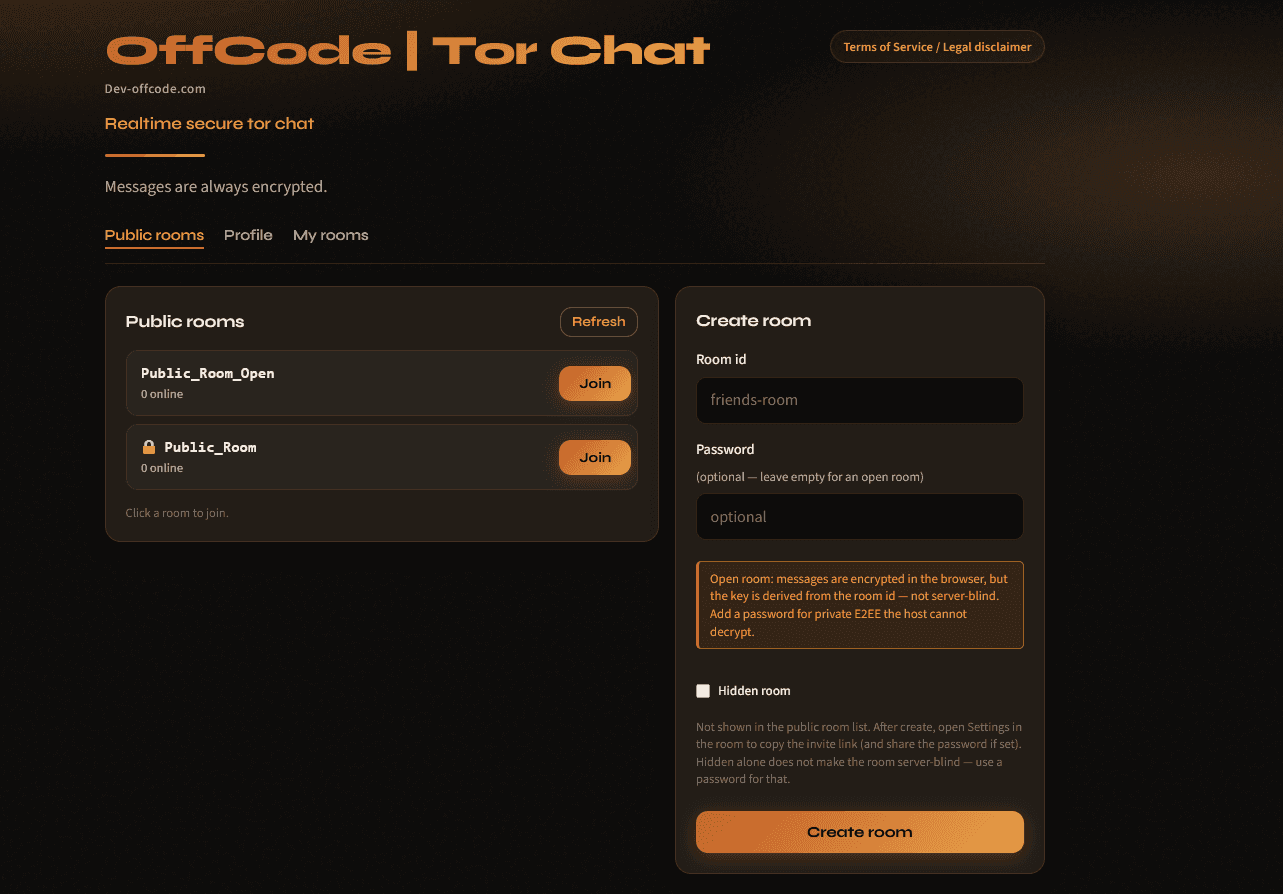
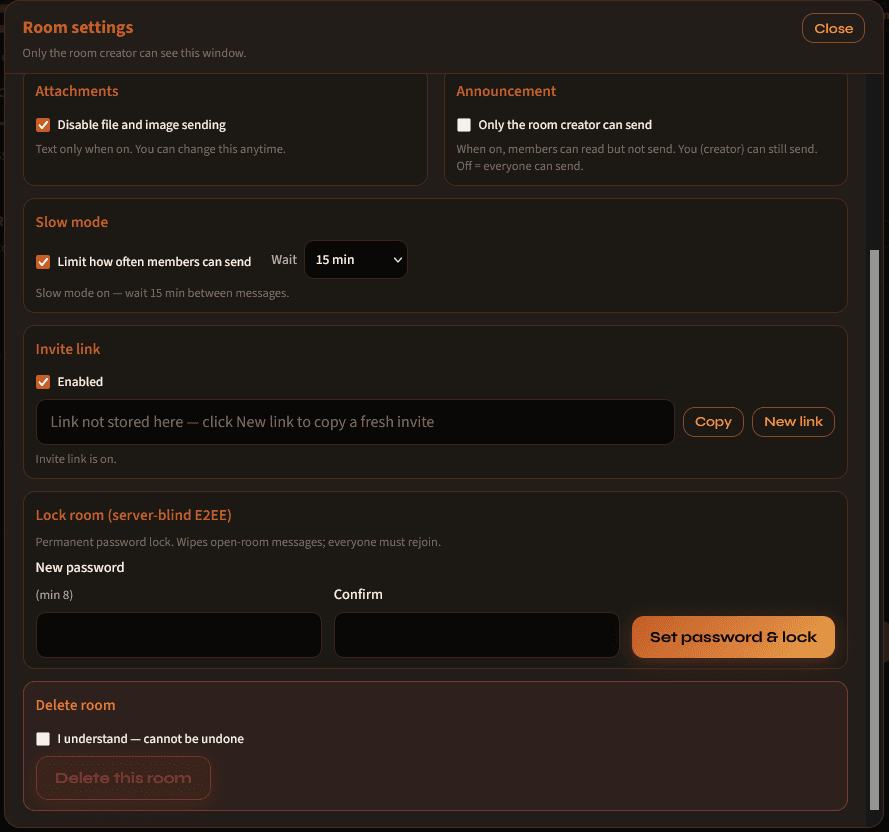
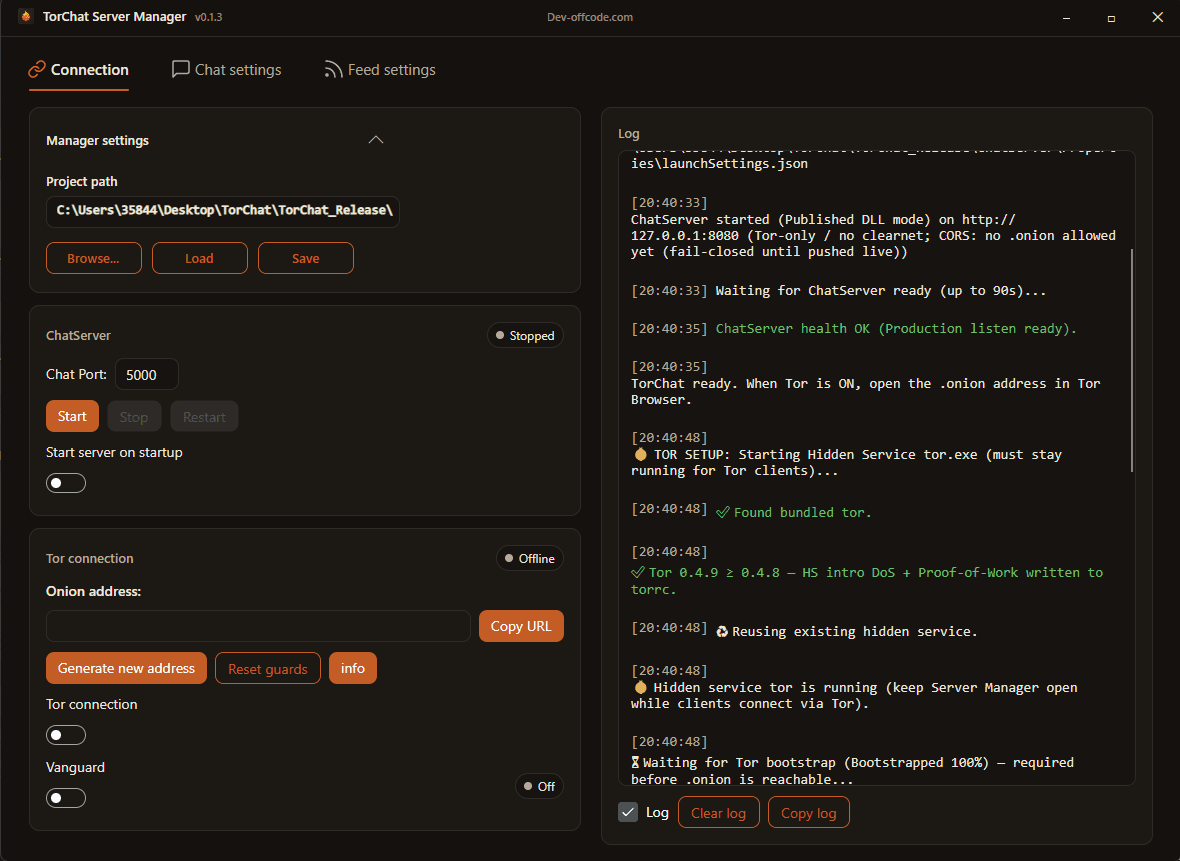
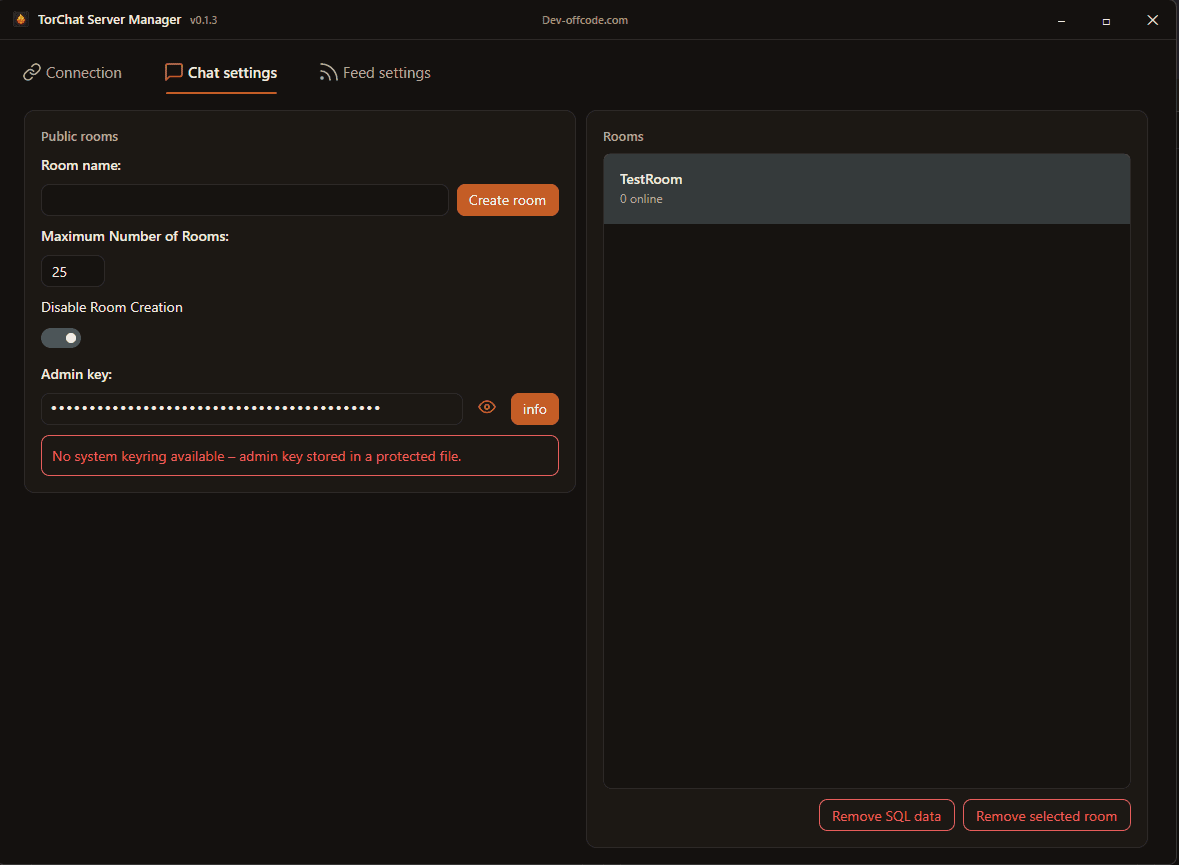
About this app
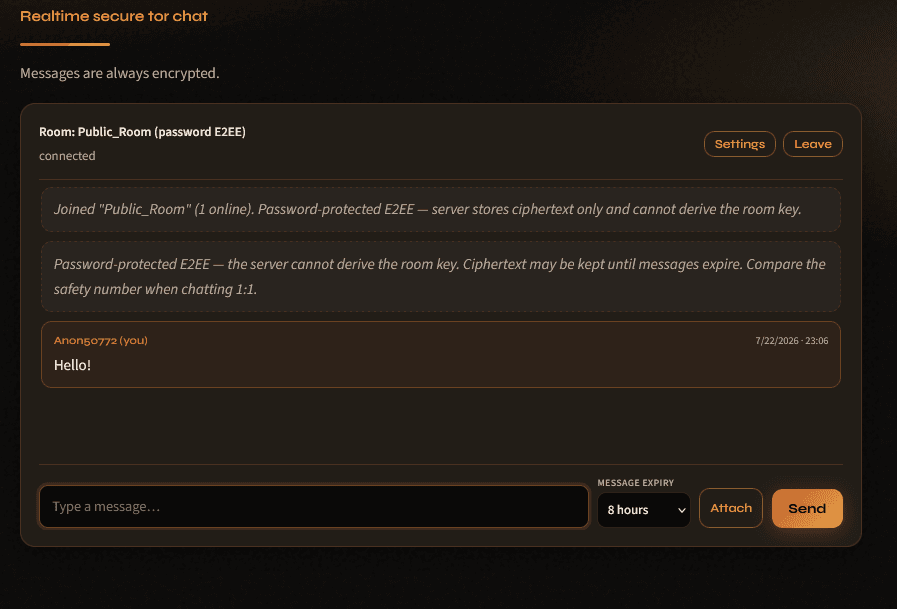
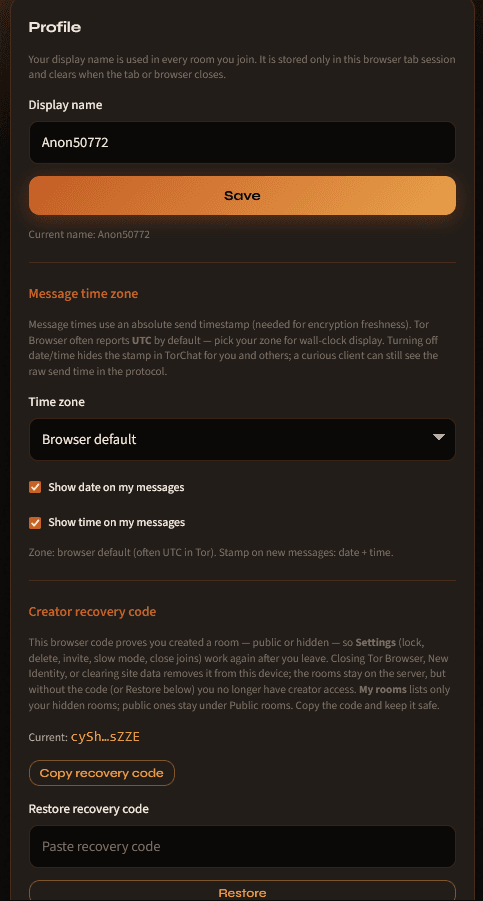
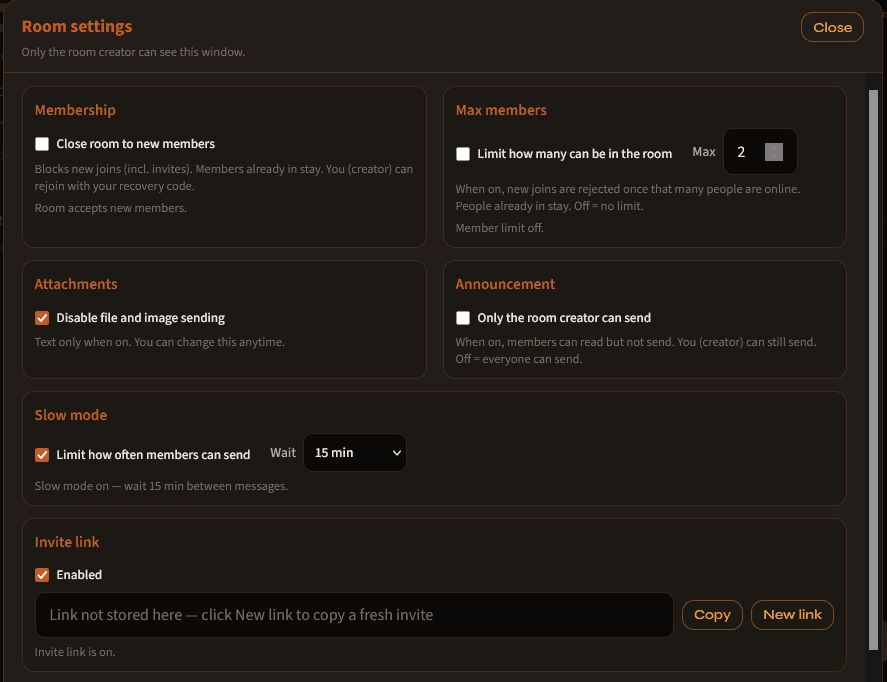
OffCode Tor Chat is a self-hosted, end-to-end encrypted chat application that runs exclusively over the Tor network via a Hidden Service (.onion). You host it yourself—on Windows, macOS, or Ubuntu Desktop using the included Server Manager, or headless via Docker—and guests join through Tor Browser with just a display name. Password-protected rooms use browser-side WebCrypto AES-256-GCM encryption with PBKDF2 (600k iterations), meaning the server (and even you, the host) cannot read messages. Open rooms are public encrypted channels by design. Features include hidden rooms with invite links, mandatory message TTL (30 min to 1 week, no forever option), E2EE file attachments (FileSeal, max 32 MiB) with EXIF/XMP stripping, 1:1 ECDH hybrid with safety numbers, creator controls like slow mode and read-only mode, SQLCipher at-rest storage, replay protection, and optional Full Vanguards for guard discovery hardening. The UI is Tor Browser-friendly with strict CSP, no third-party CDNs, and f...
Key features
- 1Server-blind password rooms: browser-side PBKDF2 (600k) → AES-256-GCM, host cannot read messages
- 2Tor Hidden Service hosting via Server Manager GUI (Win/macOS/Ubuntu) or headless Docker
- 3Creator controls: hidden rooms with invites, slow mode, read-only, message TTL (30 min–1 week), E2EE file attachments with EXIF stripping
Target customer profile
Drawn from the product itself, not from a survey.
Demographic
Privacy-conscious individuals and activists
Pain points
Big-tech messengers scan messages; fear of surveillance and data mining
Primary needs
Server-blind E2EE, no accounts, Tor-only access, self-hosted control
Demographic
Small community organizers and moderators
Pain points
Platform dependence, censorship, lack of private invite-only spaces
Primary needs
Hidden rooms with invites, creator controls, message TTL, no cloud provider
Demographic
Security researchers and developers
Pain points
Opaque encryption, no source code access, vendor lock-in
Primary needs
Open architecture, verifiable crypto (PBKDF2, AES-GCM, ECDH), Docker/self-host, source license
Scout Review
Written by AI from measured evidence, scored out of 100.
OffCode Tor Chat is a self-hosted, Tor-only E2EE chat app that takes its own threat model seriously. Password rooms are server-blind (PBKDF2 600k → AES-256-GCM, key never leaves the browser), open rooms are public by design and say so, and hidden rooms use invite links. Hosts run it via a Server Manager GUI or Docker; guests join with a display name in Tor Browser. The security posture is the standout — 12/12 on the header probe and a crypto design that reads like a spec, though no third-party audit backs it up. Design is confident and on-brand; accessibility has three concrete Lighthouse failures to fix; speed is unmeasured but plausibly lean. Growth is a real niche with a real wedge, not a mass market.
Measure by measure
Usability
63Guest flow is genuinely frictionless: .onion link, display name, done. Host side splits into Server Manager GUI or Docker, with FAQ/Security/Architecture pages. Tor Browser requirement is a real ceiling on who can use it.
Design
68Dark Copper/Forge theme with real crypto code as hero content is a confident, on-brand choice for a security tool. Screenshot carousel covers six app views; single long-form page is dense but coherent.
Speed
60No Lighthouse performance run was captured, so this sits in the category-typical band. Site claims strict CSP and no third-party CDNs, which usually means lighter pages; crypto snippets and a screenshot carousel are the main weight.
Security
7812/12 on the header/DNS probe — HSTS, CSP, frame protection, SPF, DMARC all set. Product design is serious: browser-side AES-256-GCM, PBKDF2 600k, ECDH hybrid, SQLCipher at rest, replay protection. No third-party audit found.
Accessibility
70Lighthouse a11y 93/100 with three real failures: contrast, heading order, touch targets. No accessibility statement or multi-language support found. Solid automated baseline, unaddressed manual gaps.
Growth
62Real problem, specific segment (activists, organizers, researchers), and a genuine wedge: Tor-native, self-hosted, server-blind password rooms with creator controls Signal and Element structurally won't copy.
Improvement areas
- Three Lighthouse accessibility failures: color contrast, heading order, touch target sizing
- No third-party security audit, pen-test, or bug bounty to validate the crypto claims
- Tor Browser requirement sharply limits addressable audience; no multi-language UI
Design & Usability
OffCode Tor Chat's site leans hard into its own crypto — the hero literally shows PBKDF2, AES-GCM, and X25519 snippets — and for this audience that's the right flex. The Copper/Forge dark theme is consistent, the screenshot carousel covers six real app views, and the 'How it works' diagram walks plaintext-vs-ciphertext clearly. Usability is split: guests get a genuinely frictionless path (onion link, display name, no install), while hosts choose between a Server Manager GUI on Windows/macOS/Ubuntu or headless Docker. The Tor Browser requirement is a hard ceiling on who can ever use it, and the FAQ/Security/Architecture pages carry the rest of the onboarding weight.
Speed & Security
No Lighthouse performance measurement was captured, so speed sits in the category-typical band — the site's strict CSP and no-third-party-CDN policy suggests a lean page, but the crypto snippets and screenshot carousel are the visible weight. Security is the strongest dimension: the HTTP/DNS probe returned 12/12 (HTTPS enforced, HSTS, CSP, frame protection, X-Content-Type-Options, Referrer-Policy, Permissions-Policy, SPF, DMARC), and the product design is unusually serious — browser-side AES-256-GCM, PBKDF2 at 600k iterations, ECDH P-256 hybrid with safety numbers, SQLCipher at rest, replay protection, optional Full Vanguards. What's missing is external validation: no SOC 2, ISO, pen-test report, or bug bounty surfaced in the collected evidence.
Accessibility & Growth
Accessibility lands at 70: Lighthouse scored 93/100 but flagged three real failures — insufficient color contrast, non-sequential heading order, and undersized touch targets — and there's no accessibility statement or multi-language support in the site content. For a privacy tool whose whole pitch is inclusion against surveillance, those are fixable gaps worth closing. Growth is a judgement on the idea: the target segment (activists, small community organizers, security researchers) is specific and the wedge is real — Tor-native access, self-hosted control, server-blind password rooms, and creator controls like TTL, slow mode, and read-only that Signal and Element structurally won't ship. Cwtch is the closest peer and lacks the self-hosted server model and creator tooling. The honest limit is the Tor Browser requirement, which caps the addressable audience to people already in that world.
Conclusion
If you're an organizer, researcher, or privacy die-hard who needs a chat room you actually control and whose host genuinely can't read, OffCode Tor Chat is one of the few options built for exactly that. If you need to onboard normal humans, the Tor Browser requirement will end the conversation before it starts. Fix the contrast, heading order, and touch targets, publish a pen-test or bug bounty, and this becomes a much easier recommendation inside its niche.
Suggestions for improvement
- Fix the three Lighthouse a11y failures: color contrast, heading order, and touch target sizing.
- Publish a third-party pen-test or open a bug bounty to back the crypto claims with external validation.
- Add a short accessibility statement and at least one non-English UI language for activist audiences.
- Capture and publish real performance numbers so the 'no CDNs, strict CSP' claim has receipts.
Alternatives comparison
Named competitors, point by point. Nobody paid to appear here or to be left out.
 OffCode Tor Chat |  Signal | Element (Matrix) |  Cwtch | |
|---|---|---|---|---|
| End-to-end encryption | Yes — browser-side AES-256-GCM, PBKDF2 600k, ECDH hybrid; server-blind in password rooms | Yes — Signal Protocol, centralized | Yes — Olm/Megolm via Matrix | Yes — metadata-resistant, decentralized |
| Self-hosted server | Yes — Server Manager GUI or Docker, Tor Hidden Service | No — centralized provider only | Yes — Matrix homeserver, not Tor-native | No — decentralized peer model, no self-hosted server |
| Tor-native access | Yes — .onion Hidden Service, Tor Browser only | No | No — clearnet homeserver | Yes — Tor-based transport |
| Account required | No — display name only | Yes — phone number | Yes — Matrix account | No — identity-based, no account |
| Creator controls (TTL, slow mode, read-only) | Yes — slow mode, read-only, mandatory TTL, hidden rooms | Limited — disappearing messages, admin controls | Yes — room power levels, retention policies | Limited — group admin, no TTL/slow mode |
| At-rest encryption | Yes — SQLCipher | Yes — encrypted local store | Depends on homeserver config | Yes — encrypted local storage |
Signal
Popular centralized E2EE messenger with phone number accounts, but relies on a single provider and is subject to scanning debates.
Element (Matrix)
Decentralized chat protocol with E2EE, but requires homeserver hosting and is not Tor-native; more complex to set up for anonymous guests.
Cwtch
Metadata-resistant, decentralized messaging over Tor with groups, but lacks self-hosted server model and creator controls like TTL or slow mode.
Comparing options? See OffCode Tor Chat alternatives, scored side by side
More Security apps
View all Security
OBVELO
88Privacy gateway that masks personal data in LLM traffic

ProcessSpy
87A native macOS process explorer and advanced monitor that...

Sidenty
87Sidenty is a professional digital identity protection ser...

Basalt
86Eighteen PDF tools in one native Mac window: merge, split, compress, OCR, Bates numbering, forms, signing and redaction. Offline. $29 once.

Sanctix
85Sanctions screening with verifiable SHA-256 audit trails.

PromptTrace
85Free hands-on AI security labs for prompt injection and L...

eGuard
84Verifiable parental controls for families in the Philippines

yourdrive
84YourDrive is a self-hosted file manager and media timeline that runs entirely on your own infrastructure. Organize files in nested folders, move them with drag-and-drop, search instantly, and browse photos and videos by month and year. Files stream straight to your own AWS S3, Azure Blob, MinIO, Cloudflare R2 or Wasabi storage. Install with one command. Free for personal use; teams pay per server, not per seat.

Noden
84Native macOS SSH, SFTP & RDP client with a Keychain-backe...

Archonum
84Real-device browser automation for AI agents

VaultKeepR
84Password manager with no email, no account, no tracking. ...

Privacy Requests
84DSAR management software for small teams.

A platform dedicated to providing unbiased reviews of newly launched applications, analyzing everything from their features to their full potential.
info@scoutforge.net© 2026 Scoutforge. All rights reserved.
