Cycling through all six. Tap any point to stop.
Measured on six things
Improve your AI ranking Track how AI ranks you today
Security
40HTTPS not enforced, no HSTS, CSP, frame protection or Referrer-Policy; checklist 2/12. SPF and DMARC present. No SOC 2, ISO or bug bounty claims found.
Screenshots
1 / 7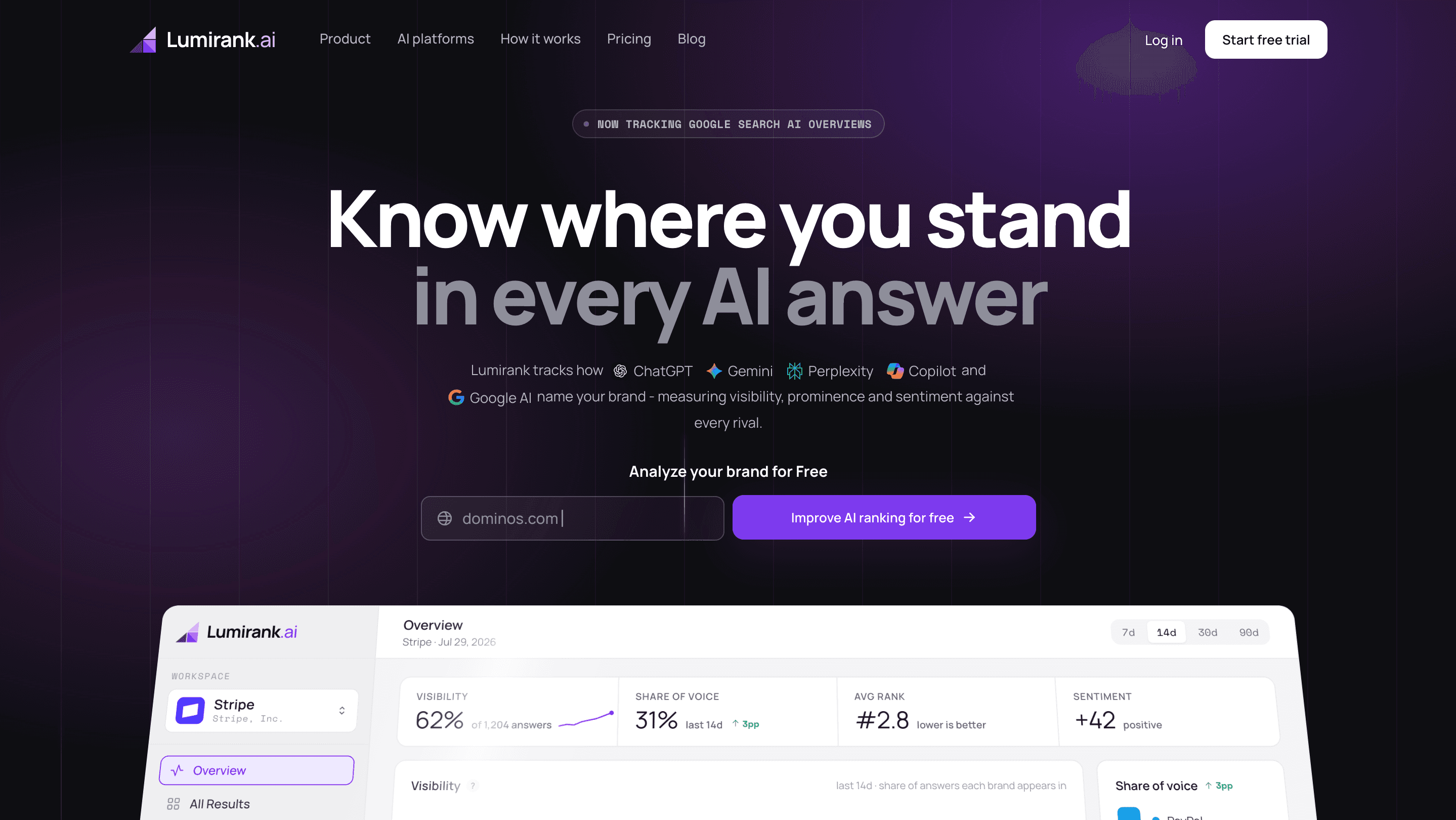
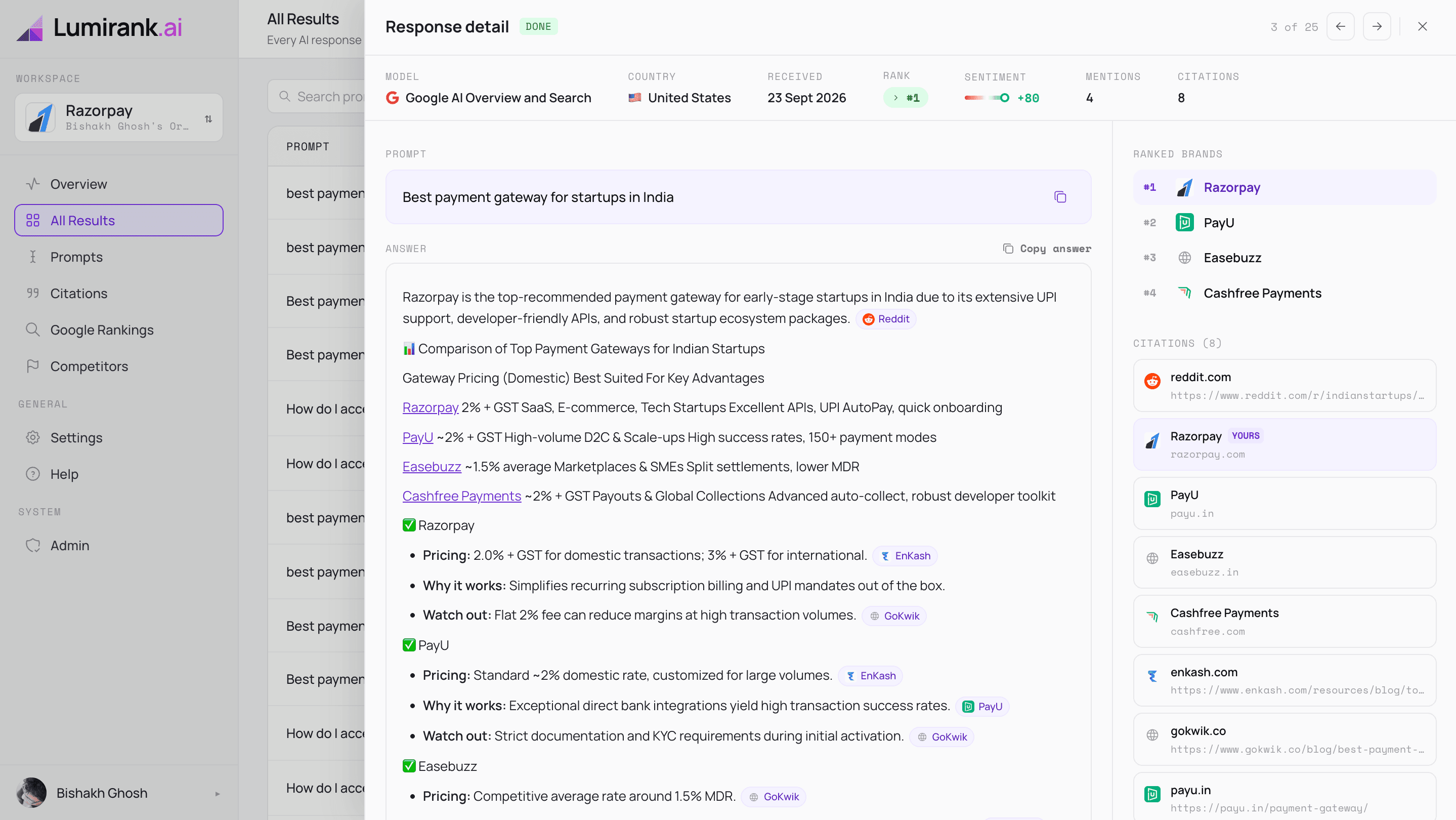
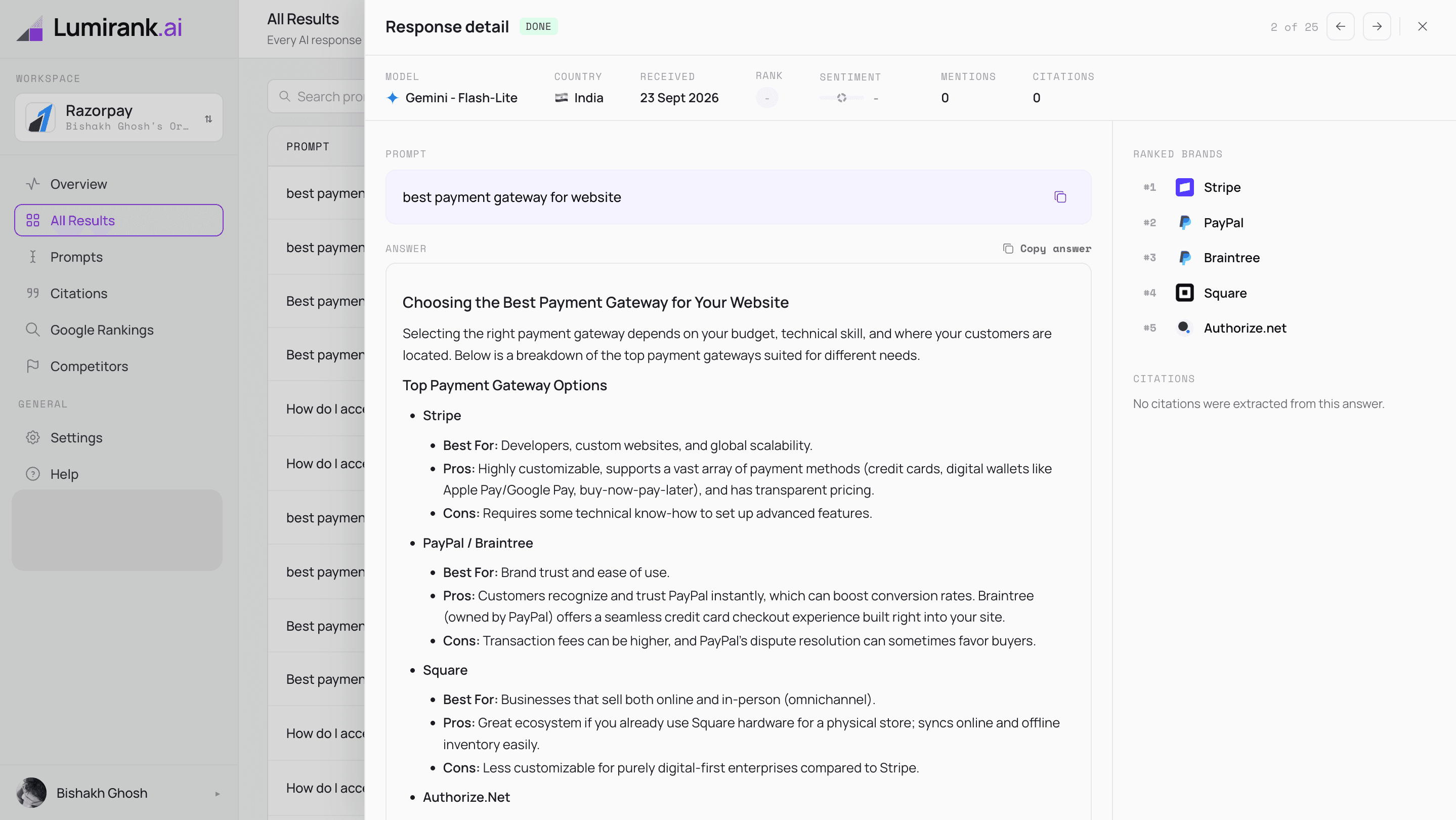
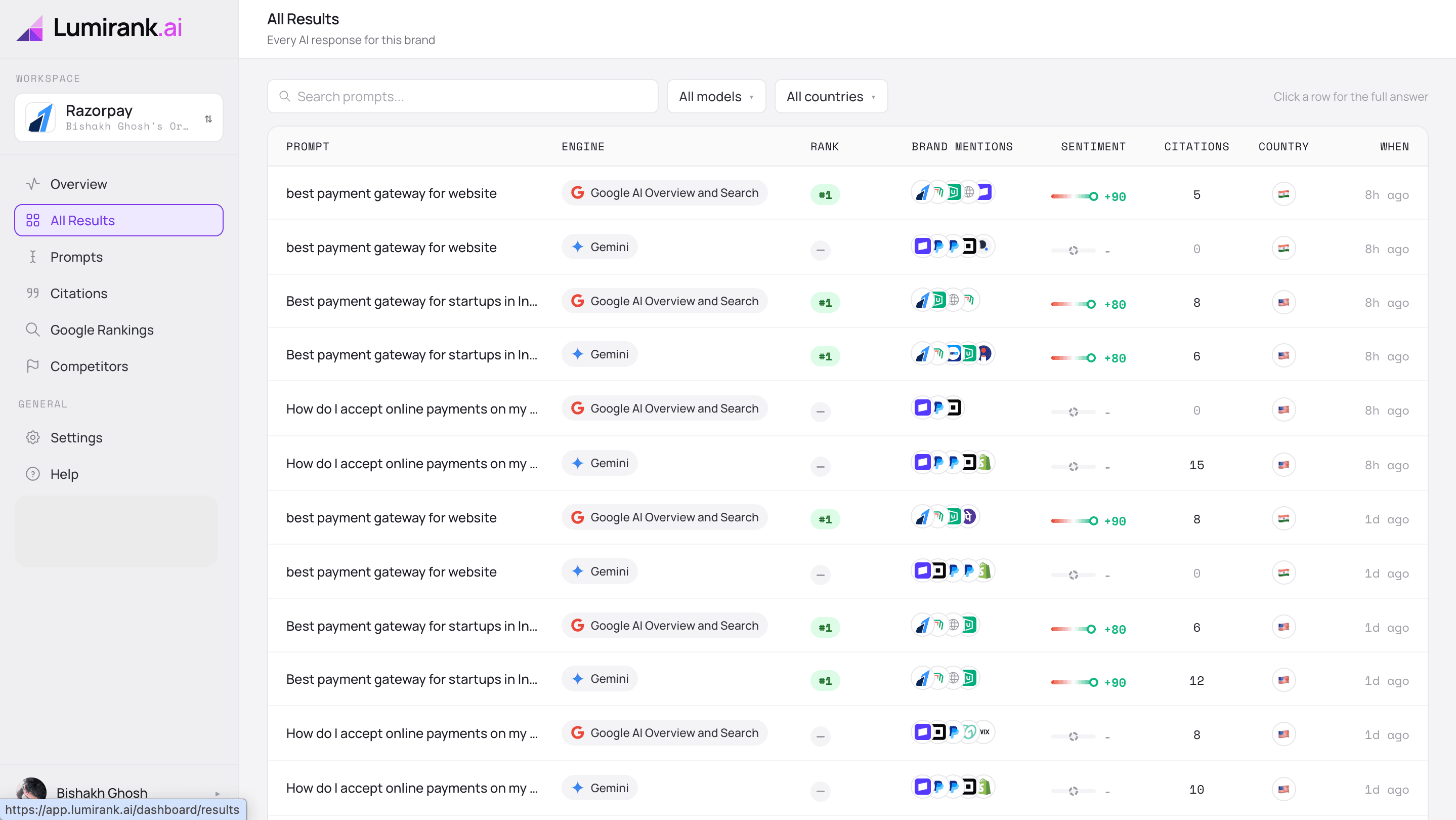
About this app
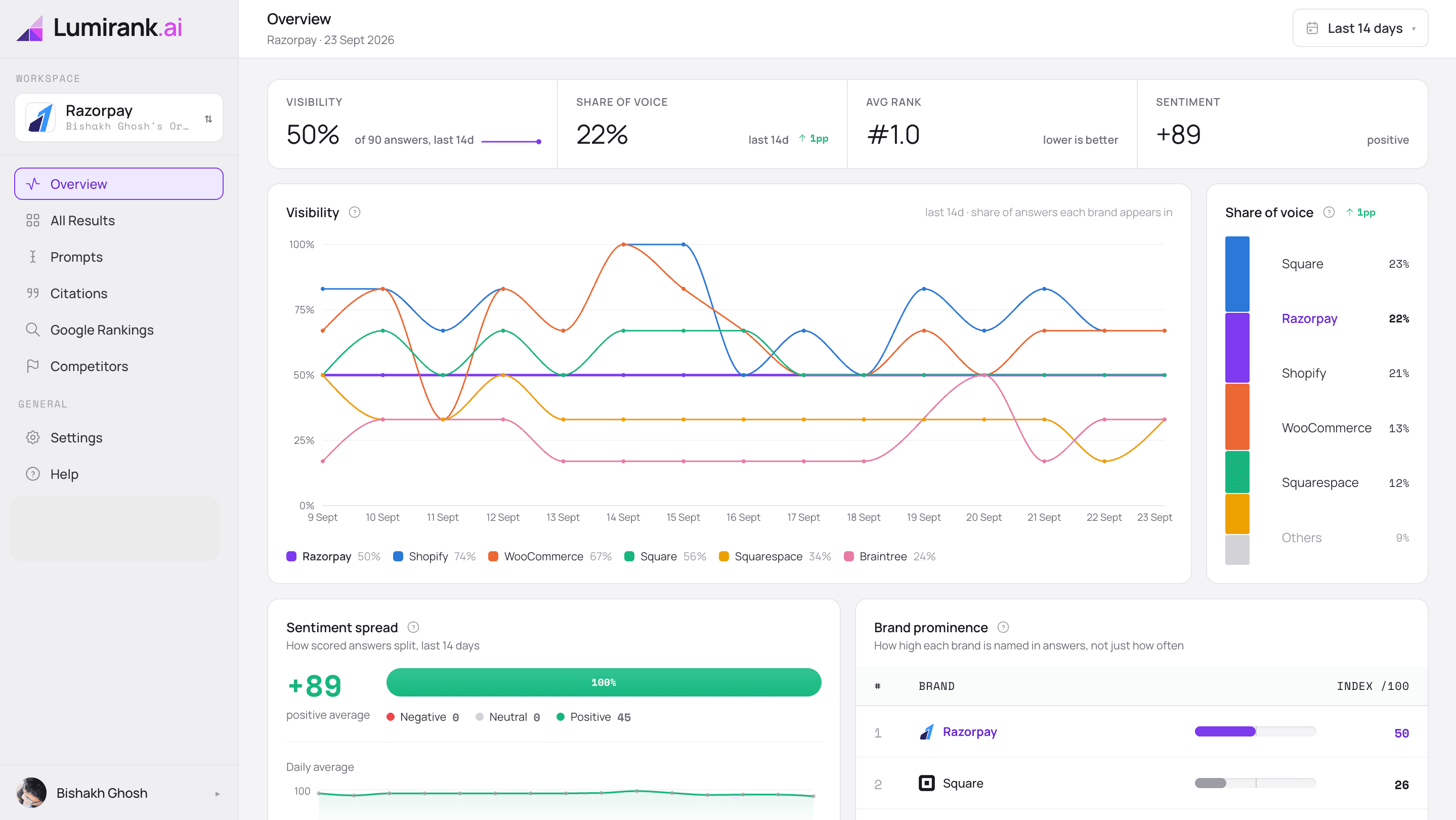
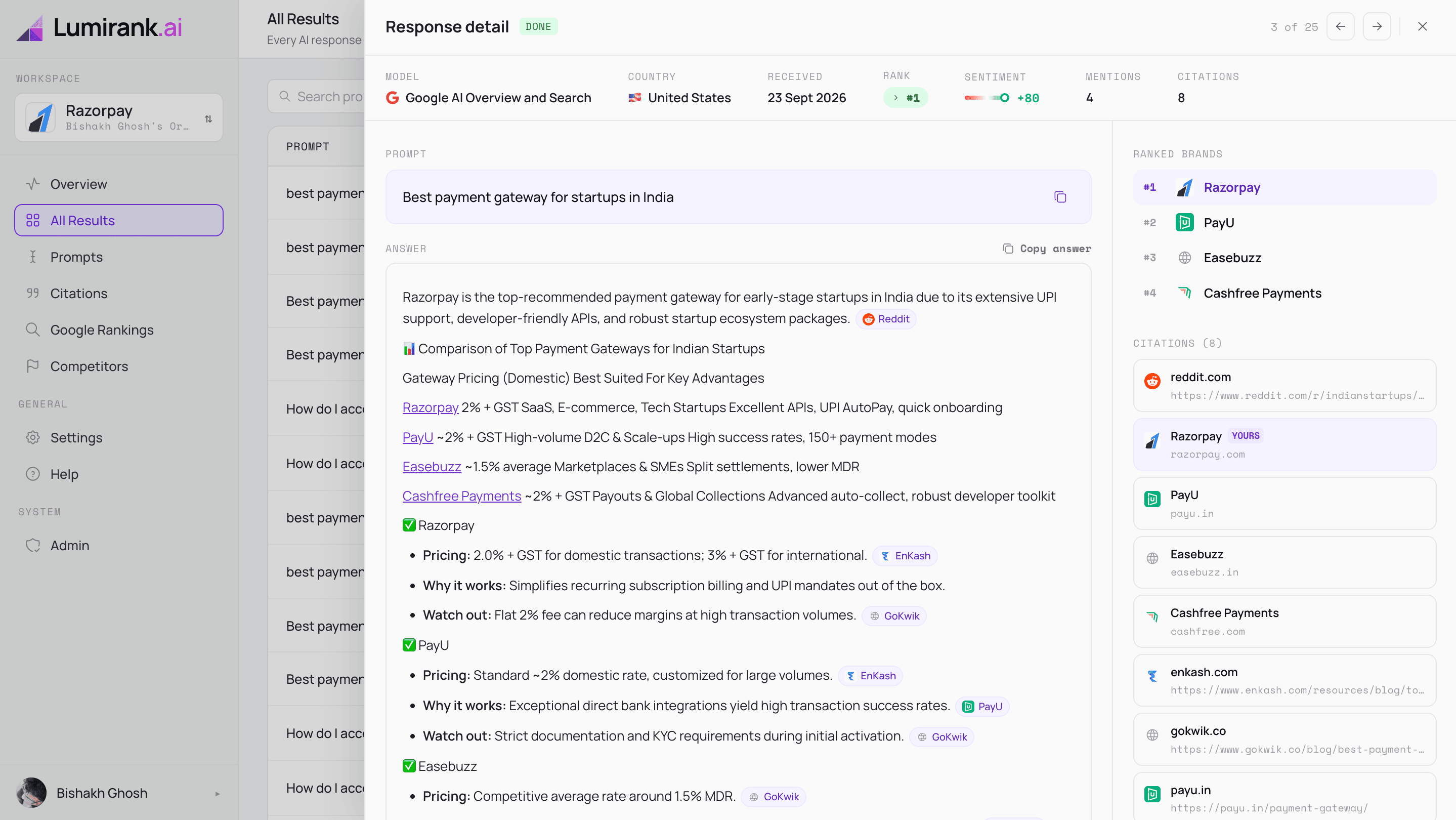
Lumirank tracks how ChatGPT, Gemini, Perplexity, Copilot, and other AI agents name your brand, measuring visibility, prominence and sentiment. It provides actionable feedback on how to improve your AI rankings.
Key features
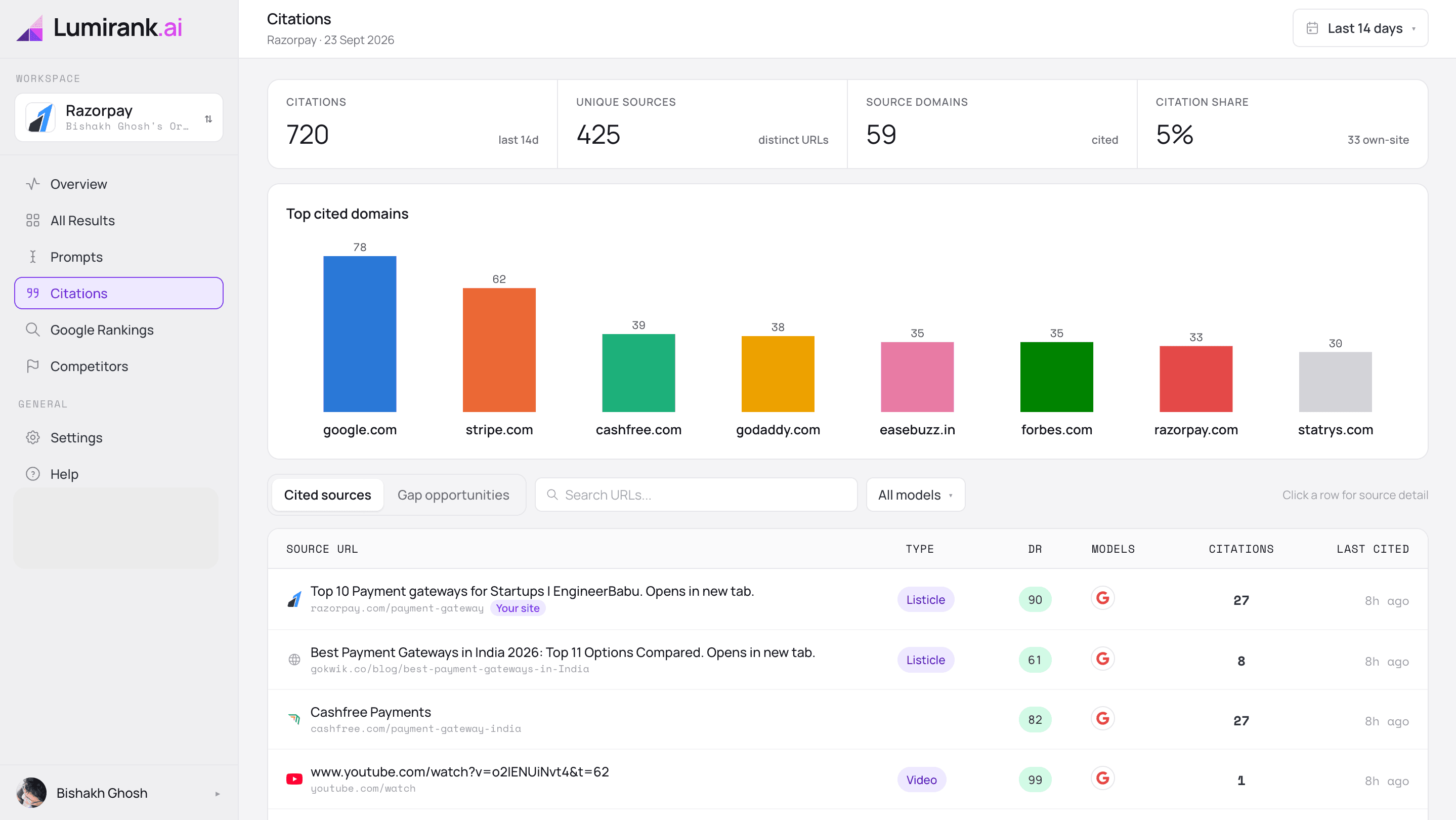
- 1Tracks brand visibility, prominence and sentiment across ChatGPT, Gemini, Perplexity, Copilot, Google AI Mode and AI Overviews
- 2Citation analysis splitting sources into owned, earned and rival, with movement alerts when competitors overtake you
- 3Free forever tier (10 prompts, 2 models) plus a no-card 14-day Pro trial and API access on paid plans
Target customer profile
Drawn from the product itself, not from a survey.
Demographic
Marketing Managers at SaaS companies
Pain points
Lack of visibility into how AI models rank their brand vs competitors
Primary needs
Track AI visibility, sentiment, and competitor benchmarks across platforms
Scout Review
Written by AI from measured evidence, scored out of 100.
Lumirank is a well-built early-stage AI visibility tracker with a fast site, a genuinely useful free tier, and a differentiated analytics model (prominence index, citation split, movement alerts) versus the Profound-style competition. Design and usability are above average for its stage; speed is excellent. The two soft spots are security posture — no HSTS, CSP or frame protection, and no published compliance — and thin documentation. For a marketing manager who wants to see how ChatGPT and Gemini talk about their brand without a sales call, the free tier is an easy yes; for a procurement-gated team, the security story needs work first.
Measure by measure
Usability
68Free forever tier with 10 prompts and 2 models, plus a no-card 14-day Pro trial, gets users to value fast. Detailed plan comparison table and clear nav. Docs depth not verified.
Design
74Polished dark dashboard mockups with real Stripe/PayPal examples, clean typography and a tidy 4-tier pricing layout. Consistent branding across pages; above-average for an early-stage SaaS.
Speed
88Lighthouse mobile 96/100 (LCP 963ms, CLS 0, TBT 8ms) and desktop 100/100. Genuinely fast, well-optimized site with no measured lag complaints.
Security
40HTTPS not enforced, no HSTS, CSP, frame protection or Referrer-Policy; checklist 2/12. SPF and DMARC present. No SOC 2, ISO or bug bounty claims found.
Accessibility
78Lighthouse accessibility 96/100 with one contrast failure. No WCAG statement or a11y page found. Responsive layout and readable structure otherwise solid.
Growth
62Real, growing category (AI search visibility) with a specific wedge: prominence index, citation split and movement alerts vs Profound. Early stage but the idea has room.
Improvement areas
- Security posture: enforce HTTPS and add HSTS, CSP, frame protection and Referrer-Policy headers
- Publish a security/compliance page (SOC 2, data handling, subprocessors) to survive procurement review
- Expand documentation and onboarding so the signup-to-first-insight path is clear
Design & Usability
Lumirank's front end is genuinely well-crafted for an early-stage product: dark dashboard mockups with believable Stripe/PayPal data, consistent typography, and a pricing page that lays out four tiers without making you squint. Usability is where it earns its keep — a free-forever tier with 10 prompts and 2 AI models means you can actually test the thing before paying, and the Pro plan's no-card 14-day trial removes the usual friction. The plan comparison table is detailed enough to answer most pre-purchase questions. The main gap is documentation depth: the site sells the workflow well but doesn't show much help-center or onboarding material, so the signup-to-first-insight path is inferred rather than demonstrated.
Speed & Security
Speed is the standout: Lighthouse mobile 96/100 with a 963ms LCP, zero CLS and 8ms TBT, and a perfect 100 on desktop. That's a genuinely snappy marketing site with no measured lag complaints. Security is the weak flank. The HTTP probe found HTTPS not enforced, no HSTS, no CSP, no frame protection and no Referrer-Policy — 2 of 12 checklist points, with only SPF and DMARC in place. For a tool that will hold brand and competitor data, the absence of a security page, SOC 2 or ISO claim, or bug bounty is a real gap versus what a marketing manager's procurement team will ask for.
Accessibility & Growth
Accessibility scores 96/100 on Lighthouse with a single failing audit — insufficient color contrast. No WCAG statement or accessibility page was found, so the automated score is the main signal; the responsive layout and clean structure suggest keyboard and screen-reader support are reasonable but unverified. Growth is the interesting one: AI search visibility is a real, expanding category, and Lumirank's wedge — a prominence index that weights where you appear, a citation split into owned/earned/rival, and movement alerts — is more specific than a generic 'AI rank tracker'. Against Profound, the free tier and the citation breakdown are concrete reasons to pick it. The honest limit is that the category is crowding fast and the domain is only months old, so execution and distribution will decide whether the wedge holds.
Conclusion
If you're a SaaS marketing manager who suspects AI assistants are quietly recommending your competitors, Lumirank's free tier is the lowest-friction way to find out — 10 prompts, 2 models, no card. Upgrade to Pro only once you've confirmed the data matches what you see in ChatGPT yourself. Before rolling it out org-wide, ask the team for a security page and a documented data-handling policy; the current header posture won't survive a serious vendor review.
Suggestions for improvement
- Enforce HTTPS and add HSTS, CSP, X-Frame-Options and Referrer-Policy headers — the 2/12 checklist score is the biggest quick win.
- Publish a security page with data-handling, retention and subprocessor details, and pursue SOC 2 if selling to mid-market SaaS.
- Fix the single Lighthouse contrast failure and add a short accessibility statement.
- Expand the help center / docs so the signup-to-first-insight path is documented, not inferred.
Alternatives comparison
Named competitors, point by point. Nobody paid to appear here or to be left out.
 Lumirank.ai |  Profound | |
|---|---|---|
| Free tier available | Yes — free forever, 10 prompts, 2 AI models | Limited / demo-based (not verified in collected evidence) |
| AI platforms tracked | 6 (ChatGPT, Gemini, Perplexity, Copilot, Google AI Mode, AI Overviews) | Multiple major AI assistants (per vendor positioning) |
| Prominence / ranking index | Yes — 0-100 Brand Prominence index weighting position in answers | Visibility and share-of-voice metrics (specific index not verified) |
| Citation source breakdown | Yes — owned / earned / rival split with history | Citation tracking offered (granularity not verified) |
| Entry paid price | $29/mo Starter; $99/mo Pro | Enterprise / sales-led pricing (not published in collected evidence) |
| API access | Yes on Starter and above | Not verified in collected evidence |
Comparing options? See Lumirank.ai alternatives, scored side by side
More SEO Tools apps
View all SEO Tools
Geogrid
92A UULE-powered local rank tracker for SEO agencies, offer...

Kerbrank
91Local rank tracker for UK businesses with Google Maps heatmaps, ChatGPT visibility checks and a weekly fix list.

AuditCloser
89White-label website audits that close deals for digital a...

CitableReport
89CitableReport is an AI visibility audit:

named.ae
88named.ae asks ChatGPT, Claude, Gemini, Perplexity and Grok your buyers' questions live, and shows who they name and the pages they read.

Indexaro
88AI visibility tracker for SEO, AEO, and GEO

Askray
88See who ChatGPT, Gemini & Claude recommend instead of you...

Spek
88Grow your app with self-learning ASO agents

Mover Marketing AI Local SEO
88Specialized SEO services for moving companies to dominate...

Cromagnon
88Free, private browser-based PDF, Word, Excel, and study t...

Wajido
88See how your company appears in AI answers

Fenn
88AI visibility tracker that checks if ChatGPT recommends y...


A platform dedicated to providing unbiased reviews of newly launched applications, analyzing everything from their features to their full potential.
info@scoutforge.net© 2026 Scoutforge. All rights reserved.
