Cycling through all six. Tap any point to stop.
Measured on six things
Describe your business; Yike AI surfaces matching public demand with sources & reasons.
Security
52HTTPS enforced with HSTS, X-Content-Type-Options and Referrer-Policy set — basics are in place. But no CSP, no frame protection, no SPF/DMARC on the domain, and no published SOC 2, ISO or security page found.
Screenshots
1 / 2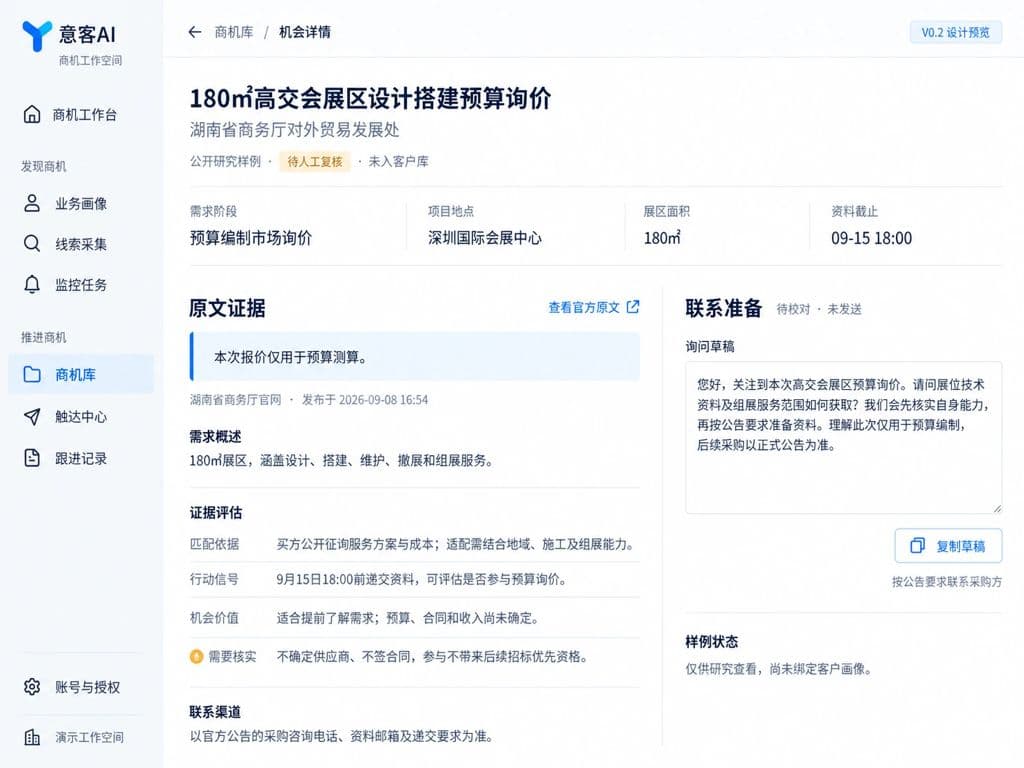
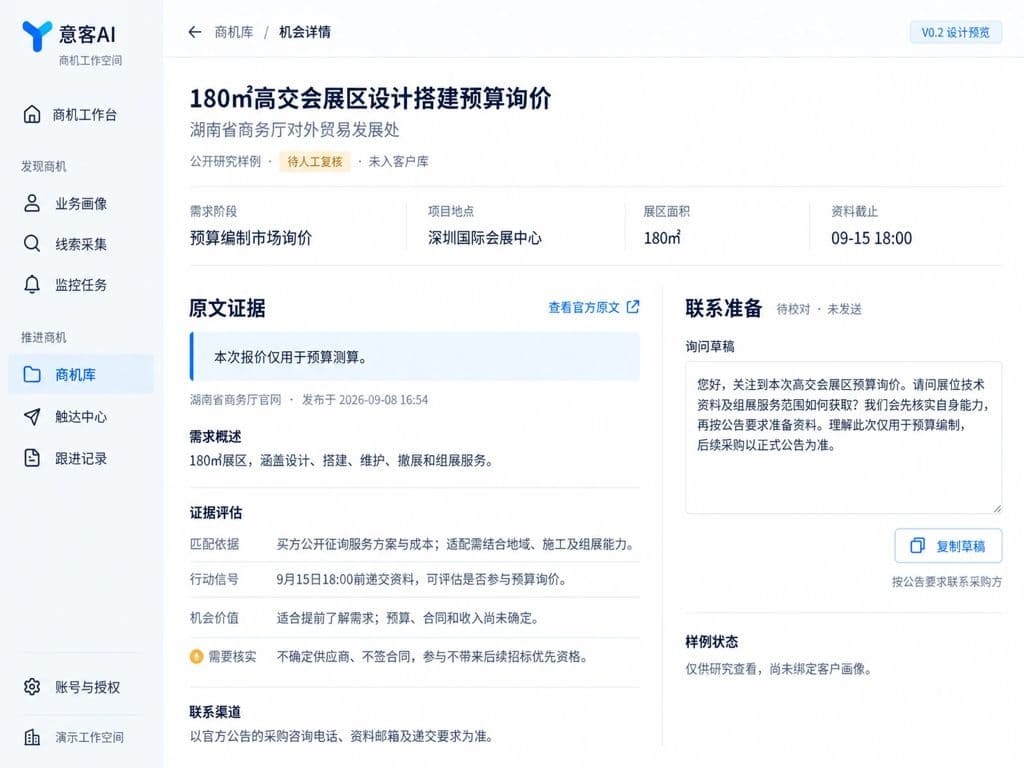
About this app
Yike AI is an AI-driven lead-generation and evidence-based opportunity workspace built for business owners and sales teams who are tired of cold calling and manual prospecting. Instead of relying on generic lead lists, it starts with a clear description of your business — what you offer, who you serve, and which needs don't fit — then surfaces publicly available demand signals that match. Every opportunity comes with the original demand text, its source, and a clear matching rationale, so you know exactly why a lead is relevant and what still needs to be confirmed. The portal includes a Demand Plaza for browsing public needs, a workbench for organizing matched opportunities, and a Customer Intelligence CRM that keeps every contact, opportunity, and follow-up activity traceable. A Windows/Mac client supports local platform connections, while the web version handles research and prospecting. Whether you work in software, equipment, or professional services, Yike AI helps you spend les...
Key features
- 1Demand discovery across public tender notices, social-media purchase inquiries and supply-chain inference, each lead carrying original text, source and match rationale.
- 21-to-1 proposal microsite with buyer-intent radar: tracks proposal opens, time spent on pricing, and internal forwards without WeChat silent authorization.
- 3Evidence-chain CRM with team claim-locking to prevent duplicate outreach, plus a five-stage real-opportunity conversion funnel and 9am daily digest.
Target customer profile
Drawn from the product itself, not from a survey.
Demographic
Sales teams and SDRs at B2B software or digital service firms
Pain points
Manual prospect research and duplicate lead hunting eat into selling time
Primary needs
Evidence-backed opportunities with source links and match rationale
Demographic
Small business owners and founders responsible for their own outbound
Pain points
No dedicated sales ops; unsure where to find qualified demand
Primary needs
An easy way to turn a business description into a steady pipeline of leads
Demographic
Sales managers needing pipeline visibility and team handoff
Pain points
Fragmented tools and lack of traceability on where leads came from
Primary needs
A CRM that records every contact, opportunity, and next step with full context
Scout Review
Written by AI from measured evidence, scored out of 100.
Yike AI (意客 AI) is a Chinese B2B opportunity-discovery workspace from 北京星河卓越科技有限公司 that inverts the usual lead-gen model: instead of selling a contact list, it surfaces public demand — tender notices, social-media purchase inquiries, supply-chain inference — and attaches the original text, its source and a matching rationale to each opportunity. The site backs this with a worked 广发证券 example, a 20-question FAQ, nine industry guides, a web app plus Windows/Mac client, and a 1-to-1 proposal microsite with buyer-intent tracking. Measured results are mixed: desktop performance 90 but mobile 65 with a 6.2s LCP, accessibility 98, and security only 6/12 header checks with no SPF, DMARC or published compliance. Design is text-heavy and never shows the actual interface.
Measure by measure
Usability
66Three-step onboarding, a 20-question FAQ, nine industry how-to guides, web app plus Windows/Mac client, and a demo phone line. Self-serve depth is above average for an early B2B tool; actual signup-to-value flow unverified.
Design
58Dense but disciplined Chinese landing page: numbered sections, consistent 意客 AI lockup, a real public-demand sample card. No actual product screenshots though — the UI is described, not shown, which is a miss for a workspace tool.
Speed
57Desktop Lighthouse 90/100 but mobile 65/100 with a 6.2s LCP — the hero and media wall are heavy on phones. CLS 0 and TBT 0ms mean it isn't janky once loaded, just slow to paint.
Security
52HTTPS enforced with HSTS, X-Content-Type-Options and Referrer-Policy set — basics are in place. But no CSP, no frame protection, no SPF/DMARC on the domain, and no published SOC 2, ISO or security page found.
Accessibility
80Lighthouse accessibility 98/100 with only two failing audits: heading order and mismatched accessible names on labelled elements. Strong automated result; no WCAG statement and Chinese-only, so real-world a11y is unverified.
Growth
62Real wedge: evidence-backed leads with source text and match rationale, aimed at 23 named project-type B2B industries the directory and CRM incumbents don't serve. Specific segment, clear differentiator, but the moat is scraping plus prompting.
Improvement areas
- No product screenshots anywhere on the site — the workbench, Demand Plaza and CRM are described but never shown.
- Security hygiene: no SPF/DMARC, no CSP or frame protection, and no published SOC 2, ISO or security page.
- Mobile performance: 6.2s LCP and 65/100 Lighthouse, versus 90/100 on desktop.
- Chinese-only interface with no WCAG conformance statement or language switcher.
Design & Usability
The landing page is a long, well-organized Chinese sales document: seven numbered sections, six capability blocks, a media-logo wall and a worked example of a 广发证券 public demand with source, match rationale and a 'what to confirm' note. That example is the best thing on the page because it shows the actual product logic. What's missing is the product itself — no screenshots of the workbench, the Demand Plaza or the CRM, so a buyer has to take the copy's word for the interface. Usability is stronger: three-step onboarding, a 20-question FAQ, nine industry-specific how-to guides, a web app plus Windows/Mac client, and a demo phone line. The self-serve documentation is real depth for a product this young, though the repeated phone-number CTA suggests the funnel still ends in a human.
Speed & Security
Speed splits cleanly by device. Desktop Lighthouse is 90/100 — genuinely fast. Mobile is 65/100 with a 6.2s largest-contentful-paint, driven by a heavy hero and the media-logo wall; CLS 0 and TBT 0ms mean it isn't janky once it arrives, just slow to arrive. Security is the weakest measured dimension: HTTPS is enforced with HSTS, X-Content-Type-Options and Referrer-Policy set, but there is no CSP, no frame protection, no Permissions-Policy, and the domain publishes neither SPF nor DMARC — six of twelve checklist points. For a tool that ingests buyer contact data and pitches 'traceable evidence chains', the absence of any published SOC 2, ISO, pen-test or security page is a gap worth closing before selling to sales managers.
Accessibility & Growth
Accessibility is a genuine strength: Lighthouse scores 98/100 with only two failing audits — non-sequential heading order and visible labels without matching accessible names — both cheap fixes. There is no WCAG conformance statement and the product is Chinese-only, so international and assistive-tech users are unverified, but the automated baseline is well above category norm. Growth is the interesting question. The category — B2B lead generation — is crowded with LinkedIn Sales Navigator, HubSpot and Apollo, all of which sell contact data or CRM workflow. Yike AI's wedge is different: it starts from public demand signals (tender notices, social-media purchase inquiries, supply-chain inference) and attaches the original text, source and match rationale to each lead. Aiming at 23 named project-type industries — packaging, HVAC, equipment, agency services — targets the long tail those incumbents structurally ignore. The limit is defensibility: the moat is scraping coverage plus matching quality, both copyable.
Conclusion
The pitch is the strongest part: 'every lead has a receipt' is a real answer to the trust problem that plagues cold outreach, and the 23-industry focus targets exactly the project-type businesses that Apollo and Sales Navigator underserve. Whether it holds up depends on things the site can't show — how fresh the demand signals are, how noisy the social-media capture is, and whether the match rationale survives contact with a real sales rep. Before selling to teams, close the boring gaps: publish a security page, add SPF and DMARC, fix the mobile LCP, and put actual screenshots of the workbench and CRM on the homepage. The idea is good enough to deserve a better shop window.
Suggestions for improvement
- Add real screenshots or a short screen recording of the Demand Plaza, workbench and CRM — the page describes the product but never shows it.
- Publish SPF and DMARC records and a security/compliance page; 6/12 header checks is thin for a tool handling buyer contact data.
- Cut mobile LCP from 6.2s: compress the hero image and lazy-load the media-logo wall below the fold.
- Fix the two accessibility fails (heading order, accessible names on labelled elements) — they're cheap and the score is already 98.
Alternatives comparison
Named competitors, point by point. Nobody paid to appear here or to be left out.
 Yike AI |  LinkedIn Sales Navigator |  HubSpot Sales Hub |  Apollo.io | |
|---|---|---|---|---|
| Where leads come from | Public demand signals: tender notices, social purchase inquiries, supply-chain inference | LinkedIn member profiles and engagement data | Inbound form fills and contacts you already own | 275M+ contact database with firmographic filters |
| Evidence / source traceability per lead | Original demand text, source link and match rationale on every opportunity | Profile and activity context, no demand-side source | Contact record history, no external demand evidence | Contact data only, no rationale for relevance |
| Built-in CRM and pipeline | Evidence-chain CRM with claim-locking and 5-stage funnel | No native CRM; syncs to external systems | Full CRM, pipelines, sequences and reporting | Basic deal tracking plus outreach sequences |
| Proposal tracking / buyer intent | 1-to-1 proposal microsite with open, dwell and forward alerts | Not offered | Email open/click tracking, no proposal microsite | Email engagement tracking only |
| Desktop client | Windows and Mac client for local platform connections | Web and mobile apps only | Web and mobile apps only | Browser extension plus web app |
LinkedIn Sales Navigator
Advanced B2B prospecting with rich filters and lead recommendations, but leads lack demand-side context and evidence.
HubSpot Sales Hub
Comprehensive CRM and sales engagement platform; powerful but not focused on surfacing publicly sourced demand signals with rationale.
Apollo.io
Large B2B contact database and outreach automation; relies on contact data rather than matching specific public demand descriptions.
Comparing options? See Yike AI alternatives, scored side by side
More Marketing & Sales apps
View all Marketing & Sales
EmbedMyReviews
92White-label reputation management software for agencies s...

Geogrid
92A UULE-powered local rank tracker for SEO agencies, offer...

Puzzly – B2B Lead Generation & Sales Intelligence Platform
92Puzzly is an all-in-one B2B lead generation platform that...

Vibe Coding Agent Skills
92A free, open-source platform offering 110 AI agent skills...

QRBliss
91Branded QR codes with AI Brand Sync, 15 free dynamic code...

ThumbnailMaker
90AI YouTube thumbnail maker: paste a video link, get the brief, the thumbnail, and a check at feed size.

WAButton
90WhatsApp website leads, forms and contact routing

DemoVexa
90Turn your code into professional product demo videos with AI-generated scripts, animated UI, and natural voiceovers.

PitchWhip
90AI cold call scripts & direct dials from LinkedIn

Opus Growth
89Opus Growth is a single MCP server for Google Ads, Meta Ads, TikTok Ads, LinkedIn Ads, Microsoft Ads and ChatGPT Ads. ChatGPT, Claude, Codex, Perplexity, Cursor and other assistants connect with the same address.

AuditCloser
89White-label website audits that close deals for digital a...

What the GIF
89Frame-perfect video-to-GIF maker that runs entirely in yo...


A platform dedicated to providing unbiased reviews of newly launched applications, analyzing everything from their features to their full potential.
info@scoutforge.net© 2026 Scoutforge. All rights reserved.
